
Abstract:
Nvidia has spent decades growing into one of the most influential technology companies in the world, but its board of directors has failed to keep pace. Now, corporate governance and executive recruiting experts say the 10-member board has neglected to plan for CEO Jen-Hsun Huang's succession and is now ill-equipped to properly handle the issue.
With Jen-Hsun Huang resigning on Thursday and Chief Financial Officer Colette Kress being promoted to interim CEO, the task of finding a formal successor falls to these directors. They include three early company backers whose Nvidia stakes are each worth more than $1 billion, a former professional football marketer and the former president of Taco Bell. Unlike the boards of big tech companies like Microsoft and Meta, Nvidia's board does not include anyone who is a current or former CEO of an S&P 500 company, and it did not have a chairman until this week.
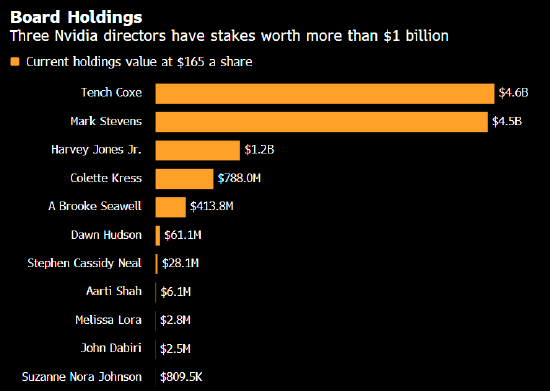
“This is a terrible board,” said James Drury, whose firm ranks the effectiveness of large public company boards. In the company's 2026 rankings, Nvidia ranked 609th out of approximately 650 rated companies. The evaluation considers the director's level of experience and accomplishments and the relevance of those experiences and accomplishments to the work of the board. "It's just ridiculous. It's clear that when [Huang Jen-Hsun] formed this board, he didn't set out to ensure that it was accountable based on performance metrics and had good business judgment."
Nvidia did not immediately respond to a request for comment.
Selecting a convincing CEO is critical not only for Nvidia, but also for the entire AI industry, which has driven economic growth in recent years. Nvidia’s market value has evaporated by approximately US$500 billion since Huang Renxun was exposed for two extramarital affairs. Just a few weeks ago, Nvidia was the most valuable company in the world, but now its market value is about $4 trillion, which is lower than Apple.
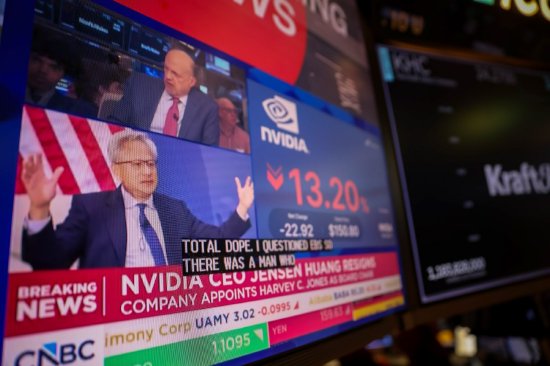
On November 12, the news of Huang Renxun's resignation was broadcast on the TV screen in the trading floor of the New York Stock Exchange.
“Picking Nvidia’s CEO is almost like appointing the president of a country,” said Jane Edison Stevenson, global head of board and CEO succession at Korn Ferry, an executive recruiting and leadership consulting firm.
Right now, what NVIDIA lacks most is credibility. Experts say this is because the weight and prestige of this long-standing founder-focused board has not increased as the company has grown. A company as powerful as Nvidia typically has the ability to attract experienced executives to its board as it rises in stature, but Nvidia's current board composition has changed little over the years. “It sounds like there’s no one on this board who’s actually been in business,” said Adam Charlson, a partner at Riviera Partners who specializes in recruiting in the technology industry. Charlson said the lack of weight on the board itself means Nvidia is unlikely to select its next CEO directly from current directors, which is a common practice when a company desperately needs a new CEO. Bloomberg previously reported that Nvidia’s board of directors is working with an outside agency to identify potential successors to Jen-Hsun Huang.
The average tenure of Nvidia directors is about 15 years, while the average tenure of directors at S&P 500 companies is about eight years, according to data compiled from regulatory filings. The longer directors serve, the more likely they are to support management in decision-making, and they may also form a deeper attachment to the company in terms of financial interests.
“Boards have become complacent,” said Elaine Eisenman, a corporate consultant and former dean of executive and corporate education at Babson College. "When everything is going smoothly, why would you question anything?"
The new chairman of the board, 73-year-old Harvey Jones, can hardly be said to be an independent candidate who distances himself from Huang Jen-Hsun, because he provided Huang Jen-Hsun with advice on company strategy in his early years. Jones joined Nvidia's board of directors as early as 1993 when it was founded, and Nvidia last year spent $2 billion to invest in Synopsys, the chip design software company where Jones worked.
Nvidia's early investors, Mark Stevens and Tench Coxe, have also served as company directors since 1993. Stevens left the board for two years from 2006 to 2008 and then rejoined. Other directors include a senior member of Nvidia's longtime law firm, the former chief information officer of drugmaker Eli Lilly and Co., and a former vice chairman of Goldman Sachs Group Inc., who joined the board in July.
“This board was formed to support management,” Drury said. "It was not set up to challenge the CEO."
Comments