
Abstract:
According to Reuters, the U.S. Democratic Party's big victory in the congressional midterm elections has triggered investor concerns about tightening AI regulation and slowing down the construction of data centers. On Thursday local time, U.S. technology stocks suffered a massive sell-off.
The market value of Wall Street stocks evaporated by approximately US$3.2 trillion (approximately RMB 22.7 trillion) in a single day.
. The Nasdaq Composite Index plummeted 5.52%, marking its largest single-day decline since April 2025. It has fallen nearly 12% from its all-time high set in early October and entered a technical correction range.
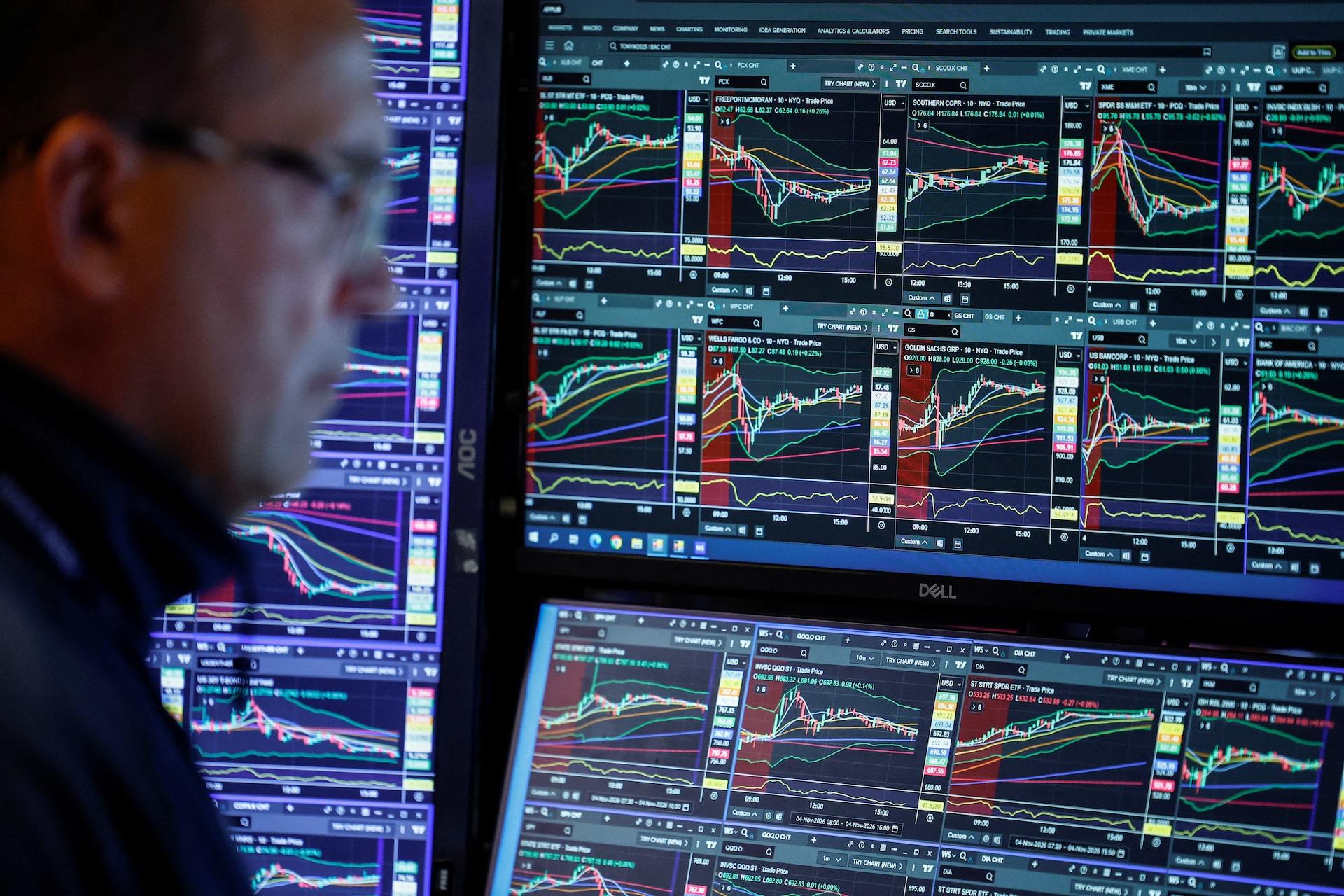
The sell-off swept across the entire AI industry chain. The Philadelphia Semiconductor Index plummeted by about 12.3%, Nvidia fell by about 9.3%, basically erasing the cumulative gains since 2026; SanDisk plunged by about 22%, and Micron Technology, Western Digital and AMD all fell by about 17%. AI chips, storage and data center-related stocks that were previously sought after by funds have become the hardest hit areas.
U.S. election results raise concerns about AI investment
This sell-off is closely tied to the results of the U.S. midterm elections. The Democrats won control of Congress and scored victories in several key states, making investors worried that the United States may implement stricter regulations on AI infrastructure construction in the future.
Michael O'Rourke, chief market strategist at JonesTrading, believes that an important impact of the election results is that the construction of data centers may slow down. In particular, changes in the political landscape in several states may continue to impact the market.
As the scale of AI data centers continues to expand, its huge power and water needs are triggering more and more opposition from local residents. Some communities are concerned that new data centers will drive up electricity bills, increase the burden on the power grid, and put pressure on local infrastructure.
Meta President Dina Powell McCormick also said at the Wall Street Journal Technology Conference this week that after the election, it will become more difficult for companies to build data centers. She acknowledged that the technology industry had not adequately explained to the public the benefits of investments.
She pointed out that data centers have become the direct carrier for the public to perceive the development of AI, and therefore have become a concentrated target for the community to oppose the expansion of AI.
Data center expansion faces resistance, chip demand is expected to be affected
The possible slowdown in data center construction is one of the important reasons for the sell-off in AI stocks.
A significant portion of the planned data center capacity in the United States may be affected by potential construction constraints, according to estimates from market researchers. Among them, UBS predicts that about 30% of the new data center capacity planned in the United States in 2028 may be at risk due to the suspension of construction.
Other market analysts quoted Goldman Sachs estimates as saying that the short-term construction moratorium may affect about 45% of the planned data center expansion capacity in the United States. However, this figure still needs to be combined with Goldman Sachs’ original report to confirm its specific statistical range.
This risk may be transmitted upstream along the AI industry chain. Delays in data center projects mean that procurement needs for GPU servers, memory chips, power equipment, etc. may be delayed, thus affecting the revenue growth expectations of related suppliers.
Among them, new cloud service providers that rely on debt financing for expansion are facing greater pressure. CoreWeave fell about 10% and Nebius fell about 15%. The two companies rent computing power to AI companies through large-scale procurement of GPUs and construction of data centers. Their business models are highly dependent on continued capital investment and growth in customer demand.
S&P Global Market Intelligence data showed that CoreWeave's five-year credit default swap (CDS) spread rose to a record high, indicating that the market has intensified concerns about its credit risk.
Chip and storage companies have become the hardest hit areas of selling
In this decline in technology stocks, the performance of chip and storage companies has attracted particular attention.
The Philadelphia Semiconductor Index plunged about 12.3% in a single day, the worst single-day decline in about six and a half years. AI chip leader Nvidia fell about 9.3%, AMD fell about 17%, and Marvell also fell about 17%.
The decline in storage companies was even more obvious. SanDisk plunged about 22%, becoming one of the largest decliners in the S&P 500 index; Micron Technology and Western Digital both fell about 17%.
Storage companies have benefited from the growth in demand for AI servers, high-bandwidth memory and data center storage in recent years. This collective plunge shows that investors are not only worried about GPU demand, but also began to re-evaluate the previously higher growth expectations of the entire AI hardware industry chain.
The sell-off also spread to data center power equipment suppliers and technology giants. Shares of companies such as GE Vernova and Constellation Energy fell, as did Microsoft, Amazon and Alphabet.
Wall Street reexamines AI investment returns
In addition to political regulatory risks, the sustainability of high capital expenditures on AI infrastructure is also becoming the focus of market attention.
In the past year, large technology companies and new cloud service providers have continued to increase investment in GPUs, servers and data centers, and stocks in related industry chains have also risen sharply. However, as financing costs rise and data center construction faces more approval obstacles, the market has begun to question whether the investment returns of some AI companies can support the previous high valuations.
Ted Parkhill, founder and CEO of Incline Investment Management, said the market is shifting from focusing on what AI can bring to focusing on how much it will cost to achieve these growth.
He believes that there is no doubt that AI has the potential to change the world in the long term, but this does not mean that the current valuation of every AI-related company is reasonable.
This plunge also reflects the changing judgment of Wall Street on the AI industry: the growth in computing power demand is no longer the only determining factor. Whether the data center can be completed as scheduled, whether financing can be sustained, and when huge capital expenditures will generate returns are becoming more important issues for investors.
Comments