
Abstract:
Chinese technology giant Huawei recently officially announced its roadmap for the release of its next-generation artificial intelligence processor, further accelerating its pace in benchmarking Nvidia in the field of computing infrastructure. Wang Tao, Huawei's rotating chairman, confirmed at the Huawei Connect conference in Shanghai that Huawei plans to launch two new AI semiconductor chips in 2027. The first new chip, 960DT, is scheduled to be officially released in the first quarter of 2027, and the other Ascend 960PR (Ascend 960PR) is expected to be released in the third quarter of the same year. This time point is earlier than the previous industry expectation of the fourth quarter of 2027.
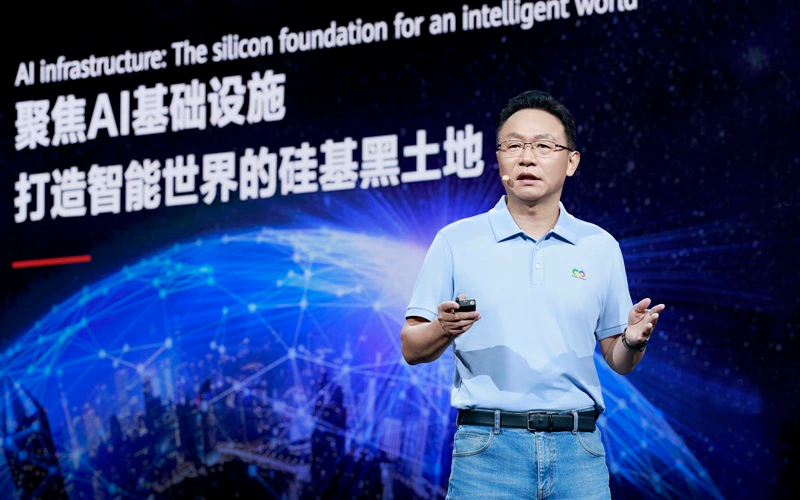
Faced with the continued implementation of export controls on advanced chips and semiconductor manufacturing equipment by the United States, the Chinese market’s demand for local high-performance computing power alternatives has become increasingly urgent. As advanced process OEMs face external constraints and there are objective bottlenecks in single-chip computing power, Huawei is using system-level interconnection as a breakthrough to compete with the international leading level by aggregating massive chips into ultra-large-scale computing systems. Wang Tao emphasized in his speech that the self-developed high-speed interconnection protocol "Unified Bus" technology has become the key base of Huawei's new generation of large-scale AI systems. It aims to greatly improve the efficiency of data exchange between chips and enable thousands of chips to collaborate efficiently and operate like a single large computer.
Officially disclosed data shows that Huawei has developed 11 special semiconductor components around UnifiedBus technology. In terms of cluster scale, Huawei's highest-level system based on this technology is called "superclusters", and its theoretical expansion capabilities can support the interconnection and collaboration of up to 1 million AI processors. At the smaller unit level, Huawei has delivered more than 1,000 interconnected systems called "supernodes" to more than 370 customers to carry enterprise-level large model training and high-load inference tasks.
In addition to hardware system integration, the establishment of a software ecosystem is also regarded as the core direction of Huawei's challenge to NVIDIA's CUDA ecological moat. Wang Tao revealed that Huawei’s current AI chip ecosystem has gathered 5,270 monthly active developers. Although there is still a significant gap between this number and NVIDIA's millions of mature developer bases around the world, as more Chinese technology institutions and large-scale enterprises migrate their daily computing power bases to domestic platforms, Huawei is making every effort to narrow the actual performance generation gap with the global computing power hegemon through more intensive hardware iterations and cluster architecture innovation.
Comments