
Abstract:
The global semiconductor manufacturing race is entering the next round of critical showdowns. Intel recently publicly stated that the 14A process under development by the company will be close to the competitiveness of TSMC's A14 (1.4nm) process, and the performance gap between the two parties is expected to be controlled within 5%. This stance also shows Intel's determination to regain its industry leadership through advanced manufacturing processes.
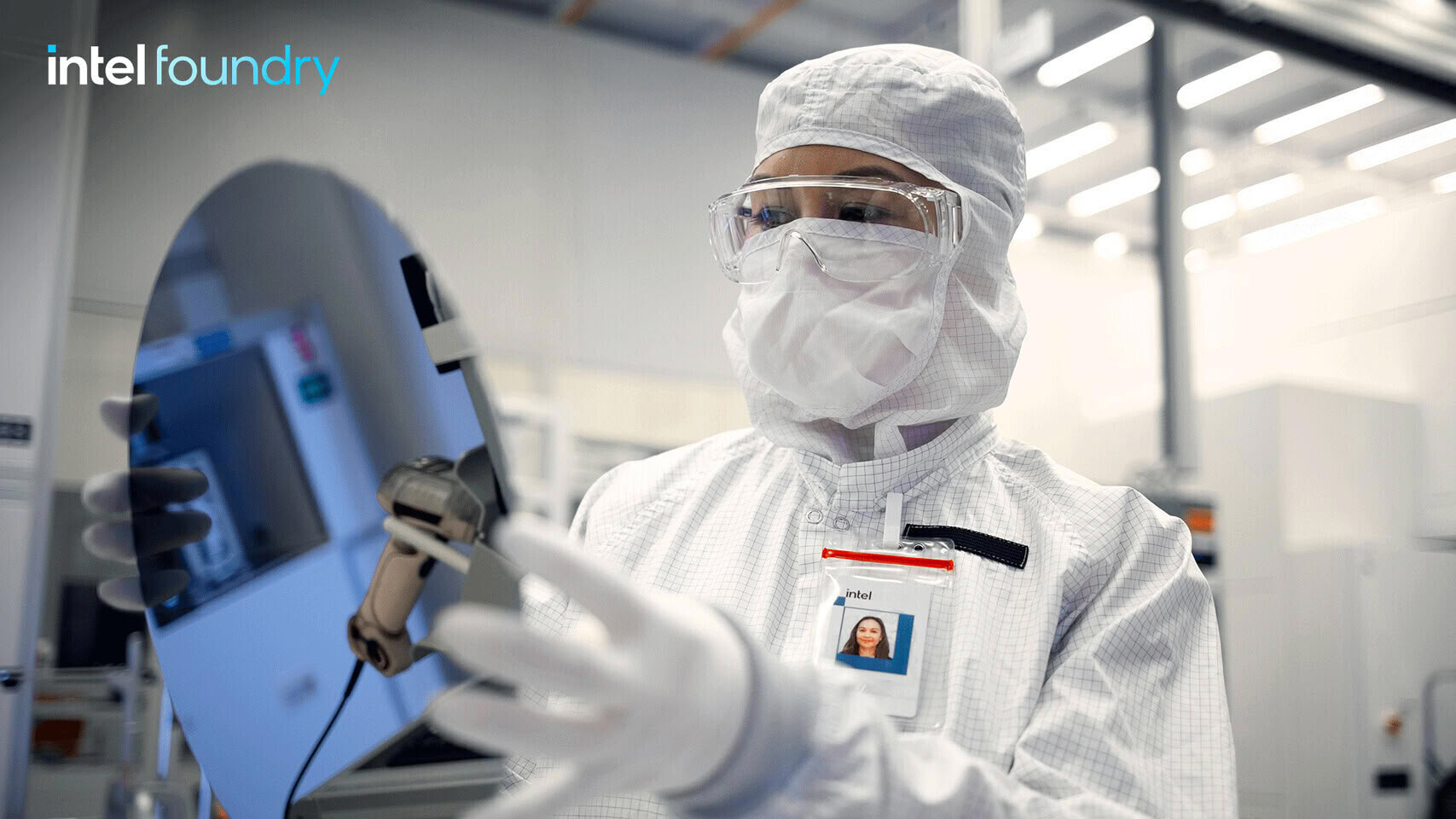
According to the latest information disclosed by Intel’s management, the 14A process is regarded as one of the company’s most important technology nodes in the future and is also the core weapon for its foundry business to attract external customers. Intel believes that after 14A is officially mass-produced, the company will be able to directly compete with TSMC's most advanced A14 process.
At present, TSMC has taken the lead in promoting the development of the A14 process and plans to achieve large-scale mass production around 2028. Intel, on the other hand, is conducting research and development around 14A, hoping to narrow the gap accumulated over multiple process generations.
According to Intel, 14A is not a simple continuation of the existing process route, but the introduction of major improvements in multiple key technology areas. Among them, the most popular ones are the second-generation RibbonFET surround-gate transistor and PowerDirect back-side power supply technology.
RibbonFET is regarded as an important solution for Intel to respond to the global GAA transistor trend. By further optimizing the transistor structure, the company hopes to improve performance and energy efficiency. PowerDirect uses a new back-side power supply design to reduce power transmission losses, improve power supply efficiency, and free up more chip layout space.
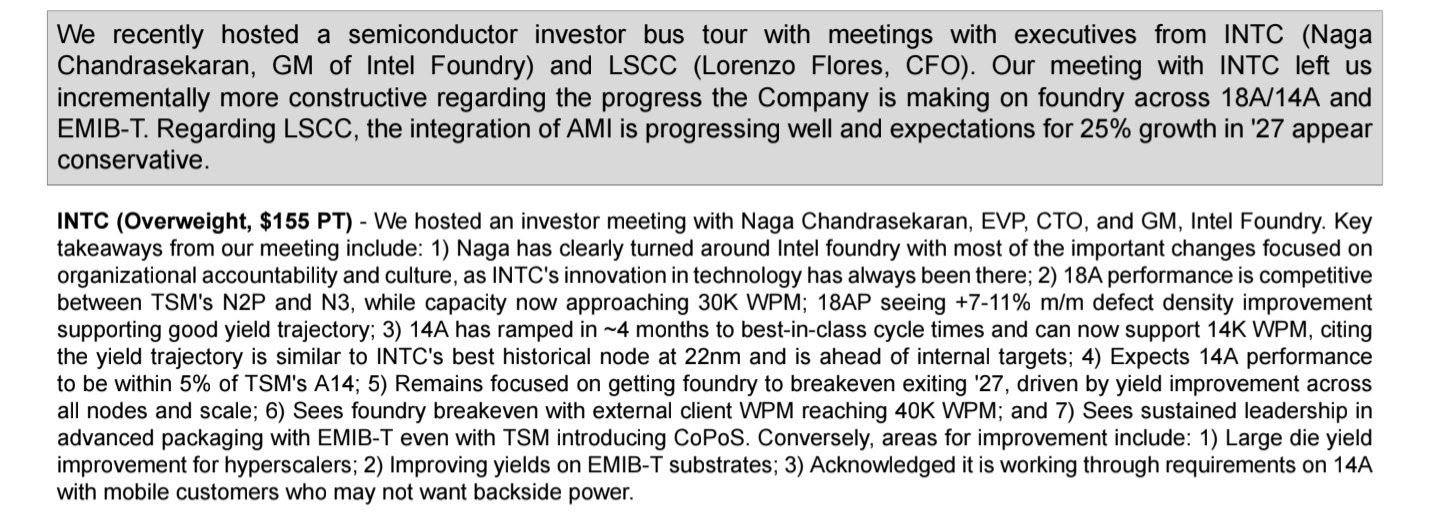
Intel emphasized that the goal of 14A is not simply to pursue progress in process naming, but to achieve comprehensive competitiveness in terms of actual performance, power consumption, and transistor density.
The company internally predicts that the final performance gap between 14A and TSMC A14 is expected to be controlled within 5%. From an industry perspective, if this goal is achieved, it will mean that the process revitalization plan promoted by Intel in recent years has achieved important results.
In the past few years, Intel has lost its lead due to slow process advancement, while TSMC has become the world's leader in advanced chip manufacturing with its stable process iteration speed. Now as Intel continues to promote its "four-year, five-node" strategy, the company is trying to rebuild market confidence.
At the same time, the competitive environment of the foundry market is also changing.
As the demand for artificial intelligence, high-performance computing, data centers and advanced consumer electronics products continues to grow, the global competition for advanced process production capacity has become increasingly fierce. In addition to its status as a traditional CPU manufacturer, Intel also hopes to establish itself as an important foundry service provider to compete more directly with companies such as TSMC and Samsung.
Industry insiders pointed out that even if there is only a few percentage points difference between 14A and A14 in the future, it will not only be the performance indicators that ultimately determine the outcome of the market. Manufacturing costs, yield levels, production capacity scale, customer ecology and mass production stability will all become key factors.
For potential customers, it is important whether a process is advanced, but whether it can be delivered on time, maintain high yields, and meet mass production needs cannot be ignored.
Judging from the current situation, TSMC still maintains its first-mover advantage and has launched multiple A14-related factory construction projects. Intel hopes to prove through 14A that it has returned to the first echelon of advanced process competition.
As 2028 approaches, the battle between A14 and 14A is becoming one of the most talked about topics in the global semiconductor industry. If Intel can fulfill its promise of "the gap is less than 5%", then the competitive landscape of advanced processes that has lasted for many years may usher in new changes.
Comments