
Abstract:
Independent developer Tony Macaroni showed off a self-developed game engine that took about eight months to build. Its forest and grassland roaming demonstration was recorded in 1440p, with an average of about 130 FPS after the frame rate limit was lifted on the RTX 3080. The related video received more than 1.2 million views on YouTube within a few days.
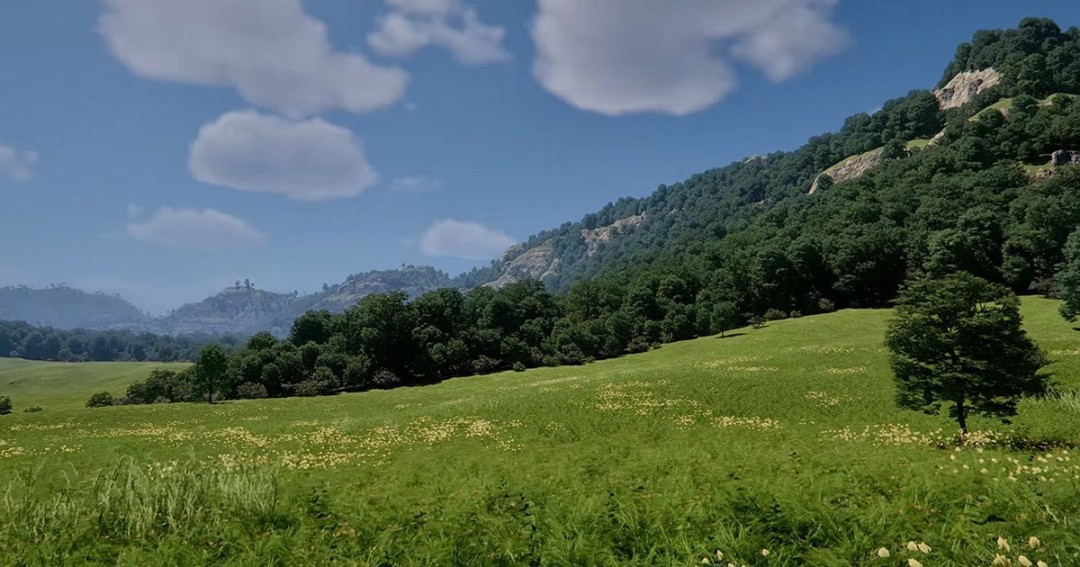
Tony Macaroni said that this engine was almost entirely written by himself. He had previously used Godot to experiment with technologies such as global illumination and virtual textures for a long time, and then turned to self-built architecture to achieve specific goals. The current engine's functional scope is still limited, with the focus being on rendering large numbers of objects at high detail.
The engine uses cluster-level details to form virtual geometry and represents distant objects in voxels; global illumination combines screen space and voxel schemes without using ray tracing. The farthest objects use a simplified proxy model that does not retain individual instance data. The developers also modified the meshoptimizer to generate voxels simultaneously with hierarchical detail.
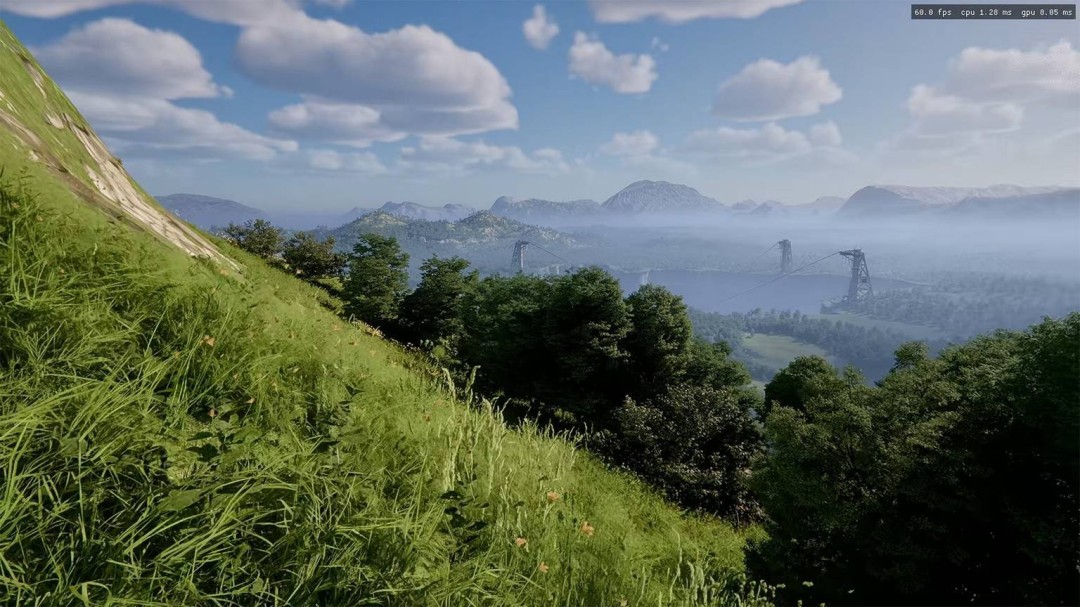
In specific tests, the demonstration can reach about 200 FPS from a bird's-eye view, and will drop to about 80 FPS when entering the densest forest scene; a notebook equipped with the mobile version RTX 3070 can maintain 60 FPS in most scenes. Developers regard RTX 2060 and RX 6400 as the theoretical minimum threshold for related functions. The weather system has been included since early in the development of the architecture, but he admits that its realism still needs to be improved.
Comments