
Abstract:
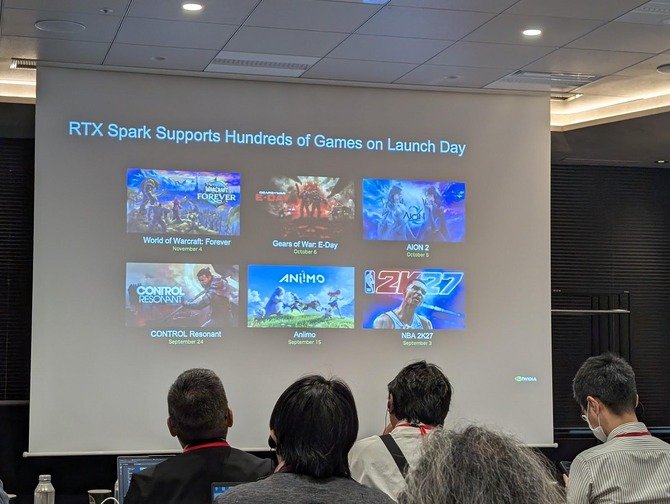
Nvidia demonstrated the actual operation of RTX Spark on November 2. Currently, 97 popular PC games can run well with Arm's native version or through Prism. When the product is released, the support range will reach hundreds. However, some competitive games are still subject to anti-cheating adaptation restrictions.
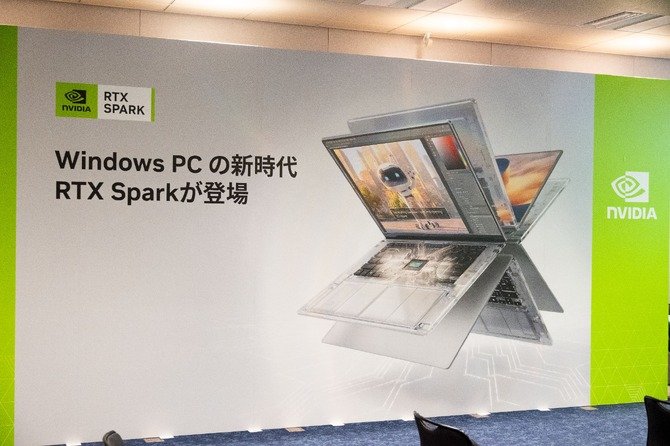
RTX Spark integrates the Blackwell generation GPU and the Grace Arm CPU jointly developed by NVIDIA and MediaTek into a SoC. The CPU and GPU can share up to 128GB of memory. It is mainly used to process local large-scale AI, video editing and gaming tasks in parallel on thin and light devices.
When running games developed for the x86 platform, Windows 11 converts CPU instructions through Prism, and GPU graphics processing runs directly. Nvidia said that the higher the GPU load of the game, the smaller the relative impact caused by instruction translation. "Fortnite" has been included in the support case, and "Fearless Contract" is in the follow-up adaptation plan; games that require kernel-level anti-cheating must adapt to Arm separately.

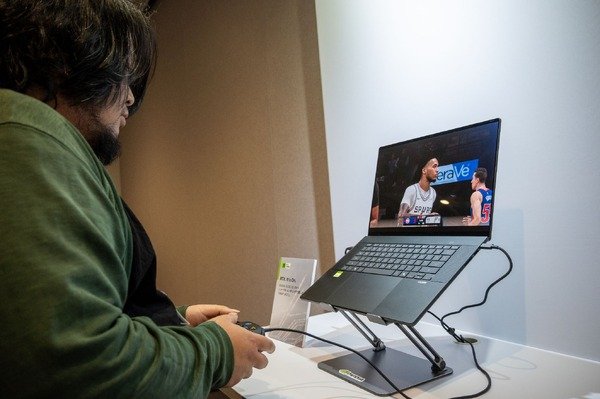
In terms of graphics, RTX Spark supports DLSS 5 when it is launched. "3D Guided Neural Rendering" can supplement lighting and material details based on the game engine output, and frame generation can also automatically switch between 2x, 4x and 6x. In the live demonstration, "NBA 2K27" turned on neural rendering and frame generation, and "Marvel Confrontation" ran in Arm native mode.
The device also demonstrated local AI uses such as email and calendar organization, programming, video enhancement, and automatic editing. Currently, the prices of products equipped with RTX Spark exceed 500,000 yen. They are positioned more towards users who need local AI, content creation and gaming functions at the same time, rather than simply replacing high-performance gaming notebooks at the same price.
Comments