
Abstract:
Microsoft is improving the troubleshooting capabilities of Windows graphics systems by integrating GPU crash diagnosis with the DirectX dump file mechanism to help developers collect more valuable debugging information when graphics applications crash. This improvement is designed to simplify the analysis process of graphics card-related failures, allowing game developers and graphics software developers to more accurately determine the source of the problem.
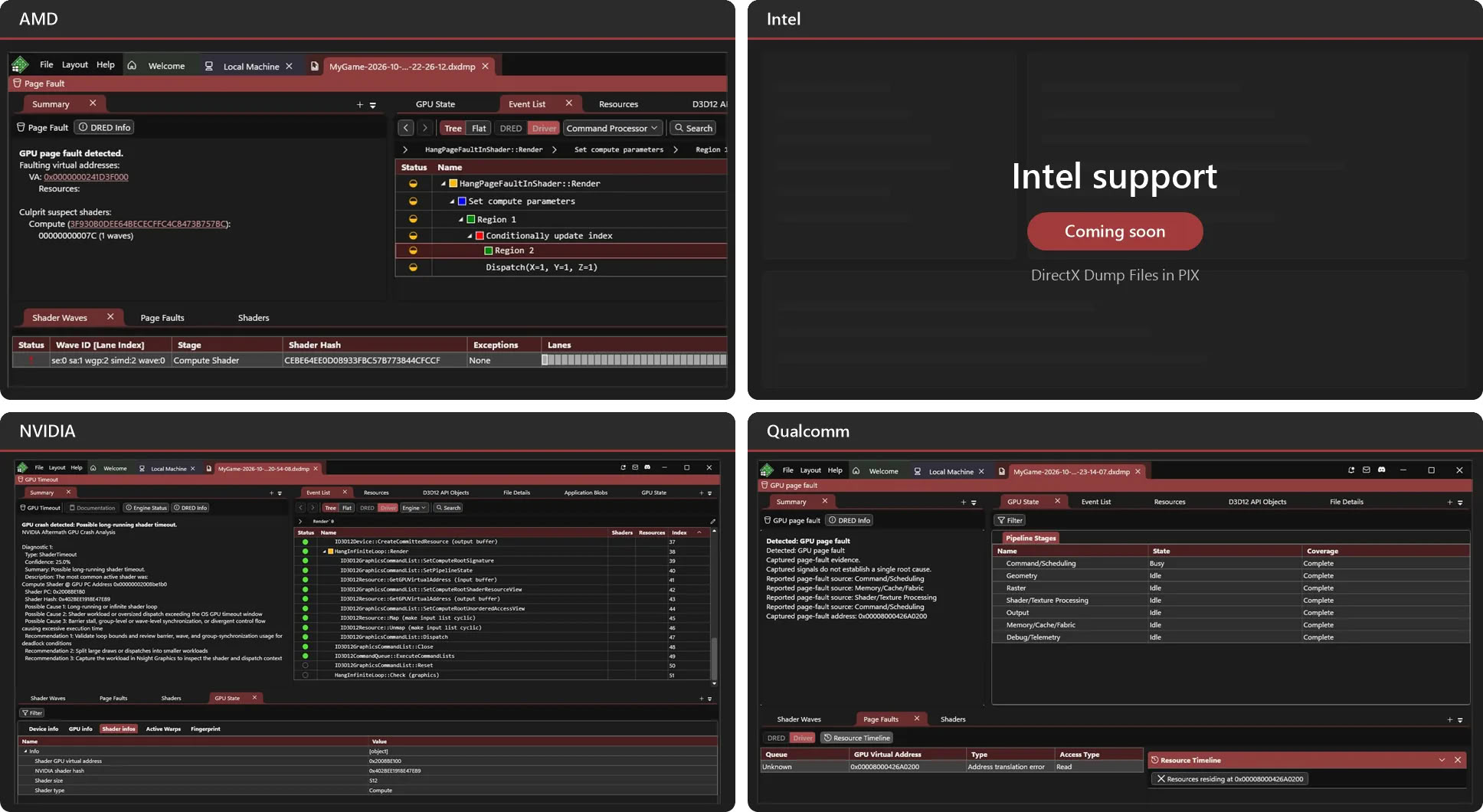
GPU crash has always been one of the more difficult problems in Windows game and graphics application development. When an abnormality occurs in the graphics card driver, GPU hardware, or graphics processing tasks, the application may suddenly exit, the screen may freeze, or even cause display abnormalities in the system. Since the way GPU performs tasks is significantly different from that of CPU, traditional application crash logs often cannot fully reflect the graphics processing status when the failure occurs, making it difficult for developers to troubleshoot problems.
DirectX is an important underlying technology for Windows platform games and graphics applications. By integrating GPU crash diagnosis and DirectX dump files, Microsoft hopes to establish a more unified fault information collection method so that developers can obtain relevant diagnostic data after a problem occurs and analyze abnormalities during GPU execution accordingly.
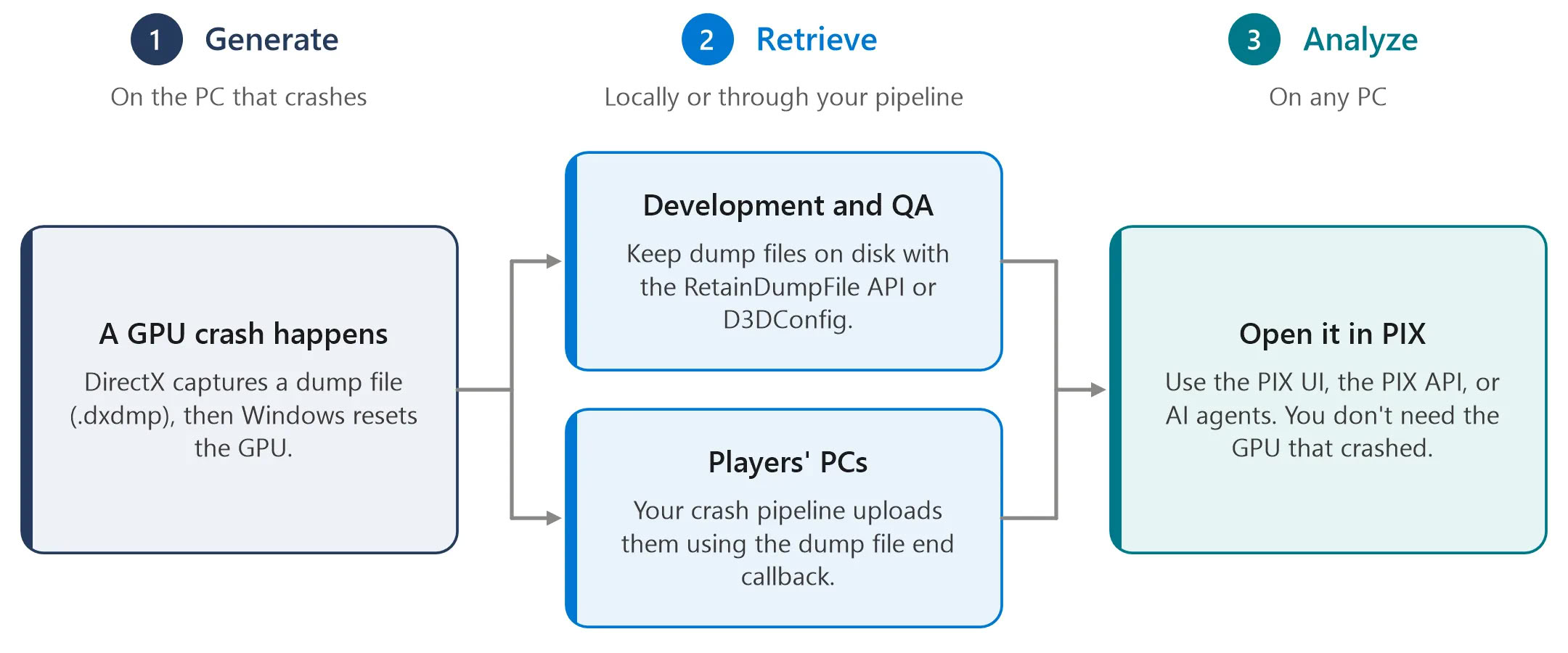
Dump files are usually used to record part of the running status of a program when it fails, such as thread information, memory content, and related execution context. For GPU crashes, it is especially important to be able to preserve diagnostic information related to graphics tasks, as the problem may involve command queues, resource access, shader execution, and interactions between the graphics driver and the application.
In the absence of sufficient fault site information, developers can often only speculate on the cause of the problem based on user feedback, log records, and limited recurrence conditions. The unified dump mechanism is expected to reduce this situation and allow the development team to more effectively analyze the operating environment when the failure occurred after obtaining the crash data.
This improvement is especially practical for game development. Modern games increasingly rely on complex graphics rendering processes and extensively use underlying graphics interfaces such as DirectX 12. As rendering technologies, hardware configurations, and driver versions continue to increase, certain faults may only occur under specific graphics cards, specific drivers, or specific operating conditions, making it difficult for developers to completely reproduce them in internal testing environments.
With better GPU crash dump support, developers can investigate these issues in a more targeted manner and determine whether the anomaly is related to the application's own graphics code, graphics card driver, or GPU execution status, thereby shortening fault location time.
However, a GPU dump file does not mean that all graphics card issues are automatically resolved. Diagnostic data still requires development tools and professionals to analyze, and the actual effect also depends on whether the dump content is complete, whether the fault can be effectively captured, and whether the relevant software and drivers provide sufficient information.
For ordinary Windows users, this type of improvement usually does not directly bring about an increase in game frame rate, nor does it mean that graphics card crashes will disappear. Its main value lies in improving the underlying diagnostic capabilities, allowing developers to have more effective troubleshooting methods when encountering graphics failures. As Windows graphics technology continues to evolve, improving the collection and analysis mechanism of GPU crash information is expected to help improve the stability of games and graphics applications and reduce some failures that are difficult to reproduce.
Note: It is currently impossible to directly verify the complete text of the original article, so the above content is compiled based on the article title and related technical background. Specific functional details, scope of application and release time may be different from the original article.
Comments