
Abstract:
Framework officially opened pre-orders for the new Framework Desktop equipped with AMD Ryzen AI Max+ PRO 495 processor on September 30. Although this mini desktop computer for local AI computing is priced extremely high, with the DIY version starting at US$6,799, the first batch of products was quickly sold out within hours after it went online, showing that there is a strong demand for large-capacity unified memory to locally run large AI models.
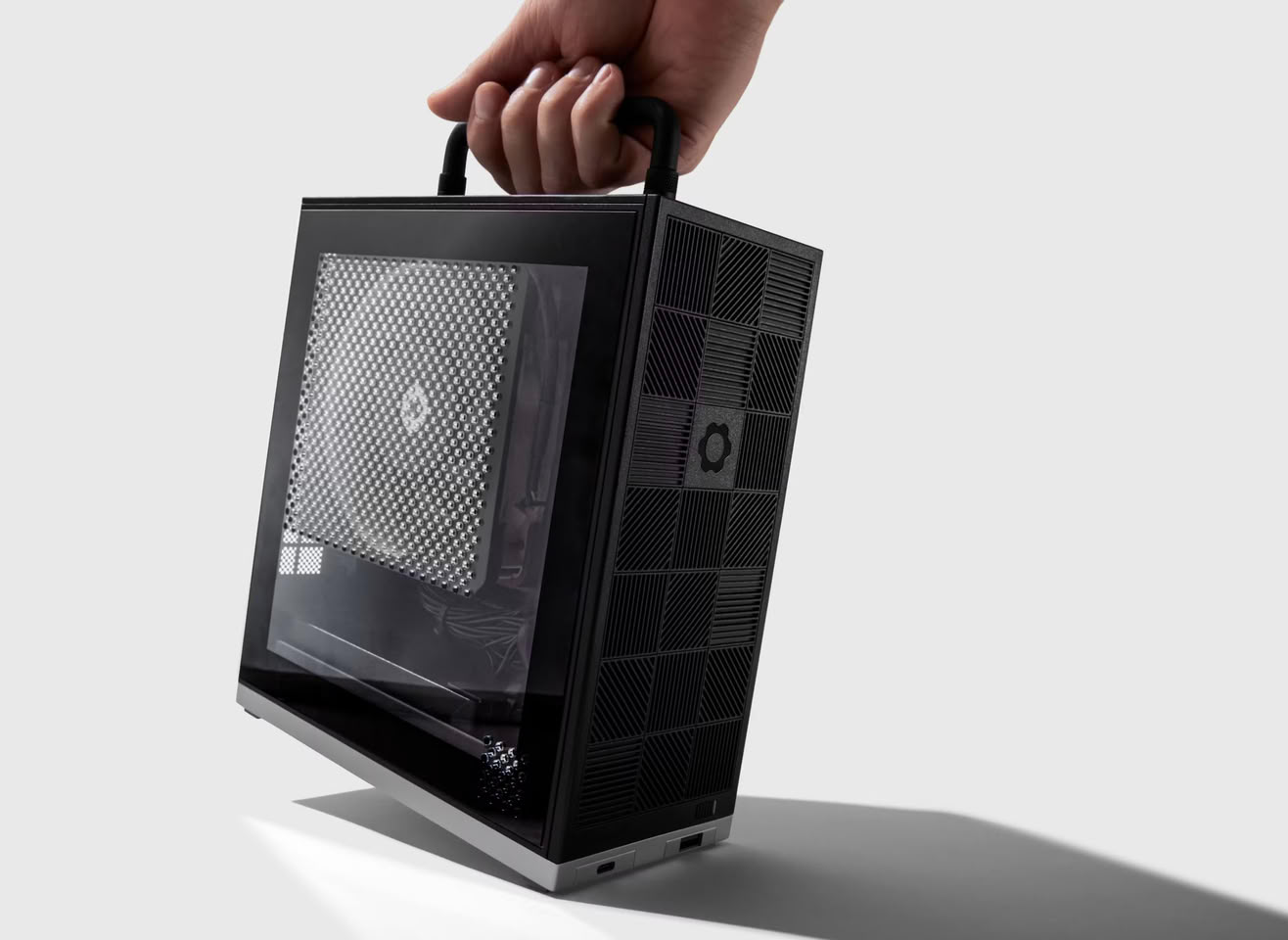
The flagship configuration launched by Framework uses AMD Ryzen AI Max+ PRO 495, a new generation processor code-named "Gorgon Halo", and is equipped with 192GB LPDDR5X-8533 unified memory. Compared with the previous Framework Desktop's maximum configuration of 128GB, the new version adds 64GB of memory at a time, allowing it to directly load larger-scale local AI models on a single machine without the need to frequently put some model weights into SSDs or form a cluster through multiple computers.
Ryzen AI Max+ PRO 495 uses a 16-core Zen 5 CPU with a maximum acceleration frequency of 5.2GHz, equipped with 64MB level 3 cache, a default TDP of 55W, a cTDP of up to 120W, and an integrated Radeon 8065S GPU. The CPU and GPU share unified memory, which is one of the important reasons why this product is particularly suitable for local AI inference. Framework said that 192GB of memory allows users to run large models that were previously difficult to fully load into memory on ordinary consumer PCs.
Compared with the previous Ryzen AI Max+ 395, the PRO 495 not only increases the memory capacity, but also has higher CPU and GPU clock frequencies, and increases the unified memory rate to 8533 MT/s. Framework said these changes can further improve AI inference speed.
The 192GB version provided by Framework this time includes the DIY Edition and the complete host version of the pre-installed system. The DIY Edition starts at $6,799 and includes 192GB of unified memory but no pre-installed storage. For users who already have an SSD or want to choose their own storage solution, this configuration can reduce some costs.
If you choose the full pre-installed version, the price reaches $7,449. This version adds a 2TB NVMe PCIe 4.0 SSD and comes pre-installed with the Fedora 44 KDE Plasma Edition operating system. In other words, just adding 2TB SSD and pre-installed system, the price of the whole machine is $650 higher than the DIY version.
For comparison, the current Framework Desktop with Ryzen AI Max+ 395 and 128GB memory is priced at approximately US$3,449. The new 192GB version has 50% more memory and an upgraded processor, but the DIY version is almost twice as expensive as the original 128GB version.
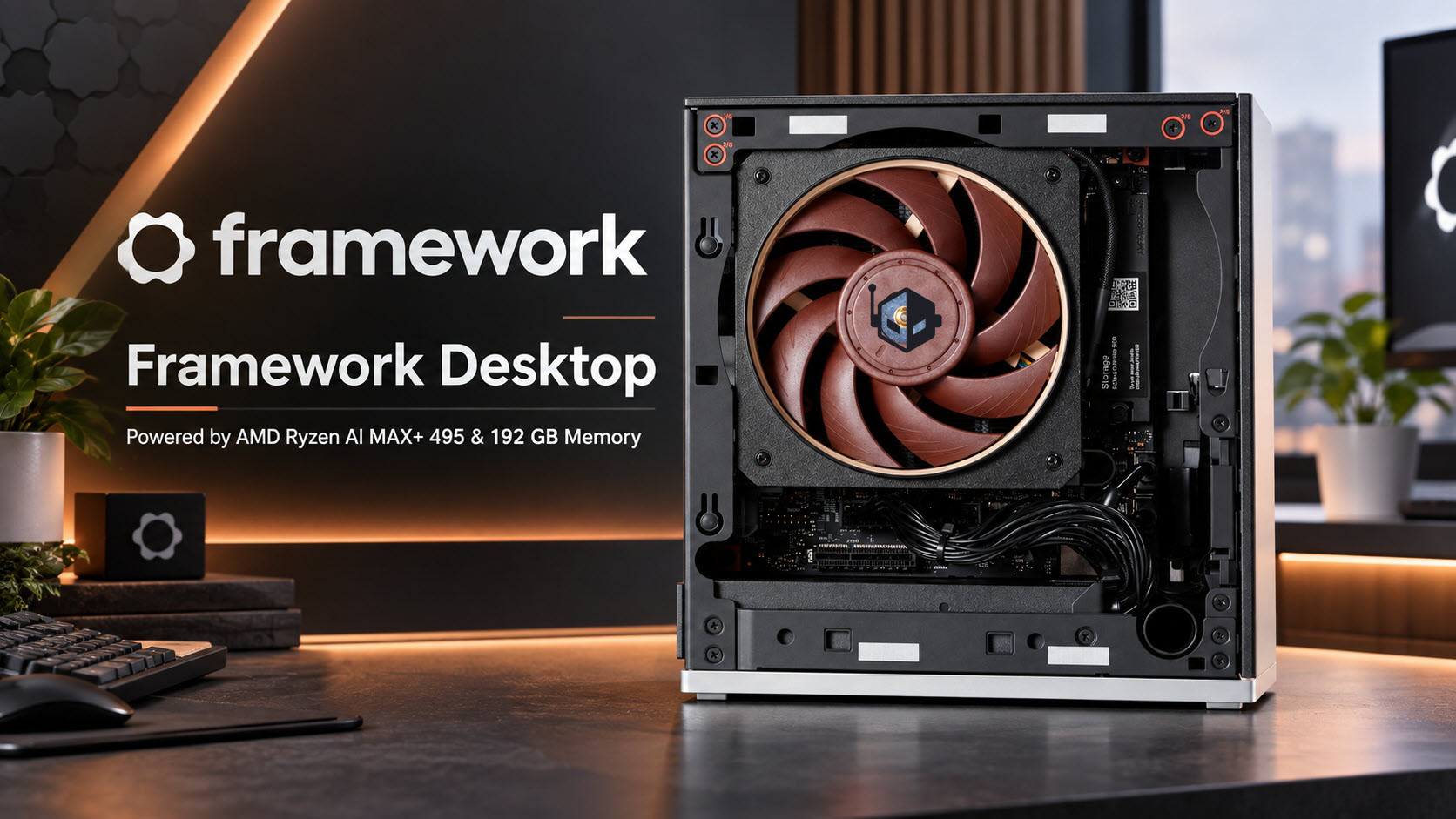
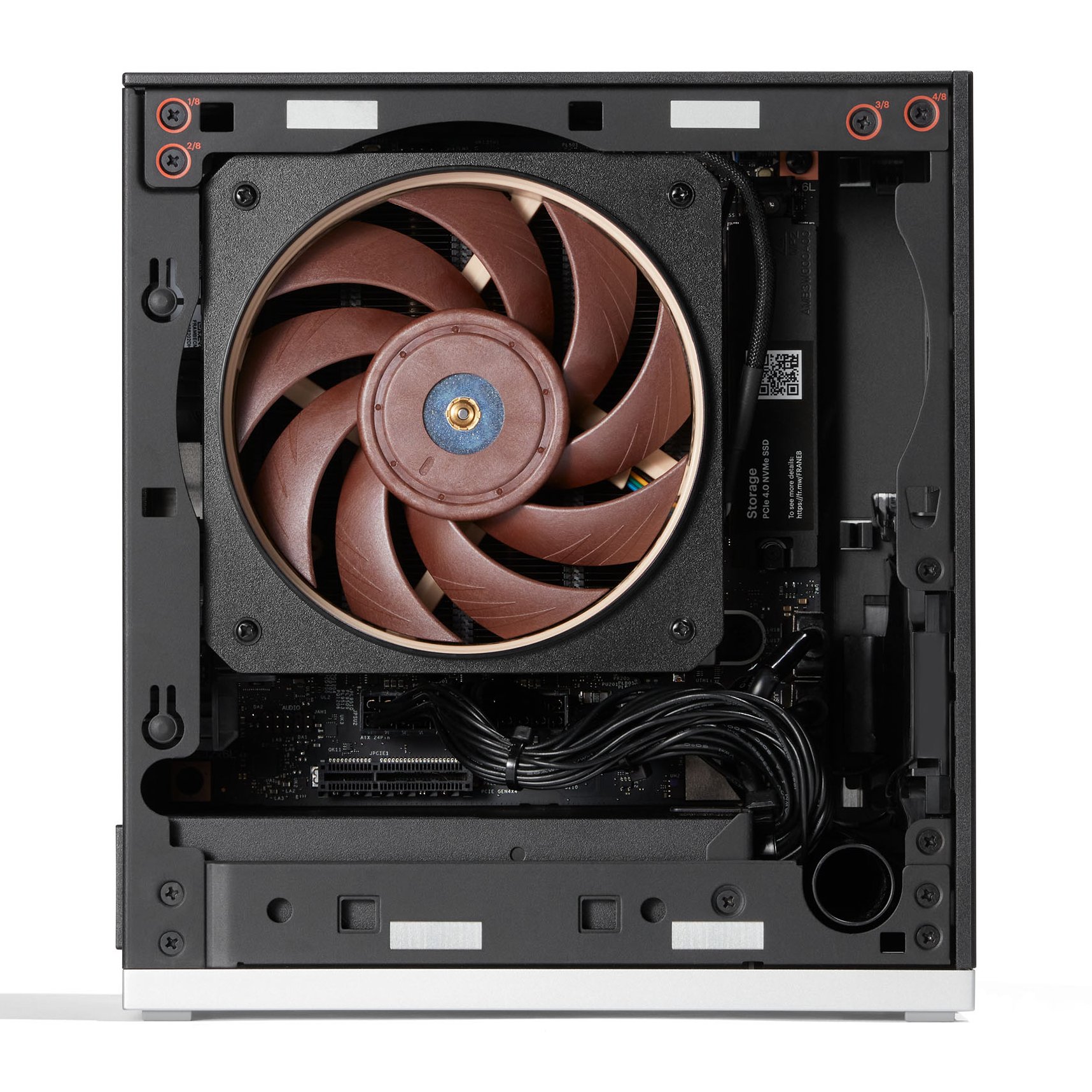
Such a high price is directly related to the recent continued tension in the memory market. Framework has stated many times before that the cost of high-capacity LPDDR5X memory is rising significantly, especially the tight supply of 128Gbit high-density memory particles, which has a very obvious impact on the cost of large-capacity unified memory devices. The price of this 192GB version is therefore much higher than the previous regular configuration of Framework Desktop.
In fact, Framework stated before the product was officially opened for pre-order that due to limited memory inventory, it would only be able to provide a batch of 192GB Gorgon Halo systems initially. After pre-orders started on September 30, the first batch of products sold out quickly. Framework later said that the company had managed to secure an additional batch of memory, so it opened a second limited batch of pre-orders.
The second batch of products is expected to be shipped from November. However, Framework also reminds consumers that the price and time to market of the next few batches of products will depend on the cost and supply of memory suppliers. The company even made it clear that the price of Framework Desktop may continue to rise in the coming months.
For local AI users, the 192GB unified memory is the biggest attraction of this machine. Traditional PCs usually rely on independent graphics card memory to run large AI models, while the memory capacity of high-end GPUs is usually limited by a single card. If the model cannot be completely placed in the video memory, system memory or even SSD must be used for data exchange, and performance may be significantly affected.
Framework Desktop adopts an architecture in which CPU, GPU and AI computing share a unified memory, which can directly allocate a large amount of memory to the GPU. The 192GB capacity means that users can run very large local models in a small computer of around 4.5 liters. Framework said that the additional 64GB of memory can not only load a larger single model, but also save two smaller models in memory at the same time, allowing a faster model to be responsible for the main interactions, and letting another more capable but slower model take on complex problems.
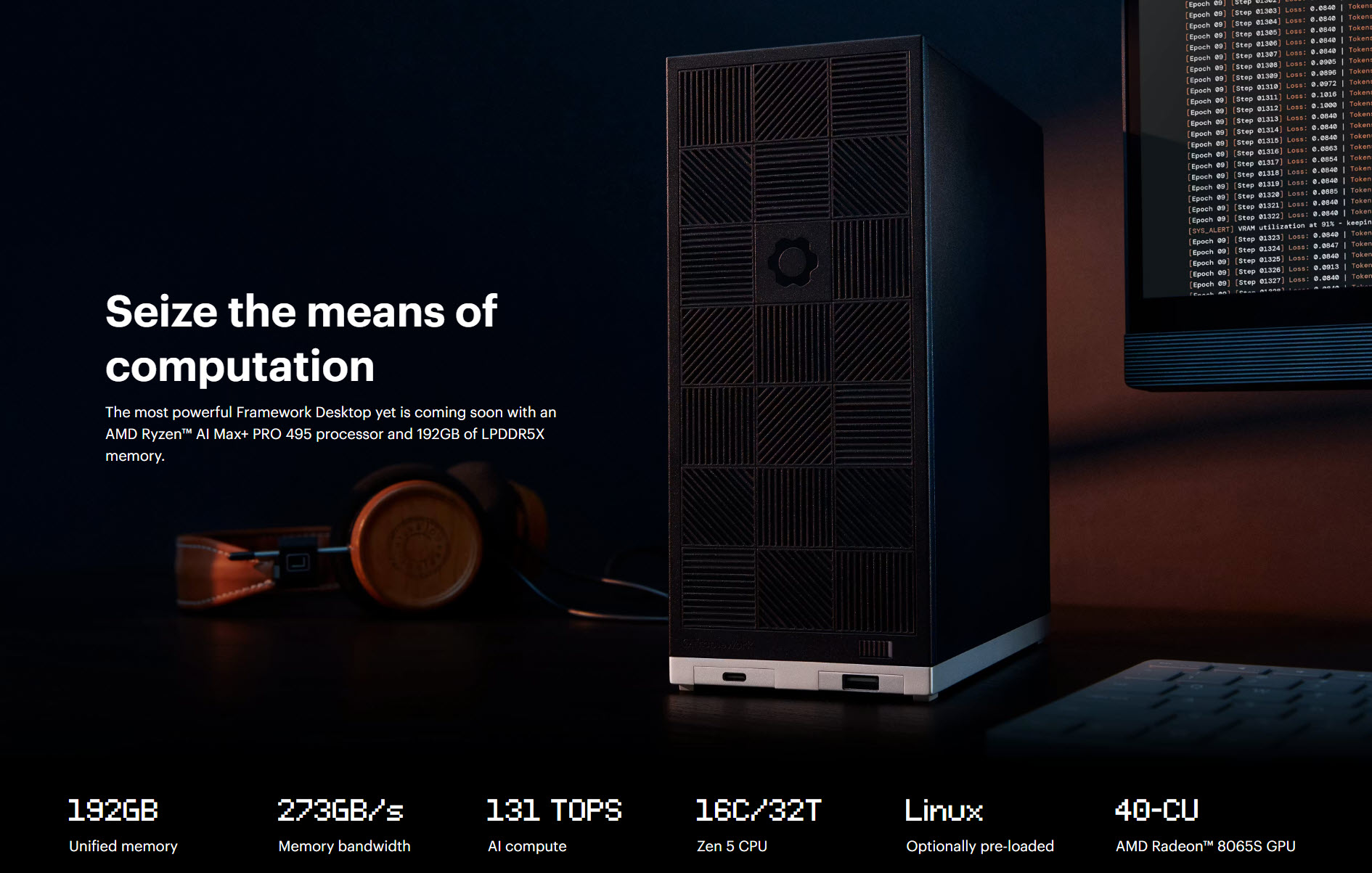
Framework also specifically emphasizes that this configuration is attractive to users who want to run AI completely locally. The model can stay in the local device without uploading the data to the cloud. For scenarios involving privacy, source code or sensitive business data, local operation can reduce dependence on cloud AI services.
However, 192GB unified memory does not mean that all 300 billion parameter-level models can run at high speed. Model size, quantization method, context length, and actual memory footprint all affect final performance. Large-capacity memory solves the problem of "can the model be installed", and the model inference speed also depends on the GPU computing power, memory bandwidth and software optimization.
The overall volume of Framework Desktop is only about 4.5 liters, so this machine is closer to a very small local AI workstation than an ordinary mini PC in the traditional sense. In addition to AI computing, it can also undertake tasks such as gaming, development, and Linux desktop work, and Framework continues to emphasize its modular design concept.
Currently, Framework Desktop already provides different memory configurations such as 32GB, 64GB and 128GB, and the 192GB version has become the flagship model of the entire product line for local AI users. As AMD continues to improve its unified memory capacity and AI computing capabilities, this "CPU+GPU+large-capacity shared memory" architecture is also becoming an important route for running large language models locally.
The first batch of 192GB Framework Desktop was sold out quickly despite the starting price of US$6,799, indicating that some AI developers and local model enthusiasts have very strong demand for large-capacity unified memory devices. However, the first batch of products is itself limited by memory supply, so sold out does not directly represent the general scale of demand in the entire market. The real key to determining whether this product can be further popularized remains future memory prices, supply, and the demand for local hardware for larger-scale AI models.
Comments