
Abstract:
The Linux kernel development team has merged a batch of updates to the PCI/PCIe subsystem into the Linux 7.4 kernel under development. In addition to fixing issues in PCI device enumeration, driver binding, and error recovery, this update also specifically improves the power management behavior when the system resumes from hibernation, helping Linux devices meet some energy efficiency certification requirements.
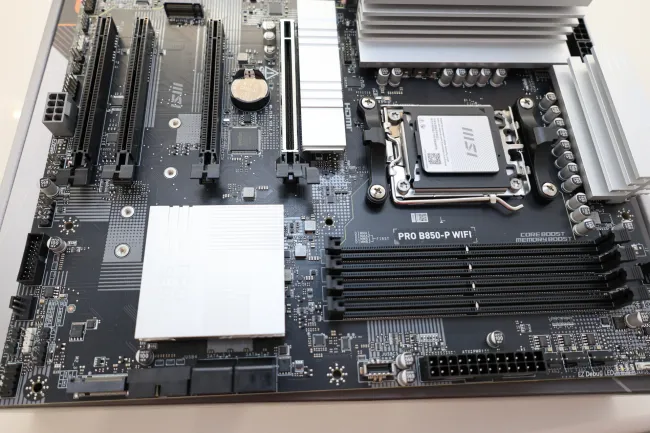
PCI (Peripheral Component Interconnect) is an important interface for computers to connect expansion devices, while PCI Express (PCIe) is currently a widely used interconnect standard for graphics cards, NVMe solid-state drives, network cards and other high-speed devices. The PCI subsystem in the Linux kernel is responsible for identifying and configuring these devices, managing the relationship between devices and drivers, and handling errors that occur during device operation. As hardware platforms continue to evolve, this part of the kernel code needs to continue to adapt to different processor architectures, firmware implementations, and PCIe devices.
In this PCI update of Linux 7.4, a noteworthy improvement involves system hibernation. When modern computers enter hibernation, they need to save the running state to a storage device and re-establish the necessary hardware operating environment when recovering. If the power management behavior during the device recovery process does not meet expectations, it may affect whether the system can successfully pass relevant energy efficiency certifications.
The new version has been improved to address this issue, focusing on making Linux's hibernation behavior better comply with energy certification requirements for system power management. Such changes are particularly important for laptops, computers pre-installed with Linux, and devices that require specific energy efficiency certifications. However, this update does not mean that the power consumption of all Linux devices will be significantly reduced. Its main goal is to improve specific behaviors during the hibernation and recovery process.
In addition to power management, this PCI subsystem update also covers device enumeration and configuration. Device enumeration is the process of identifying PCI devices, reading their capabilities, and configuring related resources when the operating system starts or detects hardware. The update corrects the way some platforms handle setting PCIe link support speeds so that SPARC64 and PowerPC systems using specific device tree paths can also correctly record PCIe link speed capabilities.
In terms of PCIe maximum payload size (MPS) management, developers have also fixed a state saving issue. When the kernel adjusts the device's MPS settings, it will update the saved state synchronously to avoid reloading inappropriate old values when the device is subsequently restored. Such fixes help ensure that the device configuration remains consistent after reset, restore, etc.
The error handling mechanism has also been improved. The PCIe Advanced Error Reporting (AER) mechanism is used to detect and handle errors that occur in the operation of PCIe links or devices. The relevant code of Linux 7.4 fixes the memory leak that may occur during the error recovery process, and adjusts some error recovery logic to avoid unnecessary recovery operations for false alarms. For long-running servers and workstations, these types of fixes can help improve system stability.
In addition, this round of updates also involves PCIe port function management and driver binding logic. Kernel developers have centralized ownership checks for some functions so that the code can more consistently determine whether the host controller has native control capabilities for the corresponding functions, reducing repeated checks and potential configuration errors.
It is worth noting that improvements in the PCI subsystem usually do not directly manifest as a substantial improvement in the performance of a certain hardware. They involve more low-level mechanisms such as device initialization, configuration recovery, error handling, and power management. For most ordinary users, these changes may not bring immediate experience differences, but they can provide more reliable basic support for different hardware platforms.
Linux 7.4 is still in the development stage. This merger means that relevant changes have entered the kernel mainline development process, but it does not mean that the official stable version has been released. The final version may also contain further fixes and tweaks.
In general, the PCI/PCIe update of Linux 7.4 mainly focuses on system reliability and hardware compatibility, and the improvement of hibernation recovery behavior is particularly worthy of attention. As Linux continues to expand its use in laptops, desktop workstations and servers, these seemingly minor underlying fixes will help improve the operating system's ability to adapt to complex hardware environments.
Comments