
Abstract:
As the next generation of graphics processors approaches, AMD is accelerating the work of paving the way for new hardware in the Linux open source ecosystem. The latest AMDGPU Linux kernel driver patch shows that AMD engineers are actively promoting support and underlying adaptation of GDDR7 video memory technology to prepare software for the upcoming new generation of graphics cards.
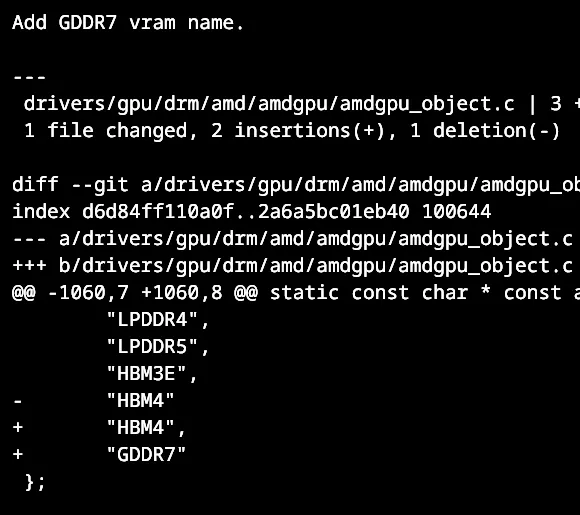
In the latest driver update and patch submission, AMD has introduced detection, frequency monitoring and power management code specifically for GDDR7 video memory for the AMDGPU kernel driver module. Patch information shows that AMD engineers not only introduced new data structures and register definitions for GDDR7, but also optimized the driver layer's support for GDDR7's unique high-speed point-to-point bus, Pam3 encoded signal processing, and dynamic voltage and frequency adjustment (DVFS) mechanisms to ensure that the new generation of graphics cards can stably exert the advantages of high bandwidth and high energy efficiency under Linux systems.
Although AMD did not directly specify the specific consumer-grade graphics card model in the publicly released code patch, based on industry trends, these underlying preparations clearly point directly to the Radeon RX 8000 series graphics cards based on the RDNA 4 architecture. With the official implementation of the GDDR7 standard by the JEDEC Solid State Technology Association, the new generation of video memory can provide a transmission rate that is double that of the previous generation of GDDR6, greatly alleviating the video memory bandwidth bottleneck in high-resolution rendering and complex computing scenarios.
AMD integrated GDDR7-related support code into the mainline Linux kernel several months in advance, aiming to ensure that Linux users and enterprise-level platforms can achieve a good "out-of-the-box" experience when the next generation of graphics cards is officially launched. As relevant driver patches are gradually merged into the upcoming Linux kernel version, more hardware details and performance characteristics of AMD's next-generation GPU architecture will gradually emerge during code evolution.
Comments