
Abstract:
Humans have long viewed the brain as a whole organ. However, a disruptive new neuroscientific study suggests that this centuries-old conventional wisdom may need to be completely revised. Through high-precision analysis of cellular gene expression and neuron structure, researchers have discovered that the human brain is not a single organ in terms of function and organizational structure, but a complex complex composed of tens of thousands of "micro-organs" that operate independently and cooperate with each other.
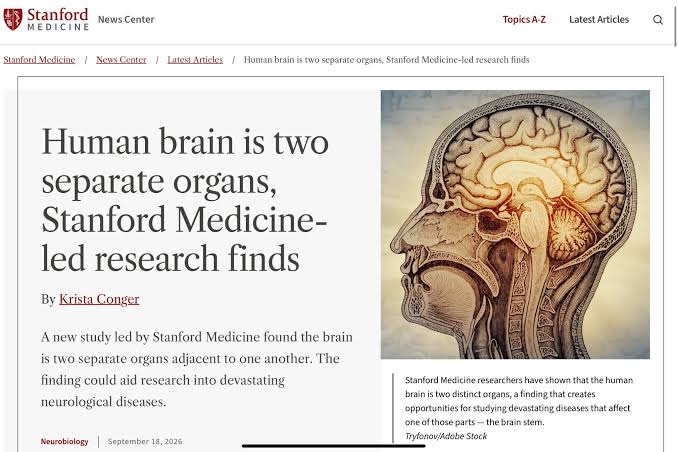
In this study, the scientific research team used single-cell RNA sequencing and spatial transcriptomics technology to conduct precise mapping of millions of neurons and glial cells in different areas of the brain. Research has found that cell communities in various tiny areas within the brain have extremely significant differences in gene expression patterns, metabolic mechanisms, and protein synthesis. These tiny cell clusters are like micro-factories with independent "identity codes", each following unique biological laws and undertaking highly specialized computing and information processing tasks.
The researchers explained that people were used to dividing the brain into large-scale regions such as the frontal lobe, parietal lobe, and cerebellum, but this was only akin to delineating the geographical boundaries of countries and provinces at a macro level. If you look deeper into the microscopic level, these large areas are actually filled with countless "miniature organs" that are completely independent at the anatomical and molecular levels. They are connected together through intricate neural networks and jointly maintain human perception, memory, decision-making and conscious activities in a manner similar to distributed computing.
This theoretical breakthrough not only refreshes human beings' basic understanding of their own central nervous system, but will also have a profound impact on future medical diagnosis and treatment of mental illnesses. Traditional diagnosis and treatment of neurological diseases often treat the brain as a unified whole for drug intervention, which explains why many neurological drugs are prone to cause a wide range of side effects. If precise targeted treatment can be implemented based on the new perspective of "micro-organ complex", specific micro-cell clusters that are damaged or diseased will greatly improve the cure rate and treatment safety of Alzheimer's disease, Parkinson's disease and various mental disorders.
Comments