
Abstract:
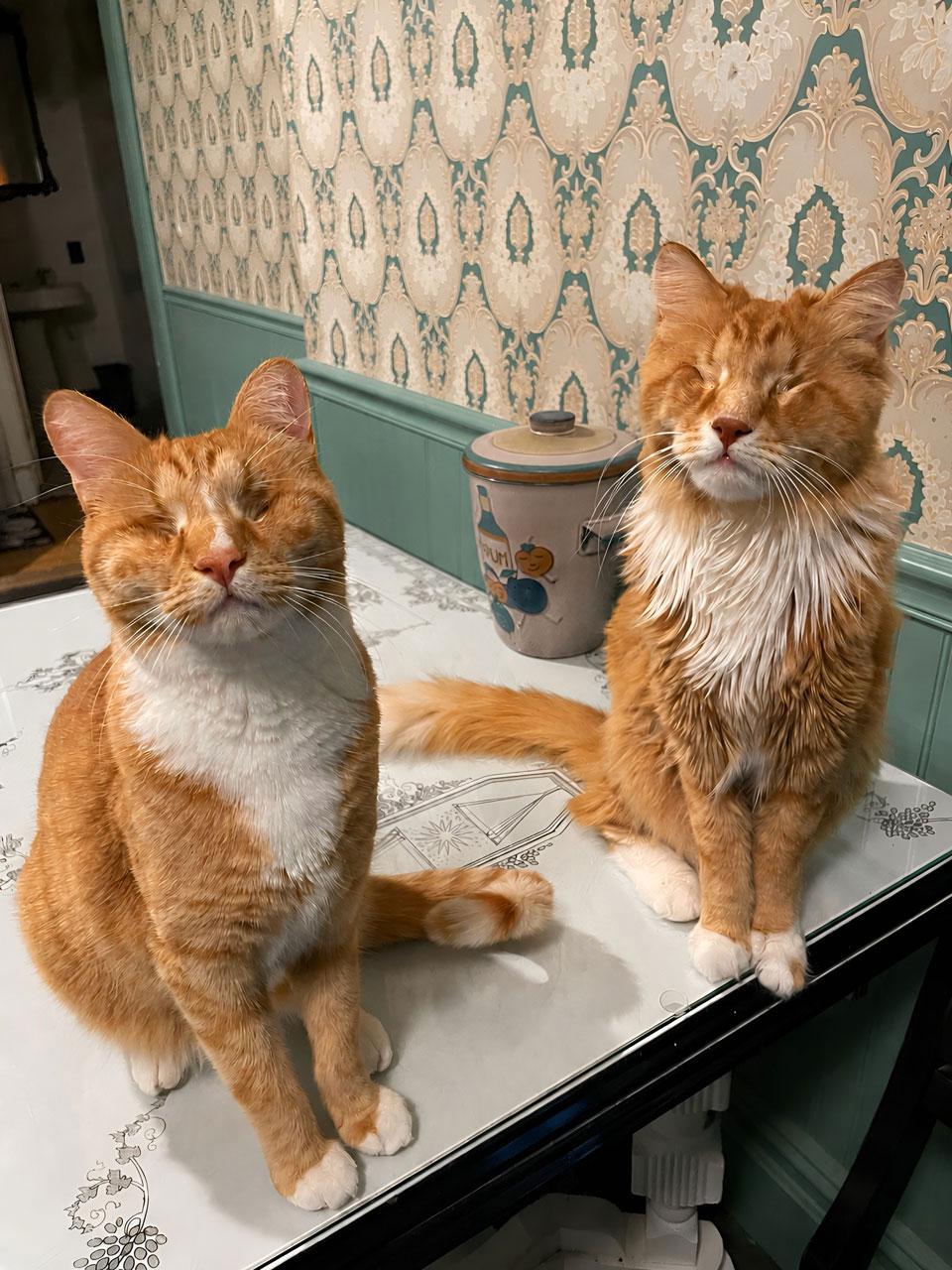
For the first time, scientists have obtained definite molecular evidence of Marfan syndrome in domestic cats. Researchers from the Cornell University School of Veterinary Medicine and the Baker Institute for Animal Health found that two cat brothers named Gary and Shaggy developed typical characteristics of Marfan syndrome at the same time, and through genetic sequencing confirmed that the cause was related to FBN1 gene abnormalities. The study, published in Scientific Reports on September 19, is believed to be the first complete clinical and molecular characterization of Marfan syndrome in domestic cats.
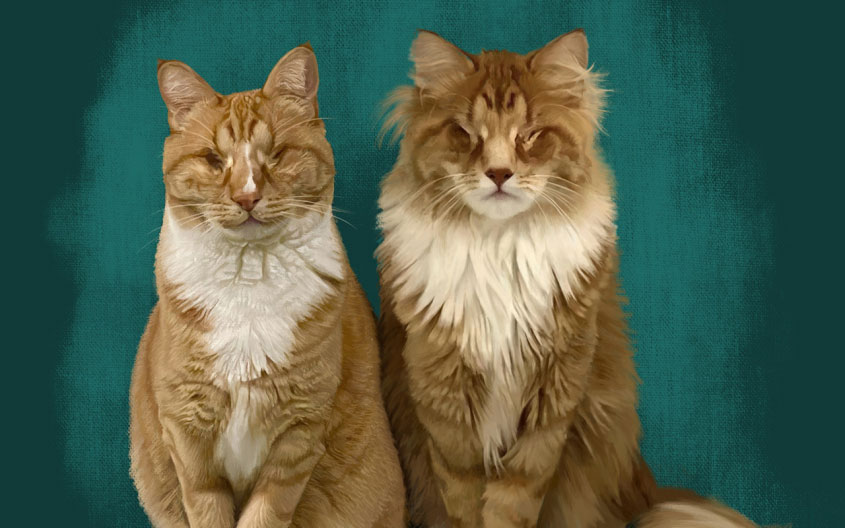
These two cats have shown different body characteristics from ordinary cats since they were young. They had significantly longer limbs. As they grew older, veterinarians further discovered that the lenses of both eyes were dislocated and the aortic roots were dilated. The combination of findings was so consistent with the classic features of Marfan syndrome in humans that researchers began to suspect they might have the genetic disorder, which had never been clearly documented in cats before.
Marfan syndrome is a genetic disorder that affects connective tissue throughout the body. Connective tissue is widely found in blood vessels, bones, ligaments, skin, eyes, etc., so the disease does not affect only one organ. In human patients, Marfan syndrome usually manifests as abnormal slenderness of limbs and fingers, dislocation of the lens of the eye, and dilation of the aorta. Aortic lesions are particularly worthy of attention, because in severe cases, they may lead to aortic aneurysm or even be life-threatening.
The researchers then conducted genetic analysis on Gary and Shaggy, hoping to determine whether they actually suffered from Marfan syndrome, which is similar to humans. Whole-genome sequencing ultimately revealed that both cats carried two abnormal copies of the FBN1 gene, one from each parent.
The FBN1 gene is responsible for producing a protein called fibrillin-1, which is an important component of connective tissue in humans and animals. Fibrillin-1 is involved in the formation and maintenance of elastic fiber structure. Therefore, abnormality of FBN1 may affect multiple systems such as bones, eyes, and blood vessels at the same time.
There is another very special thing about this discovery. In humans, Marfan syndrome usually only requires one copy of the FBN1 gene with a pathogenic variant to cause the disease, which means it is an autosomal dominant disease. But Gary and Shaggy carried two abnormal copies of FBN1 at the same time.
According to the general genetic mechanism, if both FBN1 copies have severe functional defects, it may theoretically lead to more severe diseases and even difficulty in surviving to adulthood. So the researchers further studied how these two abnormal genes affected the production of fibrillin-1.
It was found that this FBN1 mutation did not completely shut down the gene, but affected the splicing process of the gene's RNA. Specifically, the abnormal mutation is located in the splicing region near exon 22 of the FBN1 gene, causing some RNA transcripts to skip exon 22 during processing.
The researchers used Oxford Nanopore sequencing technology to analyze complementary DNA from affected cats and found that approximately 73% of transcripts had exon 22 skipping. This damages important structural regions of fibrillin-1 and reduces its normal function.
But the remaining transcripts were still able to be spliced in the normal manner, so the cat cells did not completely lose the ability to make normal fibrillin-1. The researchers refer to this situation as a "low-functional" or "partially preserved" variant, which means that although the two cats have two abnormal copies at the genetic level, they still retain part of the normal FBN1 function at the actual molecular level.
The researchers believe this likely explains why Gary and Shaggy were able to survive into adulthood despite carrying two copies of the abnormal FBN1. If this variant completely blocks fibrillin-1 production, the disease may become more severe.
The researchers also conducted pathological examination of the aortic tissue of one of the cats and found that the elastic fibers in the aorta were damaged and broken. This histological change is consistent with the degenerative changes in the aortic middle layer due to impaired fibrillin-1 function in human Marfan syndrome, further supporting the judgment that the two cats suffer from Marfan syndrome from the tissue structure level.
In addition, the researchers did not find the same FBN1 variant in a control group of more than 1,000 cats, further increasing the credibility of the association between the gene variant and the abnormal manifestations of the two cats.
This study was led by the Cornell University School of Veterinary Medicine and the Baker Institute for Animal Health, and was completed in collaboration with Ghent University in Belgium, the University of Pennsylvania, and the Schwarzman Animal Medical Center in New York. The research team combined veterinary clinical examination, imaging and histopathological analysis, and whole-genome sequencing to confirm the abnormal manifestations and genetic basis of the two cats at multiple levels.
The researchers say the discovery could first help veterinarians identify similar cases that may arise in the future. Previously, because there had never been a clear documented case of Marfan syndrome in cats, there was no mature diagnostic framework for feline Marfan syndrome to refer to when veterinarians discovered symptoms such as abnormally long limbs, lens luxation, and aorta dilatation.
With the confirmation of this case, veterinarians can consider testing for the FBN1 gene if they find a similar combination of symptoms in the future, thereby improving the accuracy of diagnosis. The researchers also believe that these findings may provide the basis for the development of feline genetic testing tools in the future.
The cases of these two cats also have certain comparative medical research value. Marfan syndrome has been studied in humans for a long time, but cases in animals that occur naturally and show highly similar characteristics to the human disease are uncommon. Therefore, Gary and Shaggy may become important natural animal models for studying FBN1 gene function and connective tissue diseases.
What is particularly noteworthy is that the two cats carrying two abnormal FBN1 copies are still able to survive into adulthood, providing scientists with new opportunities to study different degrees of FBN1 function decline. Researchers can further observe to what extent gene function declines before abnormalities in systems as diverse as the eyes, bones and aorta begin to appear.
At present, this research mainly confirms the clinical manifestations and genetic mechanisms of the disease, and does not mean that new treatments for Marfan syndrome in cats or humans can be developed accordingly. The researchers believe that more case and experimental studies are still needed in the future to further understand how FBN1 abnormalities affect the cat's body, and to what extent there are biological similarities between this feline case and human Marfan syndrome.
For Gary and Shaggy, their unusually long limbs were initially just a cosmetic quirk, but further examination revealed a genetic disorder involving the eyes, aorta and connective tissue throughout the body. This study not only confirmed Marfan syndrome in domestic cats at the molecular level for the first time, but also demonstrated that the combination of clinical observations of individual pets and modern genetic sequencing can discover genetic diseases that have never been recorded in the fields of medicine and veterinary medicine before.
Comments