
Abstract:
The field of synthetic biology has recently achieved significant milestones. The latest research by a scientific research team from the University of California, San Diego, USA shows that core enzymes naturally found in earth organisms can accurately recognize and transcribe an expanded version of the genetic code composed of eight chemical letters.
This discovery breaks through the inherent understanding that life has been constructed from only four bases for billions of years in nature. It proves that the existing molecular machinery of living cells is fully capable of processing artificially synthesized genetic information, laying a key molecular foundation for the future development of new precision medicine, targeted drugs and engineered biological systems.
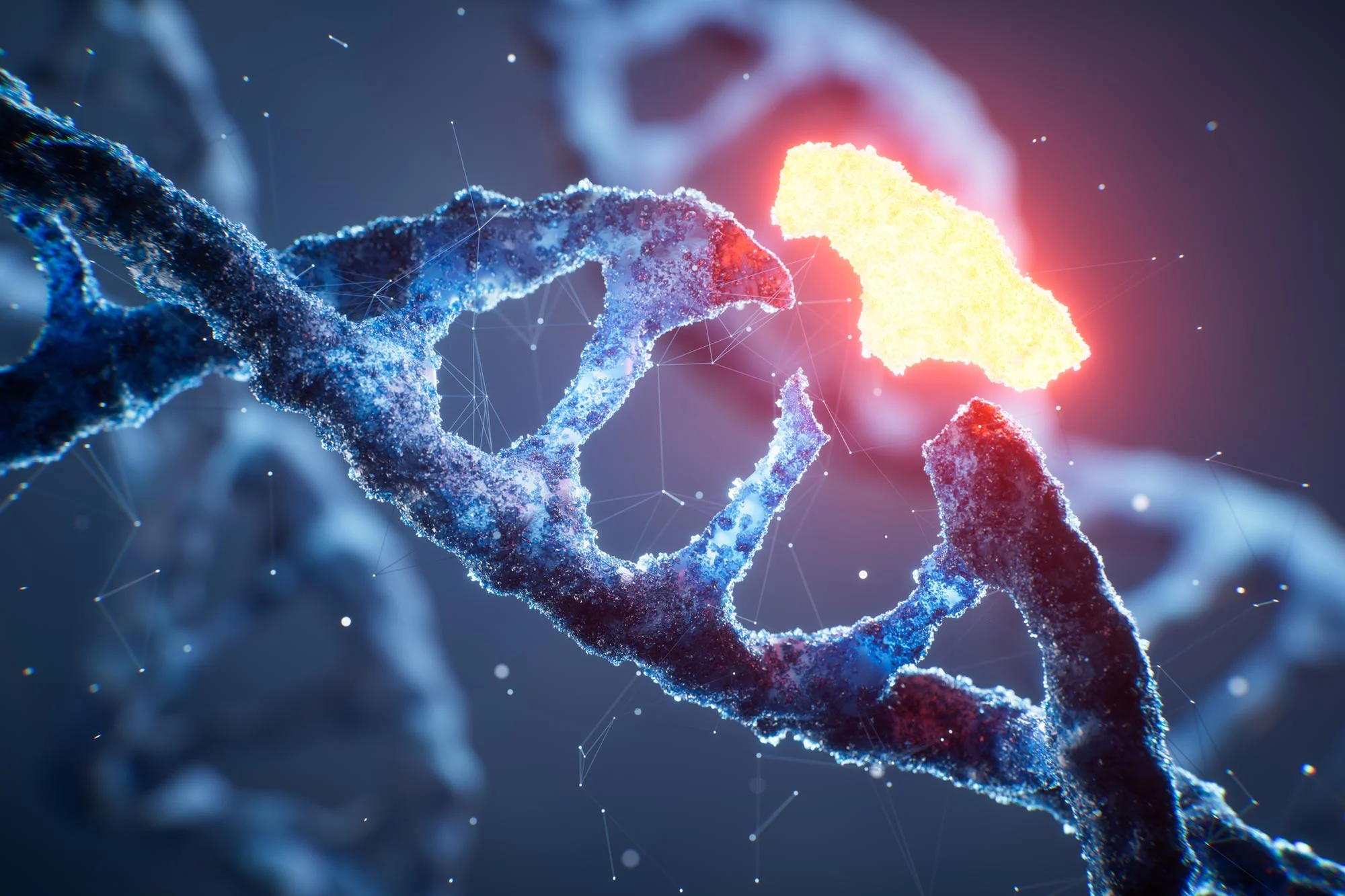
The genetic information of all known life forms on Earth is recorded in the DNA coding system consisting of the four chemical letters adenine (A), thymine (T), cytosine (C) and guanine (G). Although scientists have previously synthesized new bases in the laboratory that can be integrated into the double helix structure of DNA (such as the "eight-character DNA" system containing the four synthetic bases P, Z, B, and S), whether these unnatural letters can be accurately parsed by the reading mechanism inside natural cells has always been the core bottleneck for the practical application of synthetic biology.
In the latest study published in Nature Communications, the research team focused on the key enzyme of gene expression-RNA polymerase (RNA Polymerase). Researchers used cryo-electron microscopy (Cryo-EM) technology to successfully capture a dynamic snapshot of the three-dimensional structure of the RNA polymerase of Escherichia coli (E. coli) when it reads and transcribes synthetic bases at a high-resolution scale smaller than the width of a single atom. Experimental data show that when this natural enzyme processes synthetic base pairs, its transcription accuracy and efficiency are highly comparable to those of natural base pairs.
Structural analysis further revealed that RNA polymerase does not reject these synthetic letters as "foreign objects", but accurately recognizes them through structural and chemical signal nodes that are almost the same as those used to recognize natural bases. In addition, the research team also found in another supplementary study published in the Proceedings of the National Academy of Sciences (PNAS) that RNA polymerase can accurately recognize and transcribe even some unnatural base pairs that lack traditional hydrogen bonding forces, which greatly expands the design space of artificial genetic alphabets.
Expanding the genetic alphabet from four to eight means a geometric increase in information storage capacity. The 64 genetic codes originally composed of three letter combinations will expand explosively, making it possible to artificially design and synthesize new amino acids and functional proteins that do not exist in nature. The researchers pointed out that this technology has previously shown unique advantages in the field of molecular diagnostics such as targeted identification of liver cancer cells, and this time it has conquered the transcription mechanism of natural enzymes, which will completely clear the technical obstacles to using host cell bioreactors to produce synthetic drugs and advanced biomaterials.
Comments