
Abstract:
As artificial intelligence continues to be regarded as an important tool for changing the semiconductor research and development model, TSMC executives have recently publicly made a more cautious evaluation of AI capabilities. Mi Yujie, co-chief operating officer of TSMC, said that although artificial intelligence has been able to significantly improve the efficiency of chip design and software development, AI still cannot replace the core role of human engineers in creating the next generation of advanced manufacturing processes.
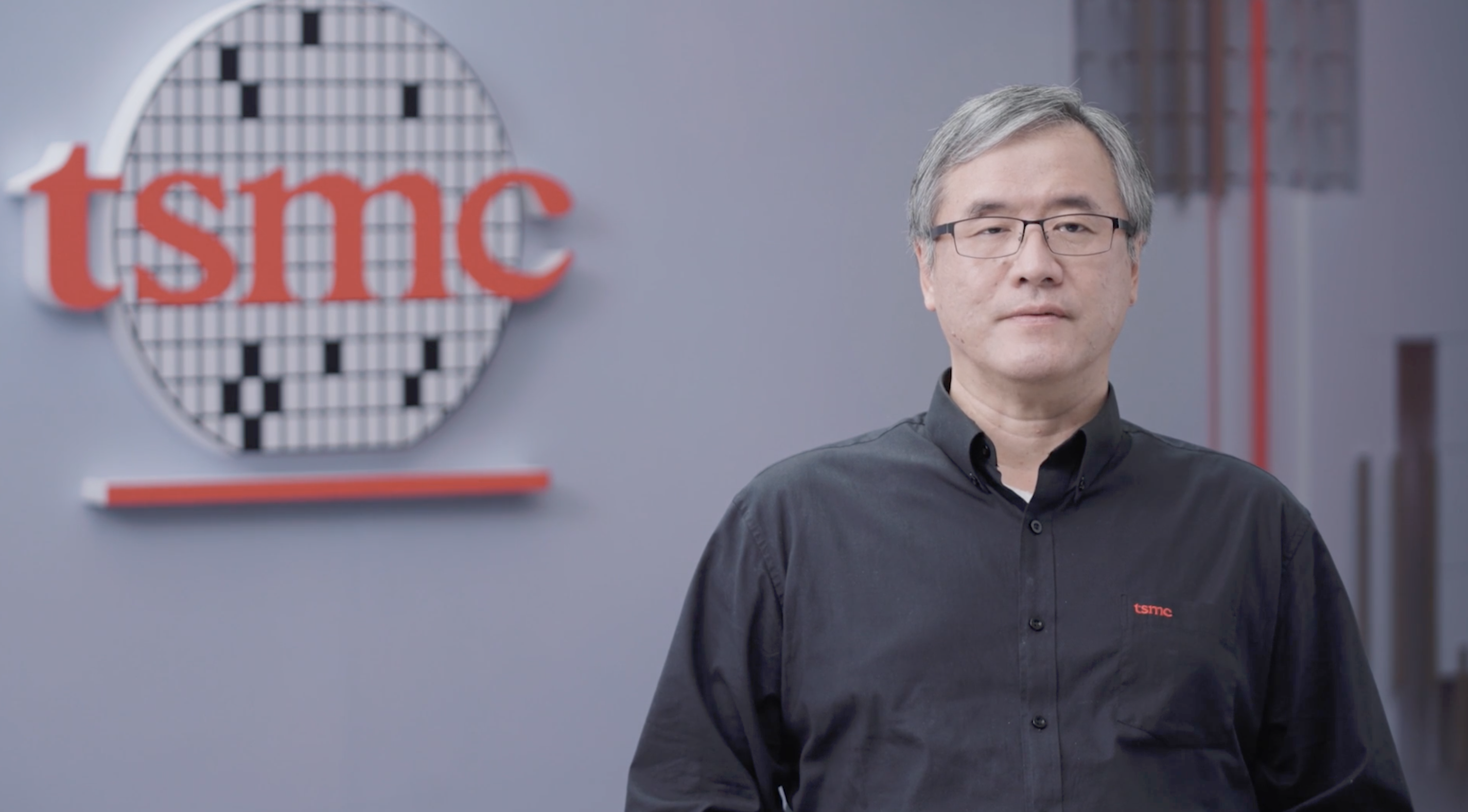
Mi Yujie expressed the above views at a related event at National Taiwan University. When talking about artificial intelligence, he compared it to "a three-year-old superman". Although it has powerful capabilities, it still lacks mature judgment. Therefore, humans should still play the role of final decision-maker when it comes to critical decisions and exploration of unknown territories.
As one of the most advanced chip manufacturing companies in the world, TSMC is currently promoting the research and development of future process nodes such as A14 (1.4 nanometer level) and more advanced A12, and is also building corresponding production facilities. For these next-generation technologies, Mi Yujie believes that artificial intelligence can help, but it cannot dominate the entire research and development process.
He said that TSMC has made extensive use of artificial intelligence in many fields, especially in software programming. Since programming tasks are relatively standardized and the relationship between input and output is clear, existing AI tools have demonstrated strong practical value.
In the field of chip development, artificial intelligence also plays an increasingly important role. Industry participants including Synopsys, Cadence and some Chinese EDA companies have begun to use intelligent agent systems to assist the electronic design automation process. AI can help engineers analyze and optimize complex circuits composed of millions or even billions of transistors, and can even complete some tasks faster than humans.
However, Mi Yujie emphasized that chip design and chip manufacturing technology research and development are not the same issue. In the existing chip design process, engineers are faced with clear rules and a large amount of historical data. Artificial intelligence can continuously optimize the results by learning from existing experience. However, the situation is completely different when developers need to create new process nodes that have never existed before.
Taking 1.4nm and more advanced processes as an example, R&D teams often need to face a large number of unknown variables. Many material properties, manufacturing methods, transistor structures, and process details have yet to be verified, and even basic experimental data does not exist. In such an environment, AI lacks a data basis for learning and reference, so its role will be significantly limited.
Mi Yujie believes that when humans enter the real exploration stage, the innovation process is essentially discovering new laws, rather than simply optimizing existing processes. For AI, if there is not enough data, it cannot rely on experiments, experience and intuition to continuously break through unknown boundaries like human engineers.
He further pointed out that even if artificial intelligence continues to advance in the future, it will not be able to break through physical limitations out of thin air. If existing equipment, materials, or manufacturing processes cannot meet a certain technical goal, AI itself will not automatically find a solution that transcends the laws of physics. What truly drives the development of advanced processes is still the scientific discoveries and engineering practices accumulated by a large number of researchers over the years.
In addition to talking about AI issues, Mi Yujie also mentioned the practical challenges facing TSMC’s international expansion. He believes that compared with building new factories, finding and cultivating outstanding senior management talents who can manage advanced manufacturing systems is also an important problem in the process of overseas expansion.
Currently, the global semiconductor industry is in a new growth cycle driven by artificial intelligence. At the same time, more and more companies are trying to introduce AI into chip design, manufacturing and operation management. TSMC has previously used artificial intelligence to monitor factory construction progress, improve safety management, and reduce risks during the construction of 1.4 nanometer factories.
However, judging from Mi Yujie’s statement this time, TSMC’s attitude towards AI is not blindly optimistic. As one of the developers of the most advanced processes in the world, the company believes that artificial intelligence is more suitable as a tool to improve efficiency and optimize processes, rather than replacing top engineers in core innovation tasks.
As advanced processes continue to approach physical limits, artificial intelligence may be able to help humans run faster, but it is still scientific discoveries, engineering breakthroughs and the creativity of researchers that determine the direction of next-generation semiconductor technology.
Comments