
Abstract:
Researchers at Monash University in Australia have discovered that an antibiotic resistance gene not only helps bacteria resist the drug, but may also change the way bacteria form spores, making them more resistant to the disinfectants and high-temperature washing conditions commonly used in hospitals. The study focused on Clostridioides difficile, a bacterium that can cause severe diarrhea and colitis, particularly in patients who have been treated with antibiotics, are frail or hospitalized. The findings reveal a previously underappreciated link between antibiotic resistance and the ability of bacteria to survive in their environment and raise new challenges for hospital infection control.
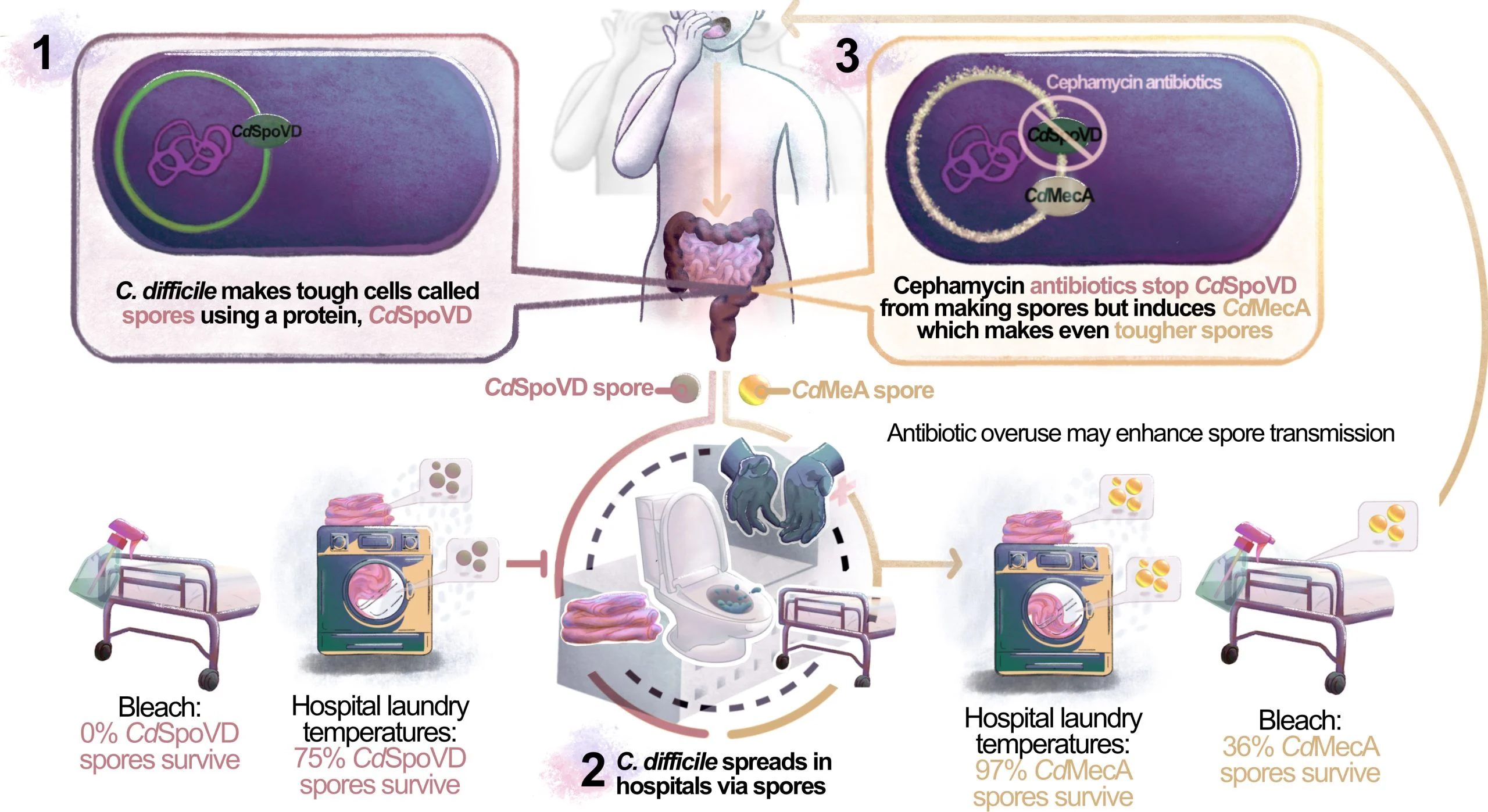
Relevant research was conducted by scientists from the Biomedical Discovery Institute of Monash University, and the paper was published in Nature Communications on July 15, 2026. Researchers have discovered that a gene that confers antibiotic resistance to Clostridium difficile also affects the bacterial spore formation process, making the spores more resistant to environmental conditions. This means that when bacteria acquire resistance, they may not only be more difficult to eliminate with drugs, but may also be more likely to survive in the environment outside the patient's body and continue to spread.
Clostridium difficile is a troublesome pathogen in healthcare settings. It is often present in transmission chains associated with intestinal infections and can cause severe intestinal inflammation and diarrhea under certain conditions. Infections can have serious consequences for older adults, people with weakened immune systems, and hospitalized patients being treated for other illnesses.
An important reason why this bacterium is difficult to completely control is its ability to form spores. Spores can be understood as a highly tolerant state formed by bacteria in unfavorable environments, similar to how plant seeds enter dormancy when conditions are unfavorable. Compared to regular bacterial cells, C. difficile spores are able to survive longer in the environment and resist a variety of adverse factors.
When the spores enter the human intestine and encounter suitable growth conditions, they may re-germinate and return to active bacteria. Therefore, even if symptoms improve after treatment, patients may still experience recurrence of infection due to the re-germination of residual spores.
The environmental tolerance of the spores also makes C. difficile particularly susceptible to hospital-based spread. Contaminated bed rails, medical equipment, bathroom surfaces and other items can serve as vectors for the spread of pathogens. If cleaning and disinfection measures are not effective in removing spores, other patients may become infected through contact with the contaminated environment.
The survivability of spores is important because spores are one of the main ways these pathogens spread from person to person, as well as in hospitals, homes and the environment, said lead author Yogisha Srikanta, a postdoctoral researcher at Monash University's Biomedical Discovery Institute.
The research team discovered this time that an antibiotic resistance gene in Clostridium difficile produces a protein that can replace a key protein in the spore formation process. Through this alternative mechanism, bacteria are able to continue to form spores even in the face of antibiotics that would otherwise block the process.
What's more remarkable is that this protein replacement doesn't just allow the bacteria to bypass the antibiotic's inhibition of sporulation, it also changes the properties of the resulting spores. Studies have found that these spores are more resistant and able to survive certain disinfection treatments and high-temperature washing conditions.
In other words, antibiotic resistance genes may do more than is commonly understood. Traditionally, researchers have focused on how resistance genes change bacterial sensitivity to drugs, for example by changing drug targets, damaging drug molecules, or affecting the process of drugs entering cells, making it difficult for antibiotics to work. But this study shows that resistance genes may also change the biological characteristics of bacteria, further affecting their ability to survive in the environment outside the host.
Study leader Dena Lelas, a professor at Monash University, said antibiotics are driving bacteria to evolve in ways that were not fully anticipated before. Bacteria can not only gradually develop the ability to resist drugs, but may also improve their survival probability in specific environments by changing their own structure and survival strategies.
This discovery provides a new perspective on understanding the transmission mechanism of drug-resistant bacteria. If a drug-resistant gene can help bacteria resist treatment and form more tenacious spores, bacteria carrying the gene may have the best of both worlds: they will be more difficult to eliminate from the patient's body and more likely to remain transmissible outside the patient's body.
However, this does not mean that all antibiotic-resistant bacteria will form spores that are more resistant to disinfection, nor does it mean that all resistance genes have similar effects. This study focused on Clostridium difficile and its specific resistance mechanisms, and the results cannot be directly generalized to all bacteria or all antibiotics.
The findings also raise further concerns about hospital infection control measures. Hospitals often use a combination of surface cleaning, disinfectant treatments, medical device management, and fabric laundering to reduce the risk of pathogen transmission. However, C. difficile spores are inherently resistant to environmental conditions, and if certain strains form spores that further enhance resistance to disinfection treatments, the effectiveness of routine cleaning measures may be compromised.
This does not mean that the hospital’s existing disinfection measures have become ineffective. Different disinfectants, treatment times, temperatures and surface conditions all affect the final outcome, and infection control for C. difficile often requires specialized cleaning and disinfection protocols. What the research reveals is a potential risk that deserves attention: changes in drug resistance may affect the behavior of pathogens both inside and outside the human body. Therefore, infection control strategies need to focus on biological changes in the bacteria themselves, rather than just considering the effects of drug treatment.
Antibiotic resistance has become a major challenge to global public health. When bacteria gradually lose sensitivity to existing drugs, doctors have fewer treatment options, infections may become harder to treat, and patients may need more complex treatments. The World Health Organization has long classified antimicrobial resistance as an important global health threat.
Clostridium difficile infection in particular highlights the complex relationship between antibiotic use and intestinal microecology. Antibiotics play an important role in treating certain bacterial infections, but they can also disrupt the balance of normal flora in the gut. When protective flora are reduced, C. difficile may gain a more favorable environment to grow. Therefore, some patients may be more susceptible to C. difficile infection after receiving antibiotic treatment.
In this case, if the pathogen has both greater drug resistance and environmental survivability, the treatment and prevention of infection may face dual challenges. Not only do healthcare facilities need to select appropriate medications, they must also prevent the re-transmission of pathogens through contaminated environments.
The researchers believe that finding new control methods for the spores themselves may become an important direction for future research. If we can effectively prevent sporulation, reduce the environmental tolerance of the spores, or find treatments that reliably remove these spores, we have the opportunity to interrupt the spread of infection at an early stage in the transmission chain.
However, this current research mainly reveals the connection between drug resistance genes, spore formation mechanisms and environmental tolerance, and does not directly provide a new treatment that can be used in daily clinical or hospital disinfection. The research team is still exploring how to deal with this previously under-understood resistance mechanism. The relevant results are still in the process of further research and verification before they can form a mature clinical treatment plan or new disinfection technology.
The significance of this study is that it is a reminder that antibiotic resistance is not just a question of whether a drug can kill bacteria. Bacteria may simultaneously change their growth, dormancy, transmission, and environmental adaptation methods during the evolution process, making infection control more complex.
For Clostridium difficile, the ability to form tenacious spores is an important reason for its continued spread. Now researchers have discovered that specific resistance genes may further enhance this ability. In the future, how to combine rational use of antibiotics with more effective infection control and environmental disinfection measures will become an important direction in dealing with such pathogens.
Comments