
Abstract:
U.S. defense contractor General Dynamics Land Systems (GDLS) announced that it will cooperate with artificial intelligence technology company Primordial Labs to introduce natural language command and control systems into the U.S. Army's future ground combat vehicles. With the help of a software platform called Anura, tank and armored vehicle crews are expected to directly control vehicle sensors, switch communication channels, retrieve camera images, and interact with unmanned driving systems through voice commands in the future, without having to frequently operate complex buttons, switches, and nested control menus.
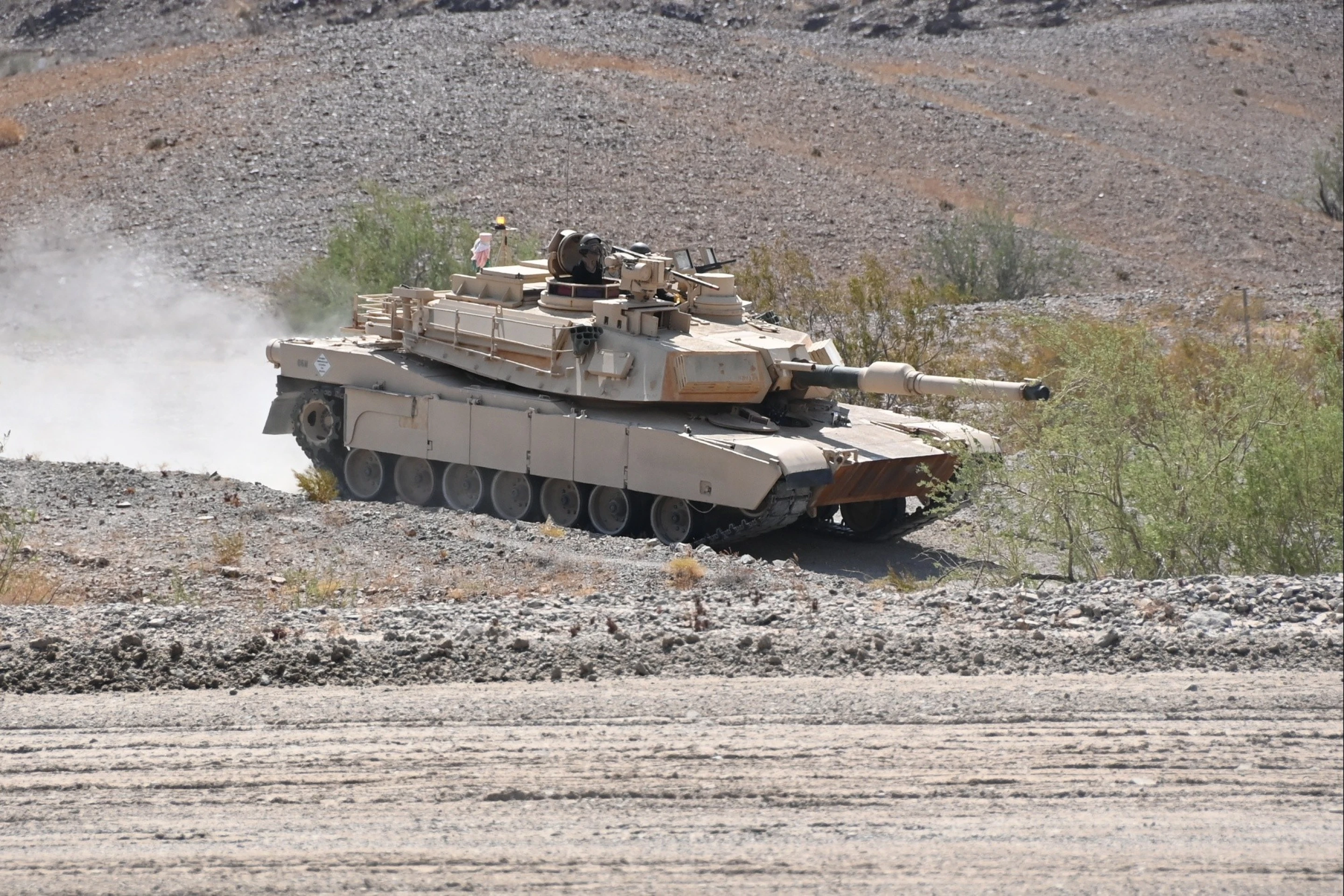
The two companies announced a master cooperation agreement on October 7, 2026, and plan to gradually expand the application scope of the Anura system in General Dynamics Land Systems' product portfolio. Potential application platforms include the M1 Abrams main battle tank, the Stryker armored fighting vehicle, and the next-generation XM30 combat vehicle the U.S. Army plans to replace the M2 Bradley infantry fighting vehicle.
The focus of this cooperation is not to turn the tank into an artificial intelligence robot that can talk freely, but to use natural language as a unified human-computer interaction interface to allow the crew to express mission intentions more directly to the on-board computer. For armored vehicle crews who need to work in high-noise, high-vibration and high-stress environments, this approach is expected to reduce operational burden and improve battlefield information processing efficiency.
Although modern main battle tanks have powerful firepower, protection capabilities and complex electronic equipment, the internal space is not spacious and the crew's working environment is also quite harsh. When the vehicle is moving, the engine, tracks and other mechanical components will produce continuous noise and vibration; during combat, the vehicle may also maneuver at high speeds, make sharp turns, and use main guns and other weapon systems at the same time. Crews must observe the battlefield, identify targets, process communications, and coordinate actions with other vehicles and infantry in this environment.
At the same time, modern armored vehicles are equipped with more and more electronic systems. The vehicle commander may need to pull up footage from different cameras, review sensor data, switch radio channels, receive information from drones, and send reports to other units via communications systems. Every time a new function is added, traditional designs often require the addition of corresponding control interfaces, menus or operating procedures, further increasing the learning and operating burden on the occupants.
It is this problem that Anura is trying to solve.
Through this system, occupants can make requests using everyday language, and the software converts voice commands into specific operations for the vehicle's existing systems. For example, the vehicle commander can ask the system to display camera footage from a certain direction, switch to a designated radio channel, or send a report to other combat units. Tasks that may have required operating multiple buttons and opening different menus in the past can be completed with a single voice command in the future.
The core of this design is to integrate different subsystems into a unified human-computer interaction platform. Traditional armored vehicles usually have separate controls for different functions, and Anura hopes to become a common interface connecting these functions. Even if new sensors, communication equipment or unmanned systems are subsequently added to the vehicle, voice control capabilities are expected to be expanded through software integration without having to redesign a completely independent operating process for each new function.
For the U.S. Army, this capability is closely related to the development direction of future combat vehicles. Modern military equipment is increasingly adopting software-defined architecture. Vehicles not only need to perform traditional maneuvering and firepower tasks, but also must be connected to battlefield data networks and work together with drones, unmanned ground vehicles and other digital combat systems. As the number of systems continues to increase, how to enable a limited number of occupants to efficiently control more equipment has become an important design issue.
Anura is developed by Primordial Labs. The company works on natural language command and control technology with the goal of allowing soldiers to interact with unmanned systems and other military equipment through voice. This cooperation with General Dynamics Land Systems will further expand this technology from previous application areas such as drone control to large ground combat vehicles.
Primordial Labs CEO Lee Ritholtz said that future combat formations will be more flexible, and military platforms will increasingly rely on software and be equipped with more on-board and off-board robotic systems. The military needs to allow soldiers in different formations to intuitively control various equipment without having to learn complex operating methods for each equipment. Anura's goal is to reduce cognitive load, physical load and training costs, so that smaller armored vehicle crews can efficiently interact with on-board mission systems and unmanned combat partners.
It is worth noting that Anura does not rely on cloud artificial intelligence services. The system runs directly locally on the vehicle and does not require an Internet connection to a remote server to understand and execute instructions. This design is particularly important for military applications, where battlefield communications can be disrupted or even completely disrupted. If a voice control system must rely on cloud computing, its core functionality may be unavailable if the communications link is attacked.
By deploying computing and instruction processing on-board devices, Anura is expected to continue working in environments where communications are limited or interfered with. However, this does not mean that the system can complete any task independently of all external information. It still needs to rely on sensor data, on-board equipment and connected communication systems that the vehicle itself can obtain in order to perform corresponding operations.
At the same time, voice control systems also face special technical challenges. The noise inside a tank is much higher than in a normal office or home environment, with engines, tracks, radios and weapons systems all causing interference. When the vehicle is traveling at high speeds or performing shooting missions, commands spoken by the occupants may be obscured by noise, and the speech recognition system must be able to accurately distinguish between different sounds and avoid interpreting erroneous commands as valid operations.
To solve this problem, the crew may need to use specialized microphones integrated into the helmet or communication device, similar to the communication systems used by helicopter pilots. Such devices can collect sounds closer to the speaker's mouth and combine them with noise reduction technology to improve the reliability of speech recognition.
Military voice control systems also have much higher accuracy requirements than ordinary consumer electronics products. If the smart speaker misunderstands the user's request, it may play the wrong song at most; but in an armored vehicle, wrong instructions may cause communication interruption, display an incorrect screen, or prevent the crew from obtaining the required information in time. Therefore, the system must be able to reliably recognize instructions and take appropriate actions when ambiguities are encountered.
More importantly, the two companies do not plan to let Anura directly control the tank's weapon firing system. According to relevant reports, the software is mainly positioned to control functions such as communications, sensors, display equipment and unmanned systems, rather than replacing traditional fire control systems to perform weapon operations. General Dynamics Land Systems hopes to use it in auxiliary tasks that can be clearly verified and tested to reduce the difficulty of safety certification.
This distinction is crucial. The fire control system involves target recognition, weapon aiming, ballistic calculation and fire control, and any errors may have serious consequences. Using natural language interfaces to retrieve information, switch communication channels, and send reports is relatively easier to verify; if artificial intelligence systems are directly allowed to control weapon firing, more complex safety, reliability, and liability issues will need to be faced.
Anura should not be simply equated with a general-purpose chatbot that can freely generate text and answer open-ended questions. According to the developer's introduction, its focus is on mapping the user's language instructions to operations that the vehicle's existing systems can perform, rather than letting the model freely generate content and then decide how to act. This relatively restricted design helps reduce the risk of the system deviating from its intended function, but actual safety still needs to be proven through testing and verification.
The technology could also be linked to the Army's plans to reduce the number of crews in future combat vehicles. One of the design requirements for the new generation of XM30 combat vehicles is to reduce the number of personnel in the vehicle while undertaking more complex tasks. Compared with the current M2 Bradley infantry fighting vehicle, the XM30 is planned to adopt a two-crew configuration, while the current Bradley usually requires three crew members to operate.
As the number of crew members decreases, the tasks required of each soldier may increase. Vehicles must help occupants manage an increasing number of sensors, communications devices and unmanned systems through automation, software integration and more intuitive controls. Natural language interfaces are therefore not only a change in the way of operation, but may also become part of the human-machine collaboration architecture of future armored vehicles.
However, it cannot yet be considered that Anura has been officially equipped with active tanks in the US Army. What was announced this time is a cooperation agreement between the two companies, with the goal of expanding the integrated application of software in relevant vehicle platforms. General Dynamics Land Systems previously stated that relevant capabilities are expected to be gradually introduced through future vehicle upgrade projects, and specific deployment still needs to be combined with technology maturity, soldier test feedback and equipment upgrade plans.
According to related reports, Anura has not yet been installed on the XM30 prototype vehicle being tested by the US Army. General Dynamics Land Systems plans to consider incorporating it into future upgrades for platforms such as the XM30, M1 Abrams and Stryker based on subsequent test results.
From the perspective of broader military technology development trends, this cooperation reflects the U.S. Army’s continued investment in digital warfare and human-machine collaboration. In the future, armored vehicles may manage more drones, ground robots and distributed sensors at the same time, but the number of crew members may not necessarily increase simultaneously. How to enable soldiers to quickly call up information, assign tasks and coordinate different equipment in complex environments will directly affect the actual combat value of these systems.
The potential advantage of natural language control is that it can reduce the operating steps between humans and equipment, allowing the crew to focus more on the battlefield situation and mission decisions. But it cannot completely replace traditional control methods. Battlefield environments may involve excessive noise, voice recognition failure, or equipment failure, so vehicles still need to retain reliable manual controls and backup operating mechanisms.
Overall, the cooperation between General Dynamics Land Systems and Primordial Labs marks that natural language interaction is moving further from the fields of consumer electronics and drone control into large ground combat vehicles. Anura's goal is not to give the tank a human-like thinking ability, but to allow the crew to control complex vehicle systems in a more natural and direct way.
If this technology can maintain reliability in real-life environments with high noise, strong interference and limited communications, it is expected to reduce the operational burden on the crew and provide a new technical basis for future miniaturized armored crews to cooperate with unmanned systems. However, moving from a cooperation agreement to formal equipment still requires a lot of testing, verification and actual use evaluation.
Comments