
Abstract:
The FBI recently arrested an engineer who worked at OpenAI. U.S. federal prosecutors allege that the employee secretly installed recording equipment in OpenAI's San Francisco office in an attempt to eavesdrop on conversations in the company's executive conference room. Investigators believe that the relevant meetings may have involved the company's highly confidential technology, business strategy and artificial intelligence research and development plans. After OpenAI discovered the suspicious device, it used its own artificial intelligence model to help analyze the device and trace the source, and reported the incident to the FBI. The employee has since been fired and criminally charged for allegedly illegally intercepting conversations.
According to information released by the U.S. prosecutors, the defendant’s name is Abdulrahman Alfozan, 35 years old and a citizen of Saudi Arabia. He was arrested on or about October 9, 2026, and made his first appearance in San Francisco federal court on October 13. Prosecutors allege he used or attempted to use an electronic, mechanical or other device to unlawfully intercept another person's oral communications. If convicted, he could face up to five years in prison and a fine of up to $250,000.
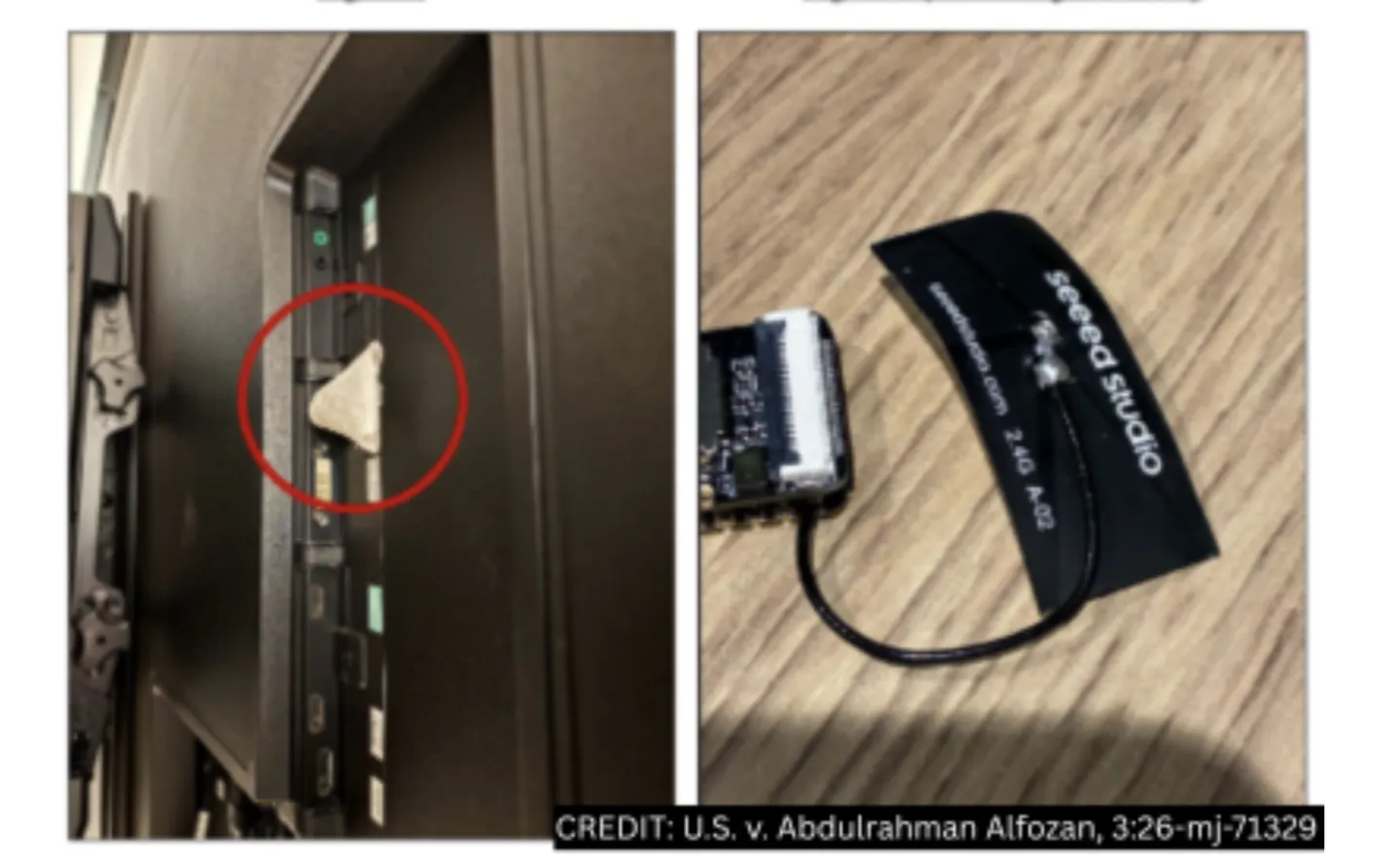
This incident first surfaced at the end of September. On September 30, OpenAI security personnel discovered a hidden recording device while inspecting the office conference room. The device was wrapped in toilet paper and plugged into the USB port behind the TV in the conference room. Its appearance did not easily attract attention. According to the company's follow-up investigation, the equipment may have been placed there around September 28.
Prosecutors pointed out that this conference room was not an ordinary office space. Company executives and related personnel frequently discuss highly confidential technical, commercial and strategic matters here, including proprietary research results, product planning and cooperation matters with government agencies. If someone secretly records these conversations without authorization, once the relevant information is leaked, it may have a serious impact on the company's business interests and technical security.
OpenAI said that after discovering the device, the company immediately launched an investigation and conducted a forensic analysis of the device. Investigators believe that this is a recording device specially designed to avoid discovery, with audio monitoring and data transmission capabilities, and the relevant storage content is also encrypted. The company subsequently sealed the conference room involved, conducted further security checks, and reported the incident to the FBI.
It is worth noting that OpenAI did not rely solely on traditional security inspection methods to handle this incident. The company said investigators used its own artificial intelligence model analysis equipment to help determine the nature of the equipment and its origin, combined with the work of digital forensics experts to track down the people who may have installed the equipment.
According to what OpenAI announced, the company determined through relevant technical analysis and internal investigations that an employee was suspected of placing the device, and submitted the investigation results to federal law enforcement agencies. The FBI subsequently intervened in the investigation and eventually arrested Alfzan.
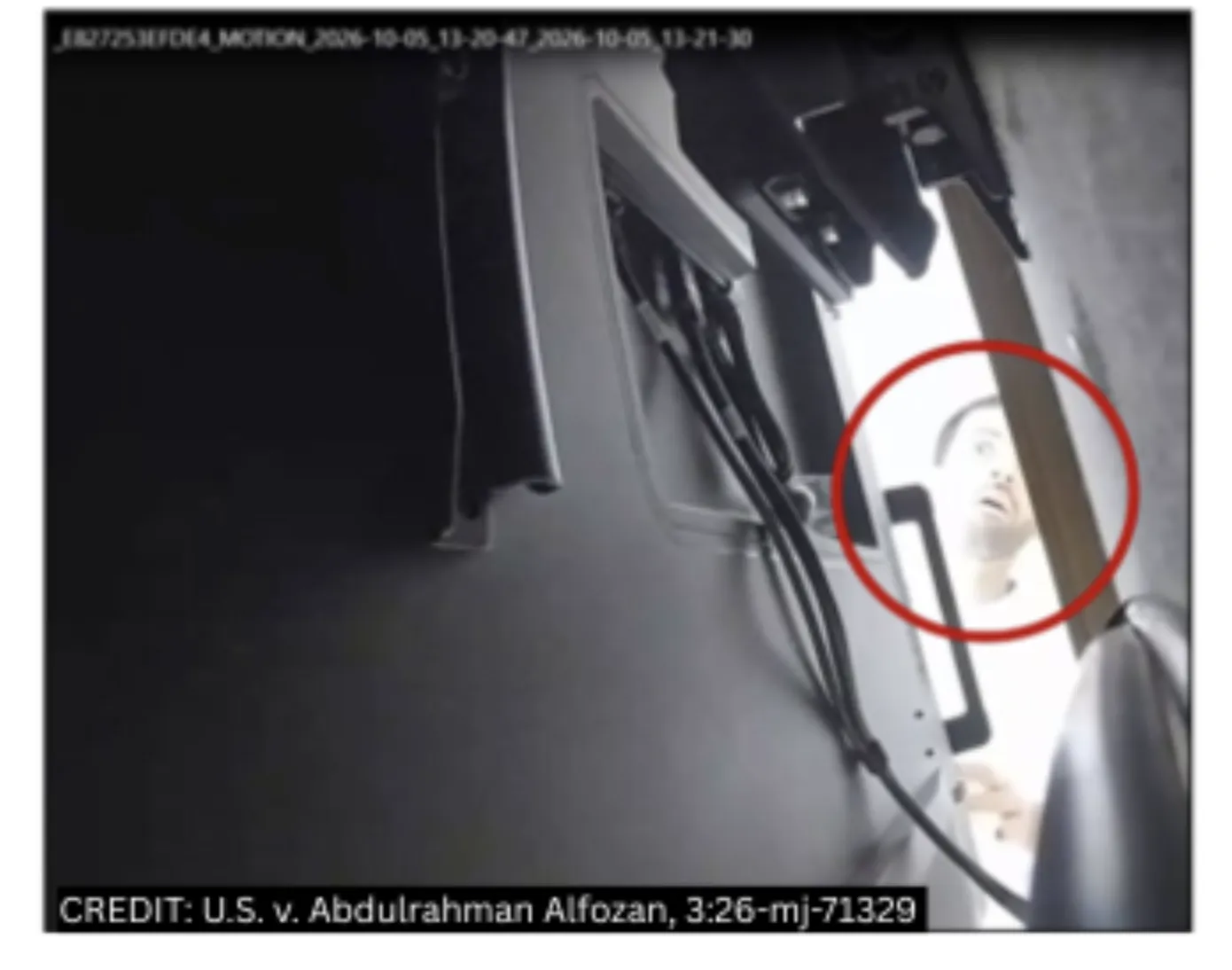
The materials released by the prosecutor also include surveillance videos of the office. Investigators said Alfzan was seen near the conference room multiple times before the recording device was discovered, even though he was not authorized to enter the space or participate in meetings there. After the company discovered the device, it installed cameras in the conference room. Surveillance video allegedly captured Alfzan re-entering the room and looking into the area behind the television, where the recording device was hidden.
In addition, prosecutors alleged that before the device was discovered, Alfzan had used the company's internal productivity tools to query information such as office building addresses, conference room locations, conference room capacity, and schedules. He also searched for the location of the company's management and the location of meetings with external partners. Investigators believe there is a link between these actions and the installation of covert recording equipment that warrants further investigation.
The investigation also involves a chatbot account associated with Alfozan's spouse. Prosecutors said the account submitted multiple inquiries related to recording devices between September 24 and 30, covering how to make, install, conceal, test and remotely access recording devices, including inquiries about making continuous recording devices and encrypted memory cards. Prosecutors also said the account looked up specific information about the device that was later discovered, before and after the device was installed.
However, these contents currently belong to the investigation materials on which criminal charges are based, which does not mean that the court has determined that the defendant has committed all relevant acts. The case is still in judicial proceedings and the defendant enjoys the presumption of innocence in accordance with the law.
On October 5, OpenAI security personnel also discovered an unattended bag in another space of the company. Prosecutors said the bag contained Alfozan's wallet, identification and another recording device. Investigators believe this discovery further deepens suspicions that he is suspected of secretly placing recording equipment within the company.
OpenAI stated that the company has evidence that the employees involved may have intentionally placed more recording devices in other sensitive areas of the office. The company gradually restricted his access to systems and premises during the investigation and suspended his physical and network access where appropriate. OpenAI also said that the company coordinated with the FBI to handle the dismissal to avoid affecting the ongoing investigation.
The company eventually fired the employee and emphasized that there is currently no evidence that he unauthorized access or theft of model weights, source code or customer data. OpenAI also stated that it has not found any signs that related incidents have compromised the security of its products or caused customer information to be leaked.
FBI Director Kash Patel said that protecting U.S. artificial intelligence technology innovation is one of the priorities of the bureau’s counterintelligence work. He pointed out that the relevant actions were aimed at obtaining sensitive conversations about the company's super-smart technology. U.S. federal prosecutors also regarded the case as an incident involving the security of important technological assets, emphasizing the importance of protecting the proprietary technology and research and development results of U.S. companies.
At present, investigators have not publicly stated how the defendants planned to use the recorded conversations, and there is no evidence to confirm whether the relevant recordings successfully obtained any confidential information. Neither OpenAI nor law enforcement authorities have released evidence to prove that the company's core technology or customer information has been leaked.
This incident highlights a special type of security risk faced by artificial intelligence companies: even if the company invests a lot of resources to protect network systems, R&D data, and model weights, insiders may still use legitimate work rights to access sensitive areas and try to obtain information through traditional physical equipment. Unlike invading servers through network attacks, hiding recording devices does not necessarily require breaking through complex network defense systems, but may directly access confidential discussions between R&D personnel and management.
For OpenAI, this case also presents another side of artificial intelligence technology in security protection. Enterprises usually need to prevent the misuse of artificial intelligence models, theft of training data and attacks on network systems. In this incident, the company in turn used its own AI models to assist in investigating suspicious hardware devices and help trace their sources.
However, OpenAI has not yet disclosed all the technical details of what specific analysis tasks artificial intelligence has undertaken in such investigations, so it is not yet possible to accurately assess the role of the model in the entire investigation process. What can be confirmed is that the company's internal investigation, equipment forensics, surveillance video and follow-up work by law enforcement agencies jointly advanced the case.
As the technology, data and business information mastered by artificial intelligence companies become increasingly strategic, how to prevent security threats posed by insiders is becoming a common concern for the technology industry and law enforcement agencies. This case still awaits further trial by the court, and whether the recording equipment has obtained valid information, whether the defendant has other relevant behaviors, and whether the incident involves a wider range of interests, all need to wait for the results of subsequent investigations.
Comments