
Abstract:
The Allen Institute research team mapped the neural connections of the locus coeruleus (locus coeruleus, also known as the "locus coeruleus" because of its dark blue pigment) in the mouse brainstem, and found that the total axon length of one neuron reaches 70.32 centimeters, which is the longest mouse neuron measured so far. Research shows that this area, which was previously thought of as broadcasting a single signal to the entire brain, actually contains groups of cells with distinct projection pathways and functions. The results were published in the journal Nature.
Although the locus coeruleus occupies only a small portion of brain cells, it is an important source of norepinephrine. Norepinephrine is involved in regulating attention, learning, stress or arousal states, and also affects heart rate. Researchers used to liken the locus coeruleus to a "megaphone" that broadcasts uniformly throughout the brain; new research suggests it is more like a communications network that sends different signals to specific brain areas.
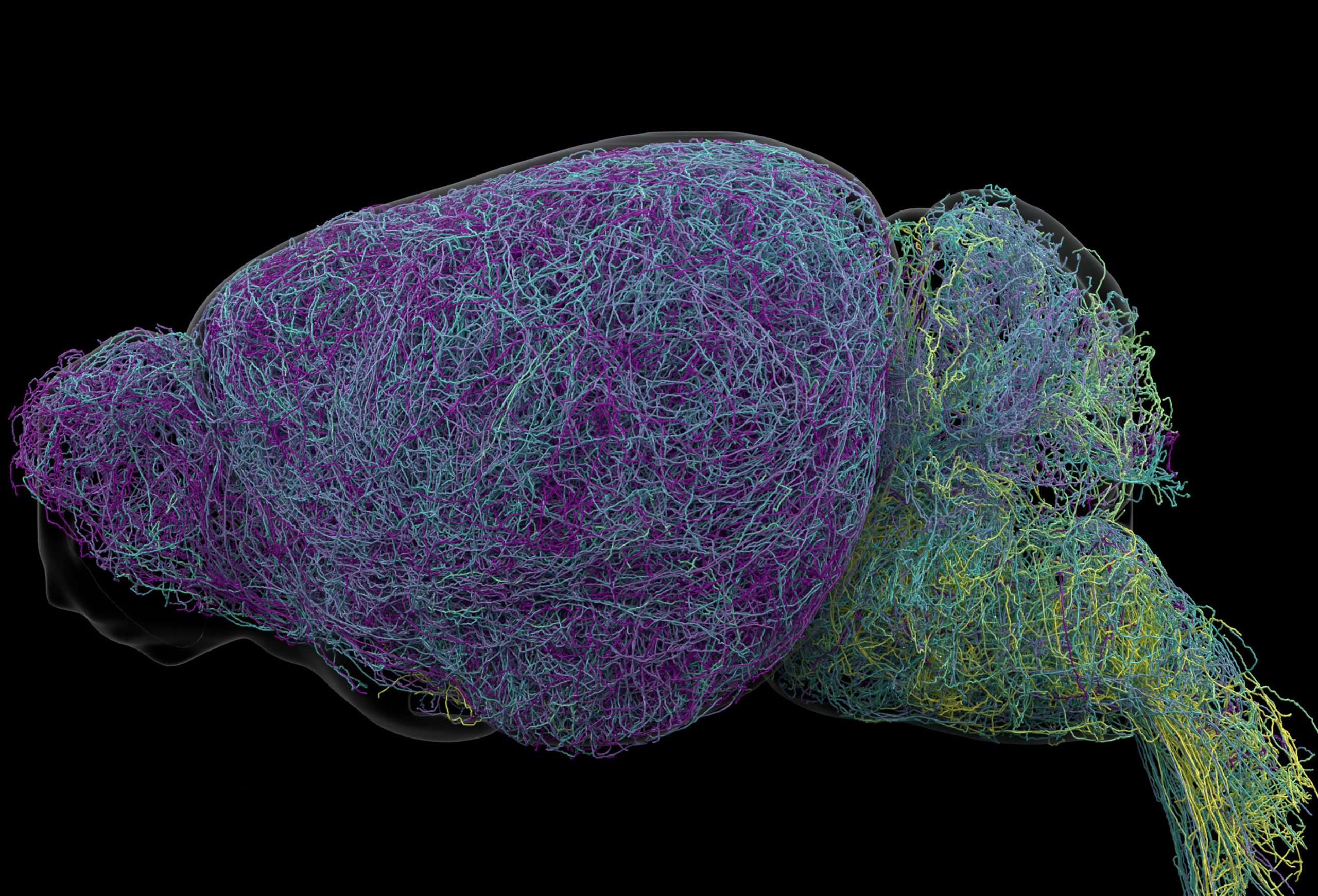
The research team combined whole-brain imaging, neural activity recording, genetic analysis and behavioral experiments to analyze the morphology, projection location and activity of neurons in the locus coeruleus of mice. The research included whole-brain imaging of nearly 35,000 neurons, gene expression analysis of nearly 400,000 cells, and complete morphological reconstruction of 132 locus coeruleus neurons. The results showed that the dorsal neurons of the locus coeruleus mainly project to the cerebral cortex and forebrain, while the ventral neurons mainly connect the brainstem and spinal cord; these anatomical differences also correspond to different gene expression characteristics.
In a decision-making task, neurons in the dorsal locus coeruleus become active when mice change their choices due to negative consequences; while the firing rate of ventral neurons increases just before the mice are about to ignore cues that may bring rewards. Based on this, the researchers believe that the dorsal projection pathway is related to learning signals, while the ventral pathway may affect whether the animal engages in environmental interaction. However, these conclusions come from mouse experiments and cannot be directly equivalent to the effects in the human brain.
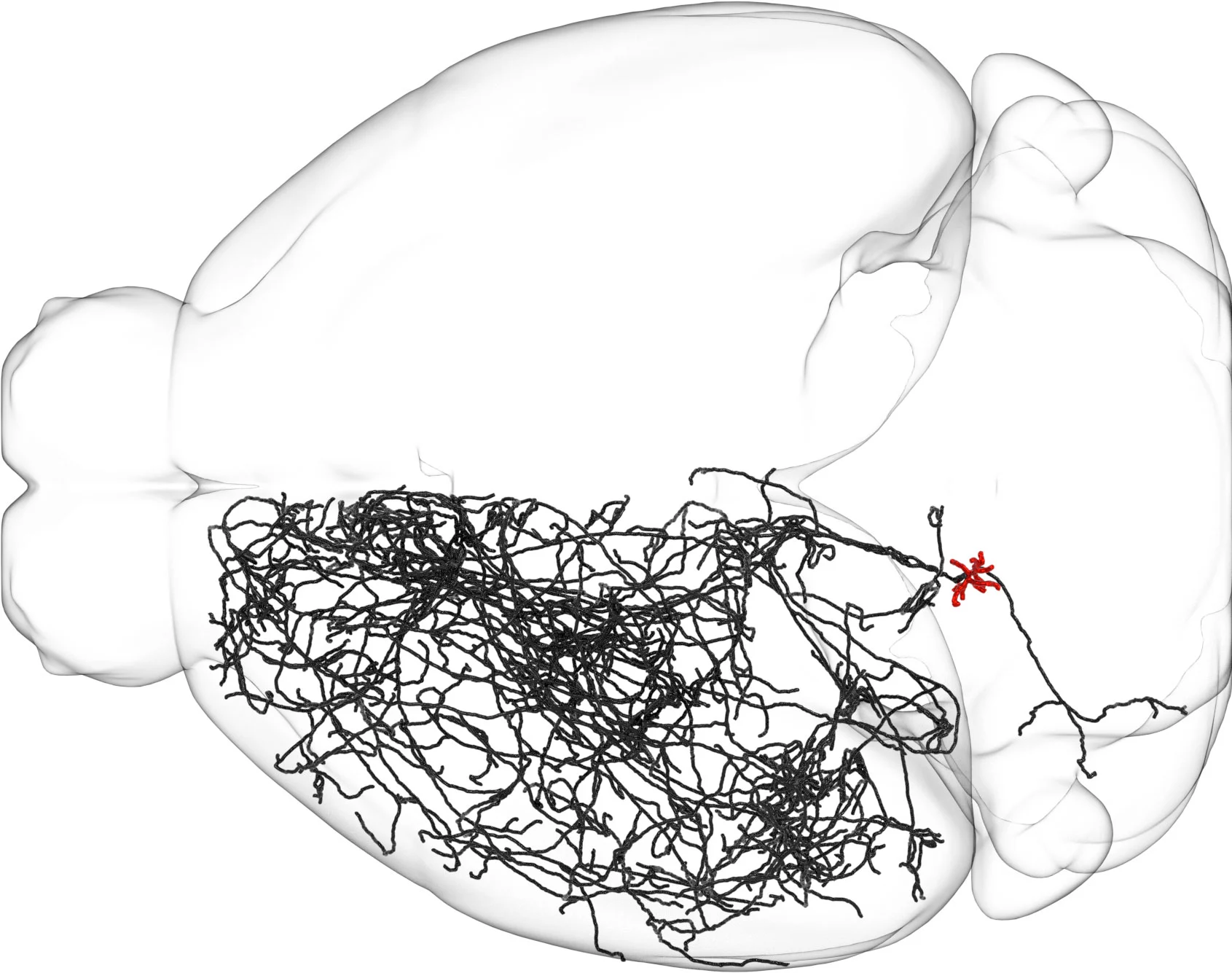
The study also found that the average total length of axons of neurons in the locus coeruleus is about 34 to 35 centimeters, with the longest one reaching 70.32 centimeters. The "length" here refers to the total length of each branch of the neuron's axon after complete reconstruction, not a straight, continuous nerve fiber extending 70 cm. This neuron delivers norepinephrine to large areas of the cerebral cortex but avoids the cerebellum, brainstem, and spinal cord, demonstrating broad but not undifferentiated coverage of its connections.

The norepinephrine system has been the target of drugs related to depression, anxiety, attention deficit hyperactivity disorder and other diseases, and neurons in the locus coeruleus are also considered to be one of the cells damaged in the early stages of Alzheimer's disease. The research team believes that further understanding of the role of different circuits may help to more precisely regulate specific neural circuits in the future and reduce the side effects on other circuits when affecting one brain area; however, this is still a basic research direction, and no new treatments have yet been tested.
Comments