
Abstract:
Researchers at Stanford University in the United States have completed a landmark experiment: they transplanted cortical organoids grown from human stem cells into a genetically modified mouse in which part of the brain tissue failed to develop normally, establishing extensive and stable connections between human neural tissue and the mouse's developing nervous system. Experimental results showed that the transplanted human tissue not only continued to grow in the mice, but also formed neural connections with the mouse brain and spinal cord and remained active while the animals were awake.
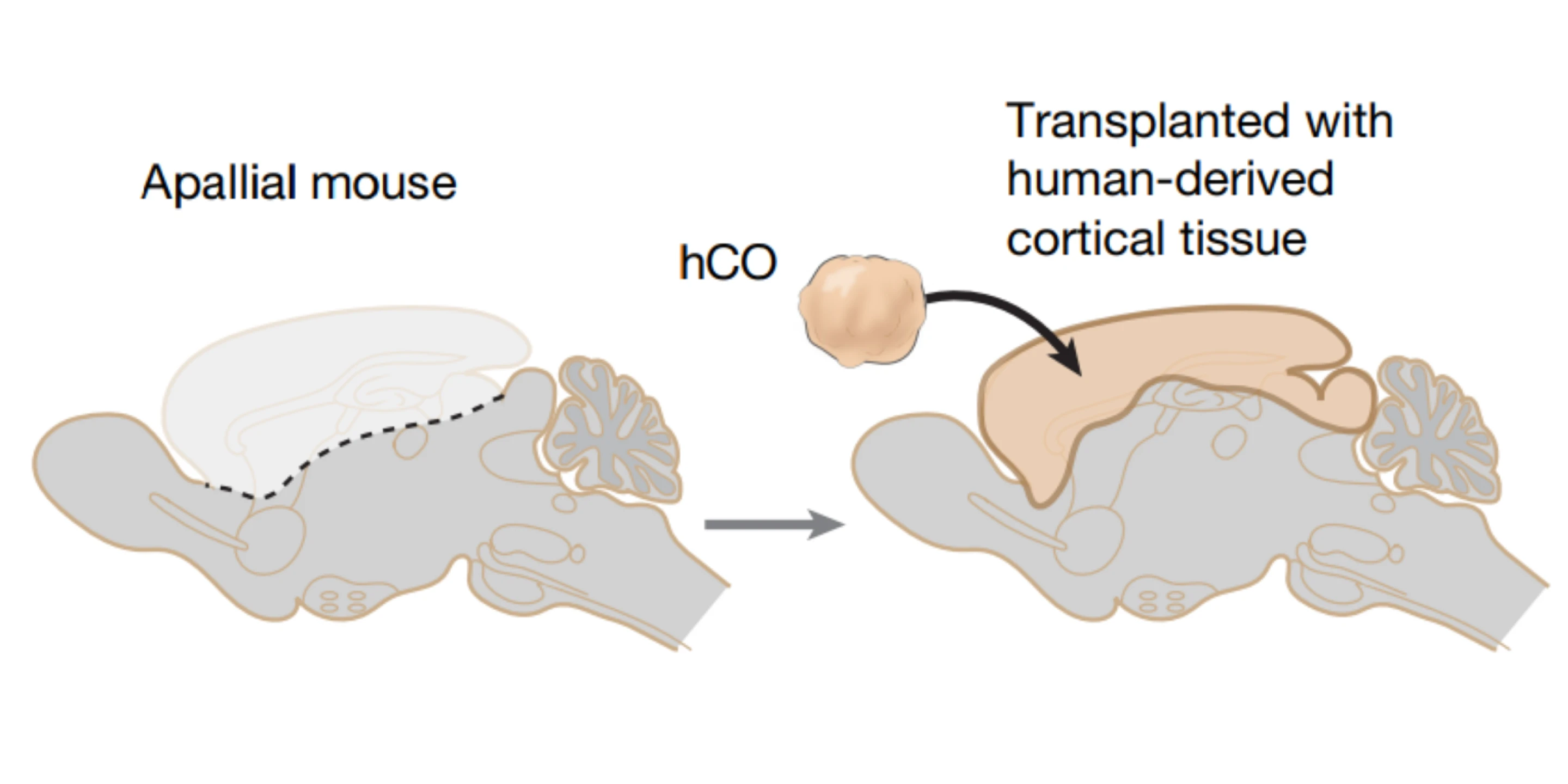
The research was published in the journal Nature. Researchers believe that this method of placing human brain organoids in the nervous system of living animals is expected to become a new tool for studying human brain development, neurological diseases and personalized treatment. It will also allow scientists for the first time to observe how human neural tissue grows, connects and works in a closer to real physiological environment.
In recent years, the use of human stem cells to grow three-dimensional organoids has become an important technology in biomedical research. Researchers can use organoids to simulate human tissues such as the brain, liver, and skin to study disease mechanisms, observe tissue development processes, and test drugs. However, after all, organoids in laboratory dishes are just a relatively isolated tissue model, lacking the complex blood supply, neural connections and interactions between different organs in the real human body, so there are still obvious limitations in studying some complex diseases.
Transplanting organoids into living animals could solve some of these problems, but previous research also encountered an important limitation. Human brain tissue does not develop at the same rate as rodents, and if human cortical organoids were implanted directly into a normally developing mouse or rat brain, the host animal's nervous system might mature quickly, limiting the space for human tissue to continue growing and building complex connections.
The Stanford University research team therefore used a special mouse model. They genetically engineered mice to lack parts of the tissue needed to form the hippocampus and outer cortex of the brain, leaving enough space for transplanted human cortical organoids. In this way, human neural tissue can continue to grow as the mouse brain develops and connect with the host nervous system in a more natural way.
The researchers then transplanted cortical organoids grown from human stem cells into the brains of these mice. The results showed that the human tissue not only survived but also continued to expand in the mice, eventually accounting for approximately 92% of the mouse's cortical tissue. This scale is much higher than what is typically achieved in traditional organoid transplant experiments.
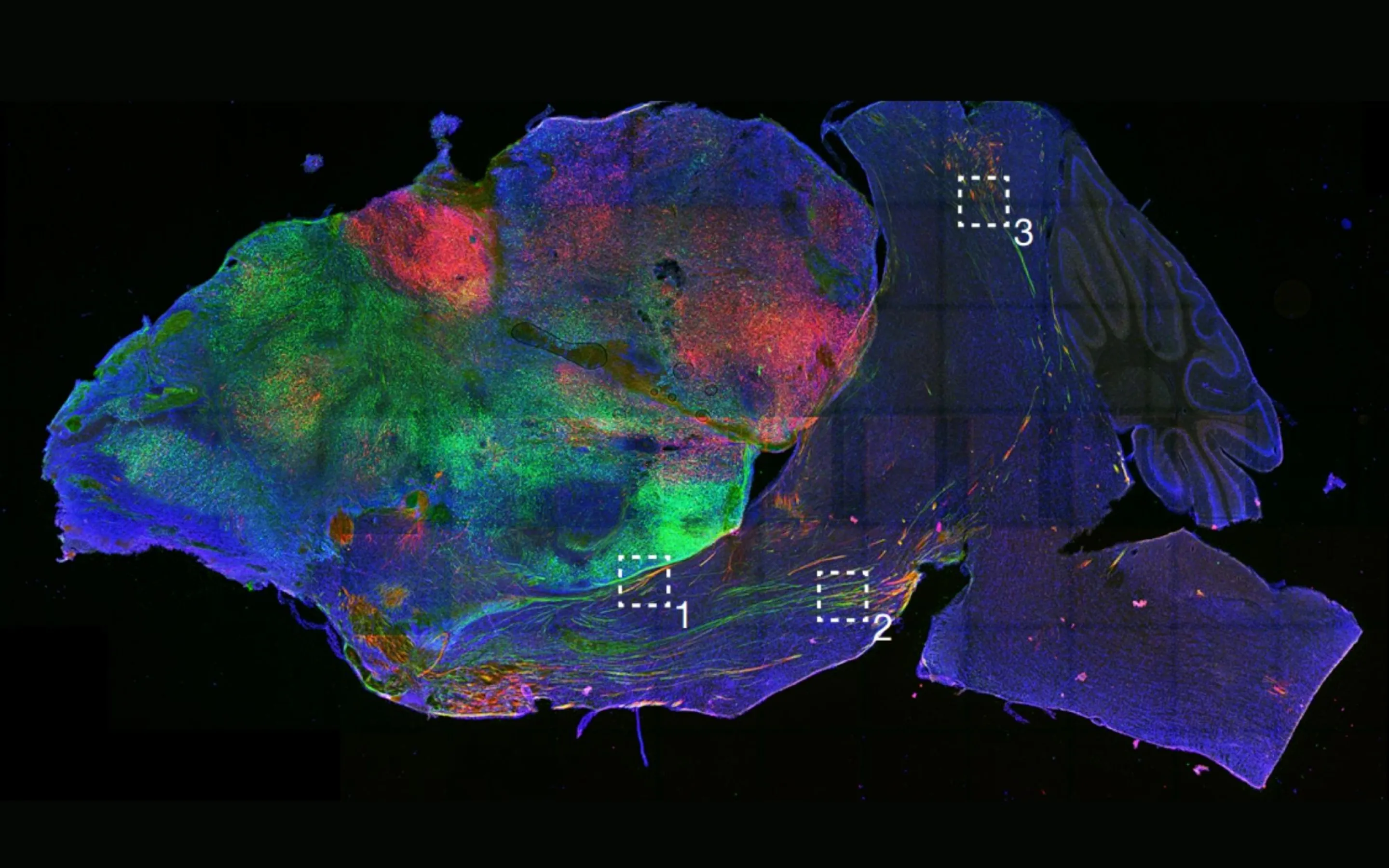
More importantly, these human neural tissues did not become a "plug-in organ" independent of the mouse brain. Using fluorescent labels, the researchers observed that neurons in the human organoids extended numerous neurites into the mouse neural tissue and established connections with the host nervous system. At the same time, detection of electrical activity also revealed the exchange of neural signals between human tissue and the mouse brain.
Experiments also show that this connection already has some functionality. After observing the movement behavior of mice, researchers found that transplanted human neural tissue can affect the motor activities of the mouse's limbs, which means that human tissue does not just passively exist in the mouse brain, but participates in the function of the host nervous system to a certain extent.
Bryce Vissel, a neuroscientist at St. Vincent's Hospital who was not involved in the study, believes that the results may provide new research avenues for developing patient-specific treatments for neurological diseases. He said that the human transplanted tissue was able to connect to the mouse brain and spinal cord and remain active while the animals were awake, which opened up new possibilities for future research on how to repair diseased brains.
However, this experiment also raises obvious ethical issues. Researchers have actually created a hybrid nervous system composed of human and mouse nervous tissue. As human tissue accounts for a higher and higher proportion in the host animal and becomes more mature, how to judge whether this animal has different neurological abilities from ordinary mice has become an unavoidable problem.
Vissel believes that the truly decisive follow-up experiment is to actively enhance or inhibit the transplanted human neural tissue, and then observe whether the mouse's perception, learning ability or behavior changes accordingly. If these abilities in mice do change in response to the activity of human tissue, it would mean that human neural tissue is already causally involved in the animal's own abilities.
Adeel Razi, a computational neuroscientist at Monash University, also believes that as the maturity, scale, and functional integration of transplanted tissues in the future continue to increase with the animal nervous system, related ethical issues will become more and more prominent. He believes that the real issue worthy of study is not simply to determine "whether the mouse brain has been humanized", but to observe how the neural calculation methods of human brain cells will change after they develop and learn in an animal environment other than humans.
The research team stated that this experiment complied with currently applicable ethical regulations and safety requirements. However, the researchers also clearly pointed out that if the proportion of human neural tissue in the mouse brain is to be further increased in the future, or the transplanted human tissue is made more mature, corresponding ethical norms must be established in advance, rather than passively dealing with these issues after the technology matures.
Despite the ethical controversies, this technology still has extensive medical research value. Researchers hope to use this model that combines human brain tissue with living animals to study more deeply the process of human brain development and explore how to use patients' own cells to grow neural tissue to develop more personalized treatments. In the future, such models may also be used to study neurological diseases and help scientists look for disease-related biological changes before patients develop obvious symptoms.
The significance of this study is that it further breaks through the limitations of traditional brain organoids. In the past, scientists could only observe a relatively isolated mass of human neural tissue in a petri dish. Now, human brain organoids can continue to develop in the brain environment of living animals and form actual functional connections with the host's nervous system. As relevant technologies continue to develop, to what extent human neural tissue can develop in animals, and how this hybrid nervous system should be ethically defined, will become important issues that need to be faced in future neuroscience research.
Comments