
Abstract:
Over the past century or so, global commercial shipping has gradually bid farewell to the age of sails and turned to internal combustion engines and modern power systems. Now, however, the wind is returning to large cargo ships. From bulk carriers to tankers to container ships, more and more shipowners are installing modern wind propulsion devices such as towering rotor sails, rigid wing sails and suction sails. As the technology continues to mature, even LNG carriers are expected to join this ranks in the future.
However, the modern shipping industry does not intend to turn ocean freighters back into traditional sailing ships. The design goal of these new systems is to use natural wind power to provide additional thrust to the ship while retaining traditional engines, and to reduce fuel consumption and emission levels under suitable conditions.
Wind-assisted propulsion, once considered a niche experimental project, is now gradually developing into an emerging industry in the field of commercial shipping.
Data from the International Sailing Ship Association show that there are currently more than 100 large merchant ships around the world equipped with modern wind propulsion systems, with a total transport capacity of more than 5 million deadweight tons. Although this number is still small compared to the total size of the world's merchant ships, the scale of related projects is constantly expanding, the number of participating companies continues to increase, and the tonnage of ships continues to set new records.
Since 2026, a series of industry dynamics have further released signals that wind-assisted propulsion is moving out of the experimental stage.
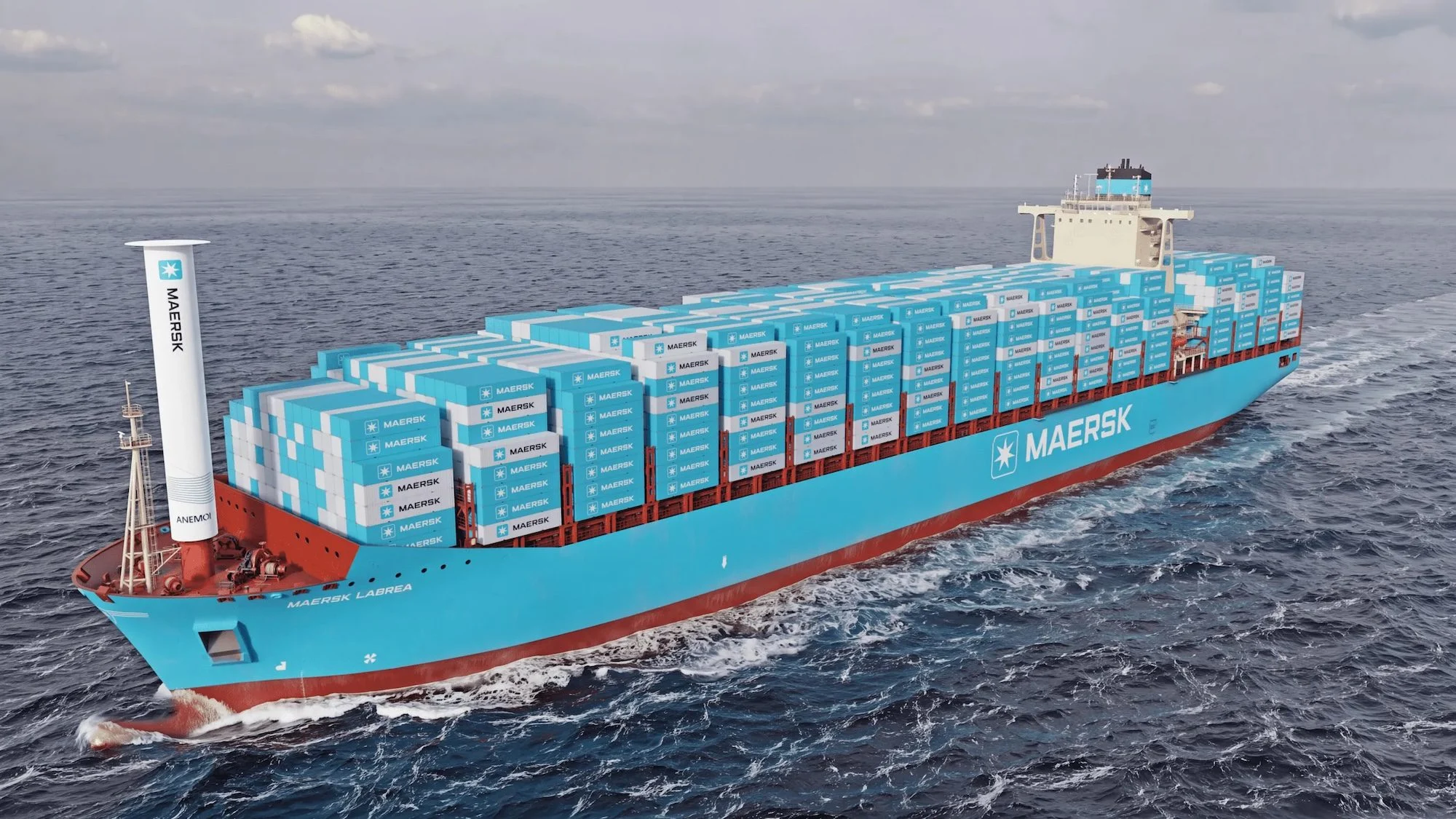
One of the most talked about projects comes from Maersk. The company plans to install a rotor sail system with a height of 35 meters on a container ship with a capacity of 8,700 TEU, and plans to start testing on regular transatlantic routes in 2027. If the project goes ahead, it will be the first time a rotor sail has appeared on a container ship.
The shape of the rotor sail is completely different from traditional sails, and is more like a huge vertical cylinder. When the wind blows over the rotating cylinder, it creates the so-called "Magnus effect", which creates additional thrust, reduces the load on the main engine and reduces fuel consumption.
This concept is actually more than a century old, but has been limited by control technology and material levels in the past. With the development of modern automation technology, solutions that were originally difficult to apply on large commercial ships have now begun to enter the actual operation stage.
Brazilian mining giant Vale is one of the important promoters of this trend. The company's "Sohar Max" ultra-large ore ship has currently installed five sets of 35-meter-high rotor sail systems. As one of the largest ore transport ships in the world, its load capacity reaches 400,000 tons. According to project evaluation, this system can help ships reduce fuel consumption by up to about 6%.
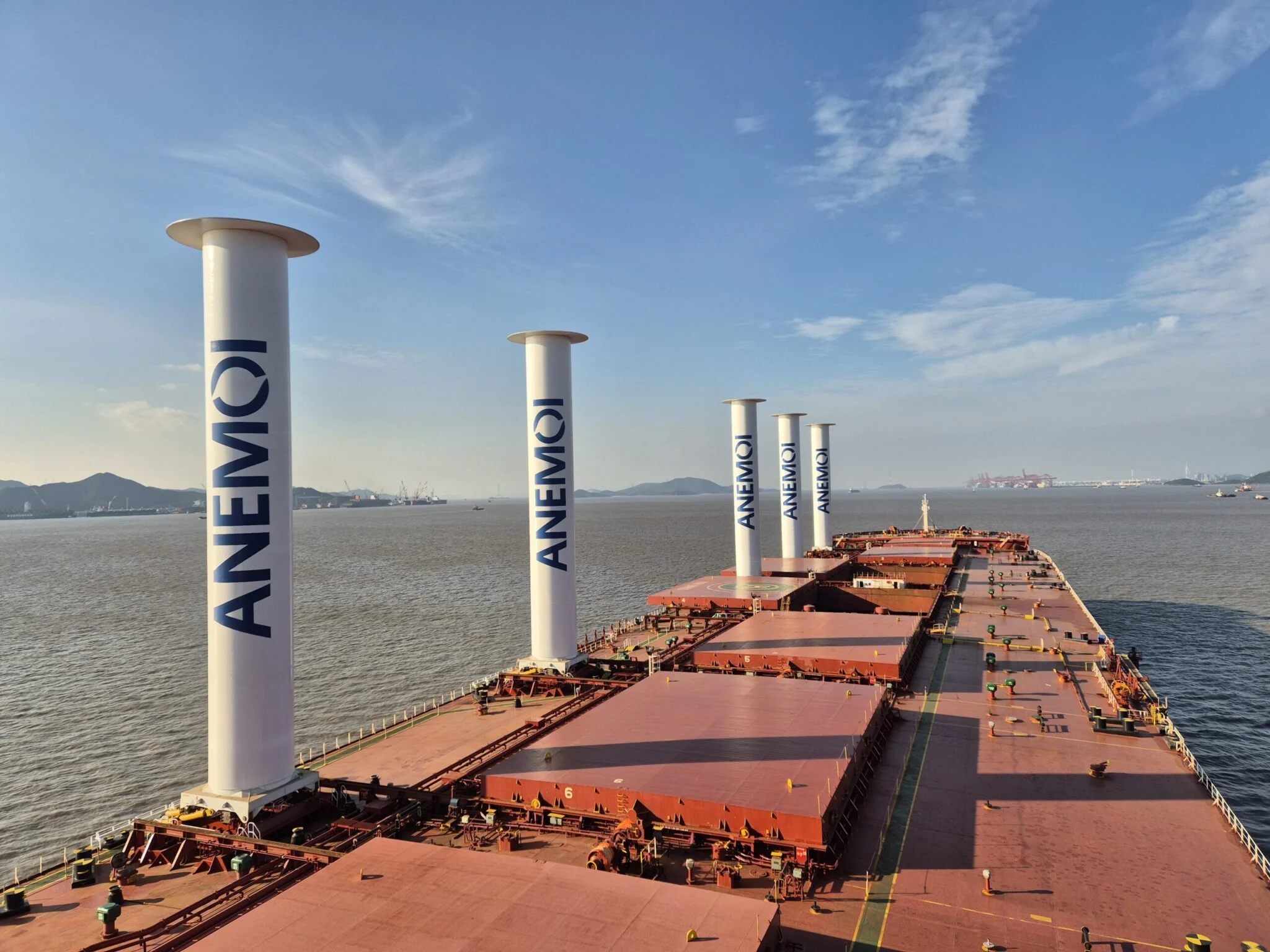
Vale also plans to introduce rotor sail technology into a new generation of very large ore ships using ethanol fuel in the future to further enhance the emission reduction effect.
At the same time, two very large crude oil carriers being built by Japan's Idemitsu Tanker Company have also been determined to be equipped with Norsepower's rotor sail system and are scheduled to be put into operation in 2028.
The LNG transportation industry has also begun exploring wind-assisted propulsion. Korea Classification Society, HD Hyundai Heavy Industries, BAR Technologies and the Liberian Flag Registry have jointly launched a research project to evaluate the feasibility of installing WindWings rigid wing sails on 174,000 cubic meter LNG carriers.
This design moves the crew living area forward to reserve space for the large wing sail on the main deck. Researchers hope to further reduce the fuel consumption and carbon emissions of LNG carriers.
Of course, not all projects simply provide auxiliary power to the engine.
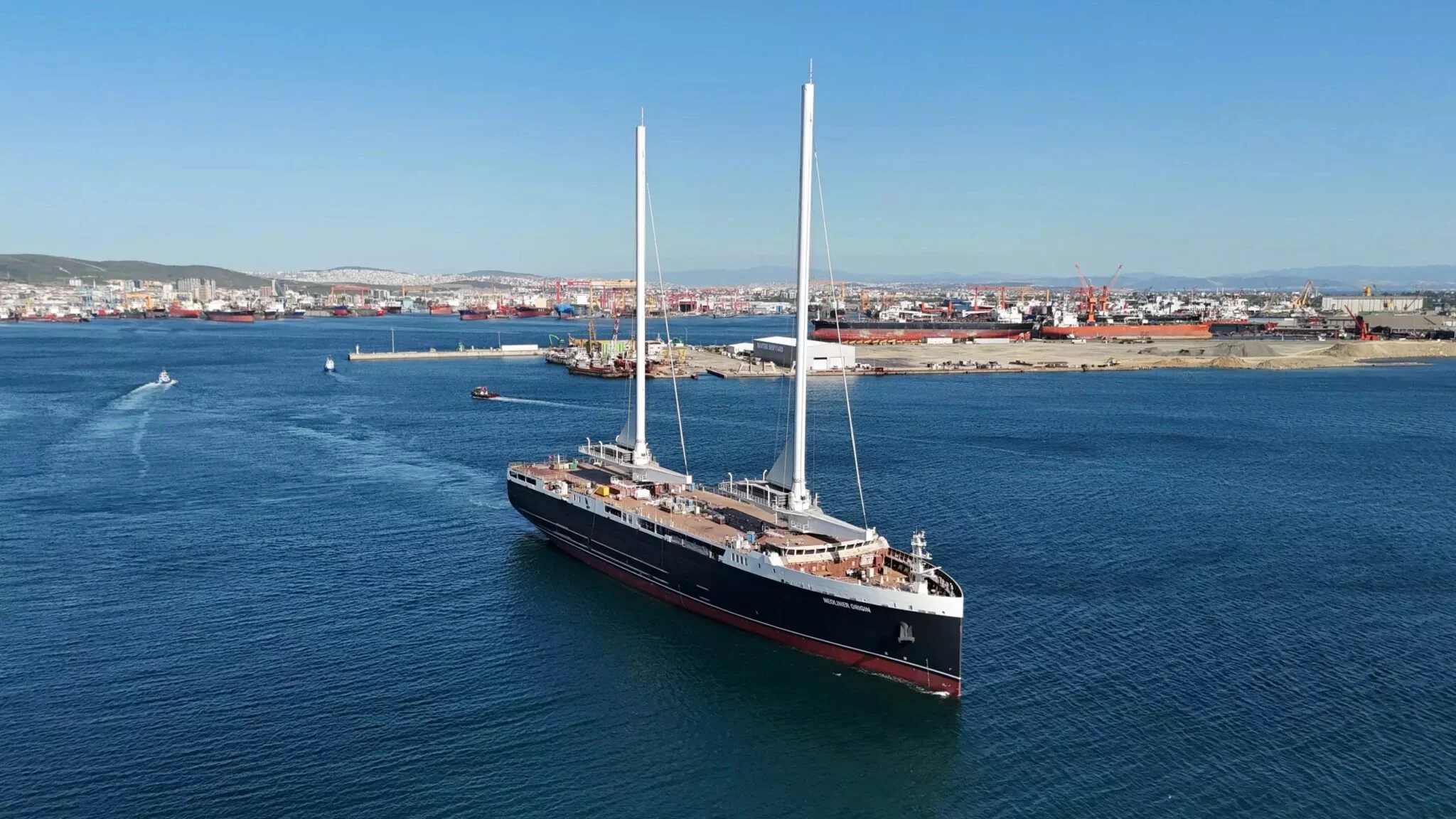
The Neoliner Origin cargo ship built by a French shipping company will be delivered in 2025. The ship uses two carbon fiber masts with a height of 76 meters and is equipped with a sail system with a total area of approximately 3,000 square meters. Unlike most wind-assisted propulsion vessels, the wind itself has become the ship's primary source of power as it sails across the Atlantic.
An important reason for the return of wind power technology is that the shipping industry is facing increasing pressure to reduce emissions. The International Maritime Organization is continuing to tighten carbon emissions targets for the global shipping industry, while traditional fuel costs and emissions compliance costs are also rising.
In this context, wind power has become one of the few natural energy sources that can be directly utilized without purchasing additional fuel. Although it cannot completely replace modern power systems, as an auxiliary propulsion method, its economical and environmental value are being recognized by more and more shipping companies.
Industry insiders believe that sails are unlikely to return modern cargo ships to the sailing patterns of hundreds of years ago, but future ocean-going fleets are likely to see a new hybrid form: engines, low-carbon fuels and wind propulsion systems working together to achieve higher efficiency and lower emissions.
After more than a century of silence, wind is returning to the core stage of the global shipping industry in the form of new technologies. For the maritime industry that is looking for a path to decarbonization, this "sail renaissance" is no longer just a romantic historical memory, but has gradually become a realistic business choice.
Comments