
Abstract:
Germany's Lufthansa Technik recently received approval from the European Aviation Safety Agency to install the "AeroSHARK" bionic surface material it developed on an Airbus A330-300 passenger aircraft and conduct flight tests. The development team hopes to use the structural properties of shark skin to help large passenger aircraft move through the air more efficiently like a shark swimming.
For the modern aviation industry, one of the biggest challenges has always been air resistance.
Although the fuselage of a modern airliner feels very smooth, from a microscopic scale, its metal surface actually contains a large number of small uneven structures. When an airplane flies at a speed of about 890 kilometers per hour, a thin layer of air will adhere to the surface of the fuselage.
Between the body and this layer of air, there is a region with a thickness of about 1 mm. This region, called the viscous sublayer, is filled with a chaotic and disorderly mass of tiny vortices and air disturbances.
It is these seemingly inconspicuous small-scale turbulence that constitute the so-called "surface friction resistance". Research shows that this type of resistance accounts for about half of the overall air resistance of the aircraft, and therefore becomes an important factor affecting fuel consumption and flight efficiency.
Aeronautical engineers have long looked for ways to weaken this drag, and the answer ultimately comes from the ocean's apex predators.
Although people often think of sharks as being very smooth, their skin is actually covered with extremely tiny scales. These scales, called denticles, resemble miniature teeth with regularly spaced, elongated raised structures.
These tiny textures line the direction of the shark's body. When water flows through it, a large number of micro-vortices are also formed. However, the protrusions on the surface of the dermal teeth can confine these eddies farther away from the skin, thereby reducing the direct disturbance of the water flow on the body surface.
It is this mechanism that helps sharks swim at high speeds in seawater with greater efficiency.
The design concept of AeroSHARK is derived from this natural phenomenon.
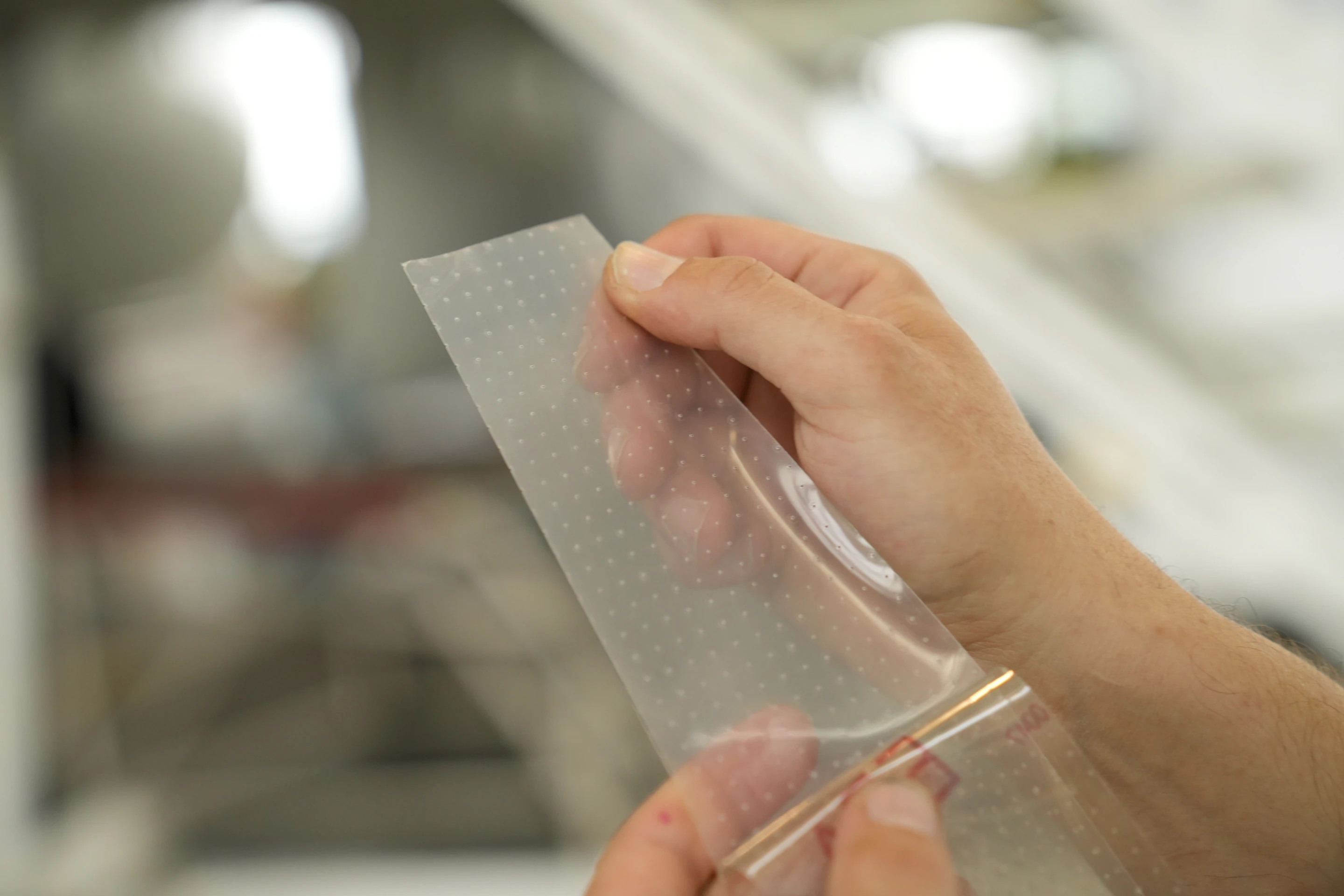
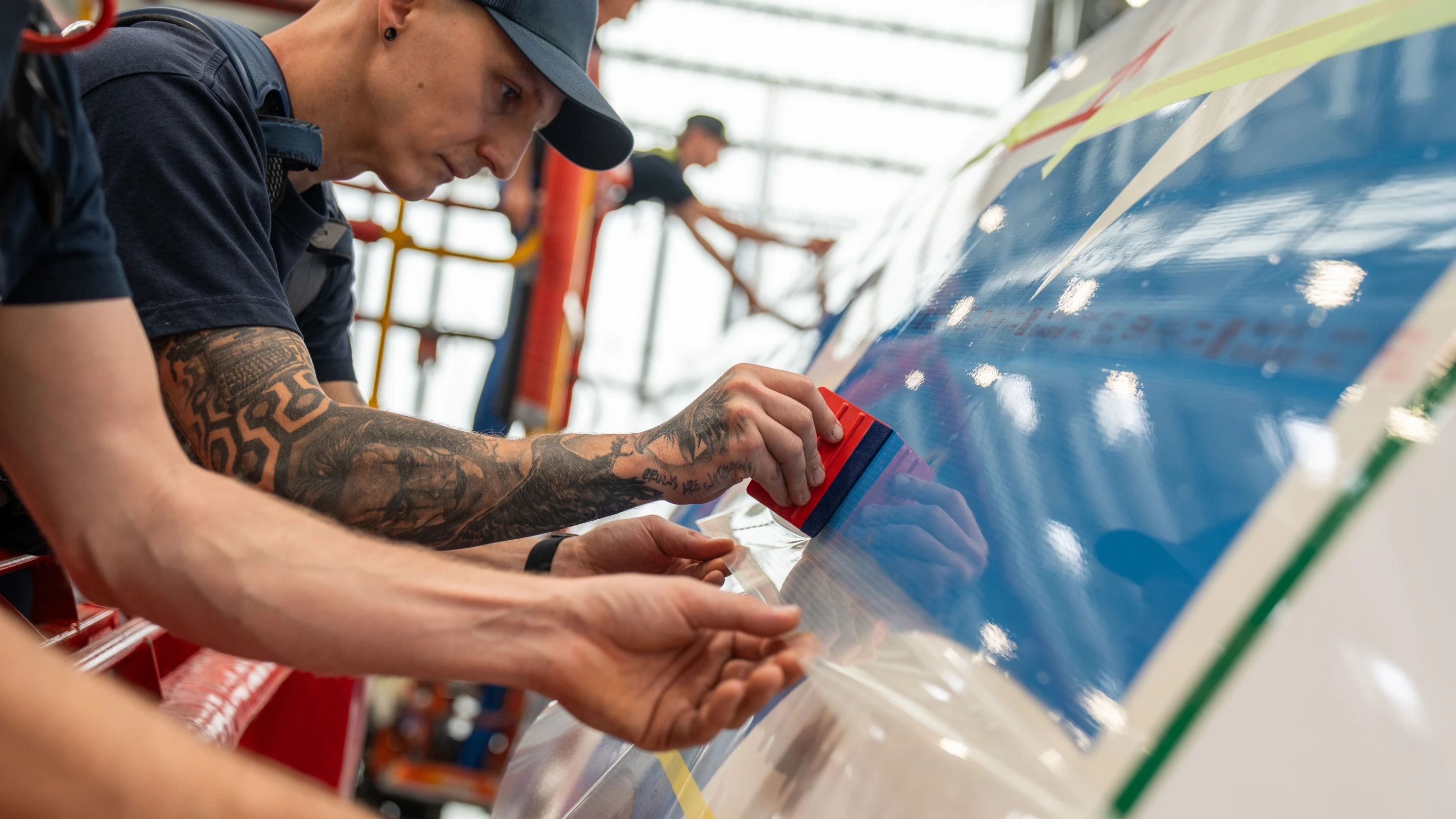
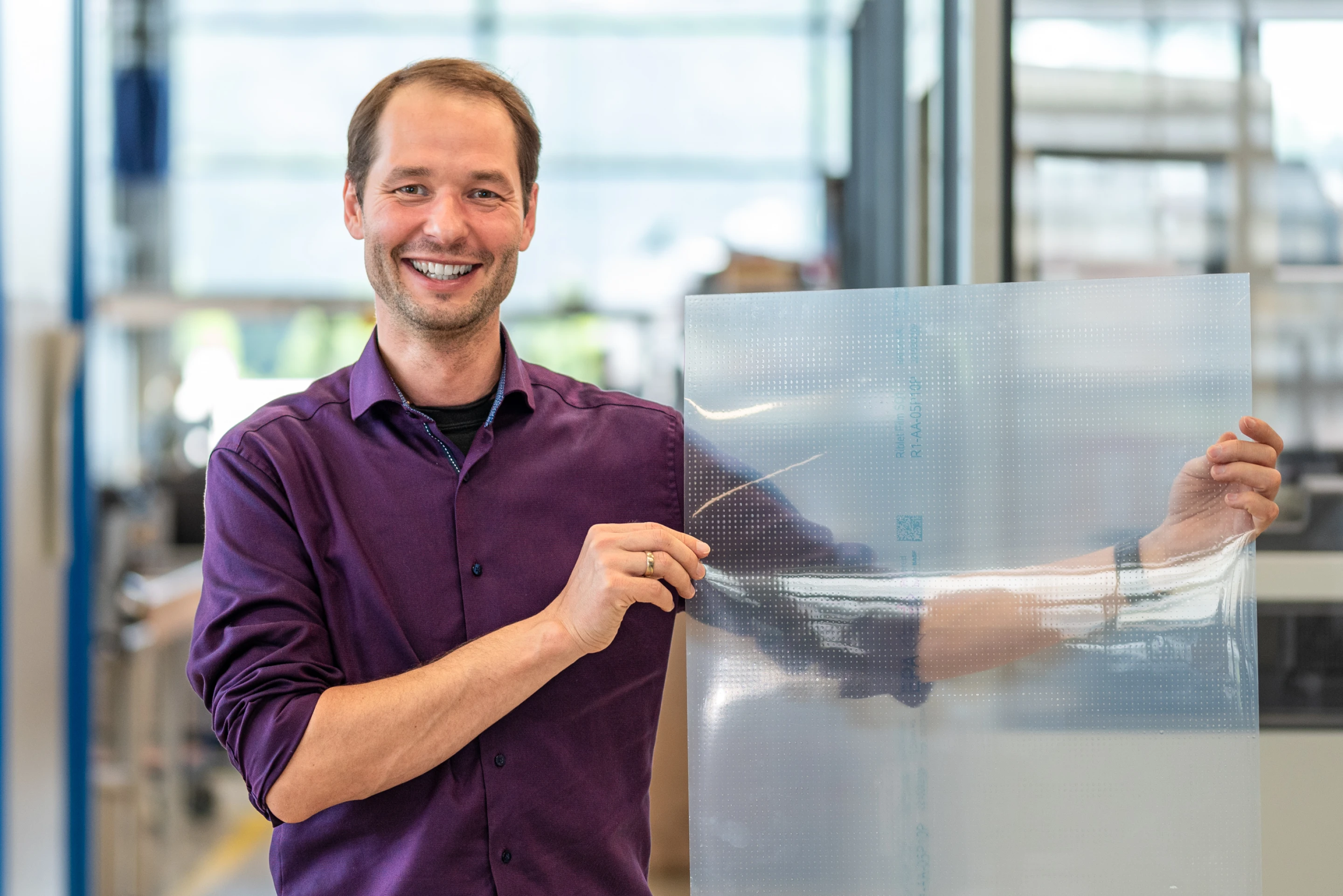
The system is essentially a layer of special polymer film with a large number of micro-grooves only about 50 microns wide embossed on its surface. By accurately imitating the height, spacing and geometry of shark skin teeth, the researchers hope to achieve a drag-reduction effect similar to that of sharks.
After installation, this film will cover the outside of the aircraft fuselage like a large film. When air flows through these fine structures, the disturbances originally formed on the surface of the aircraft are reorganized, thereby reducing air resistance and improving flight efficiency.
According to Lufthansa Technik's calculations, the current version of AeroSHARK can reduce fuel consumption and carbon emissions for a single flight by approximately 1%. If it is further expanded to parts such as wings and tails in the future, the emission reduction effect is expected to increase to about 2%.
This approval for testing does not mean that AeroSHARK has been put into practical use for the first time.
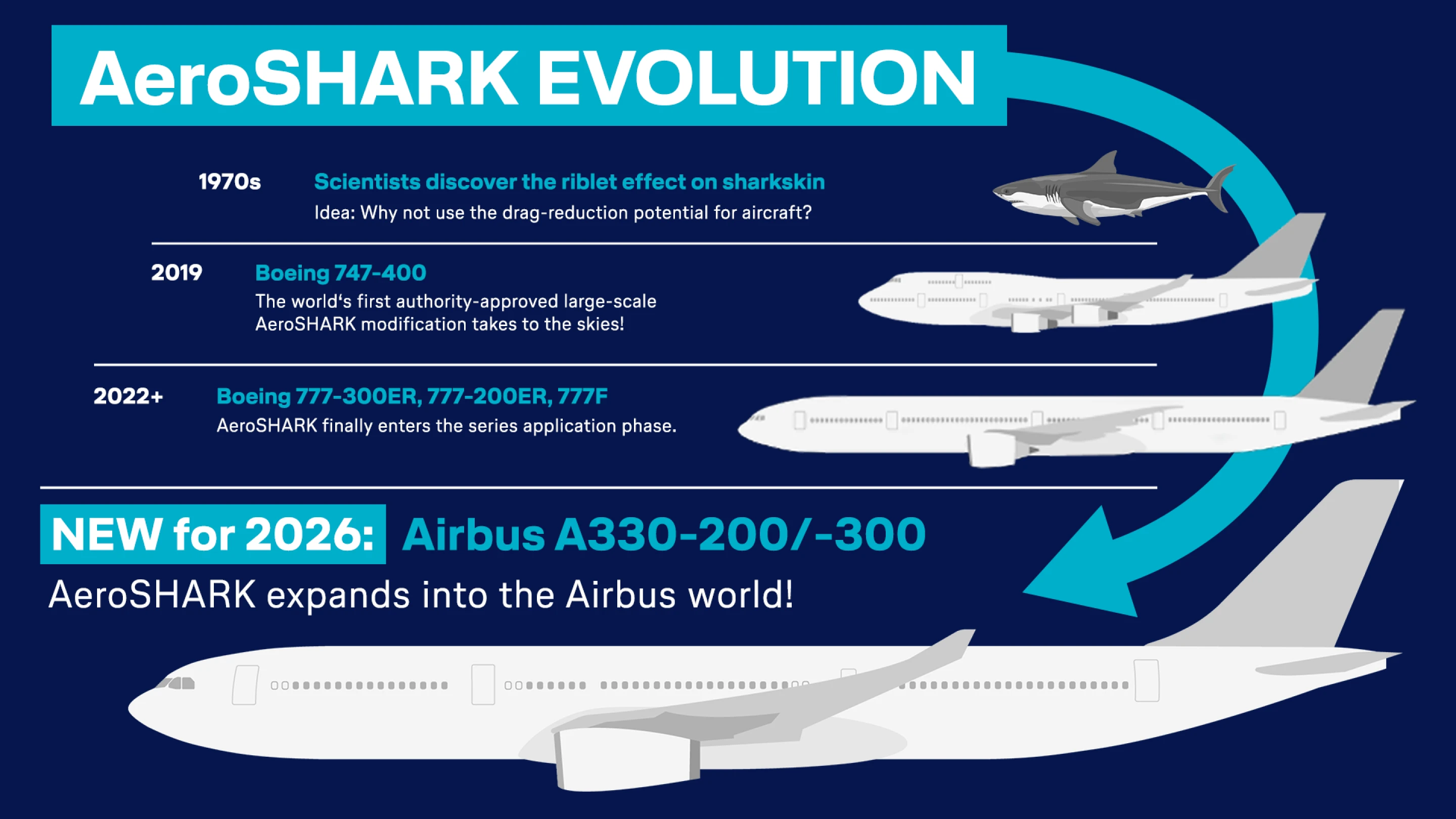
In fact, this technology has been certified for commercial operation on some Boeing 777 freighters and passenger aircraft, and has accumulated a lot of experience in real route operations.
So far, the AeroSHARK system has been installed on many long-range aircraft of the Lufthansa Group. According to data released by the company, related technologies have set hundreds of thousands of flight hours operating records and helped airlines save a lot of fuel consumption and carbon dioxide emissions.
However, for Airbus models, this A330 certification has special significance.
As the world's second most common long-range wide-body passenger aircraft, the A330 will continue to serve in the global airline fleet for a long time in the future. If AeroSHARK finally obtains formal certification and is widely used, its potential market size will far exceed its current scope.
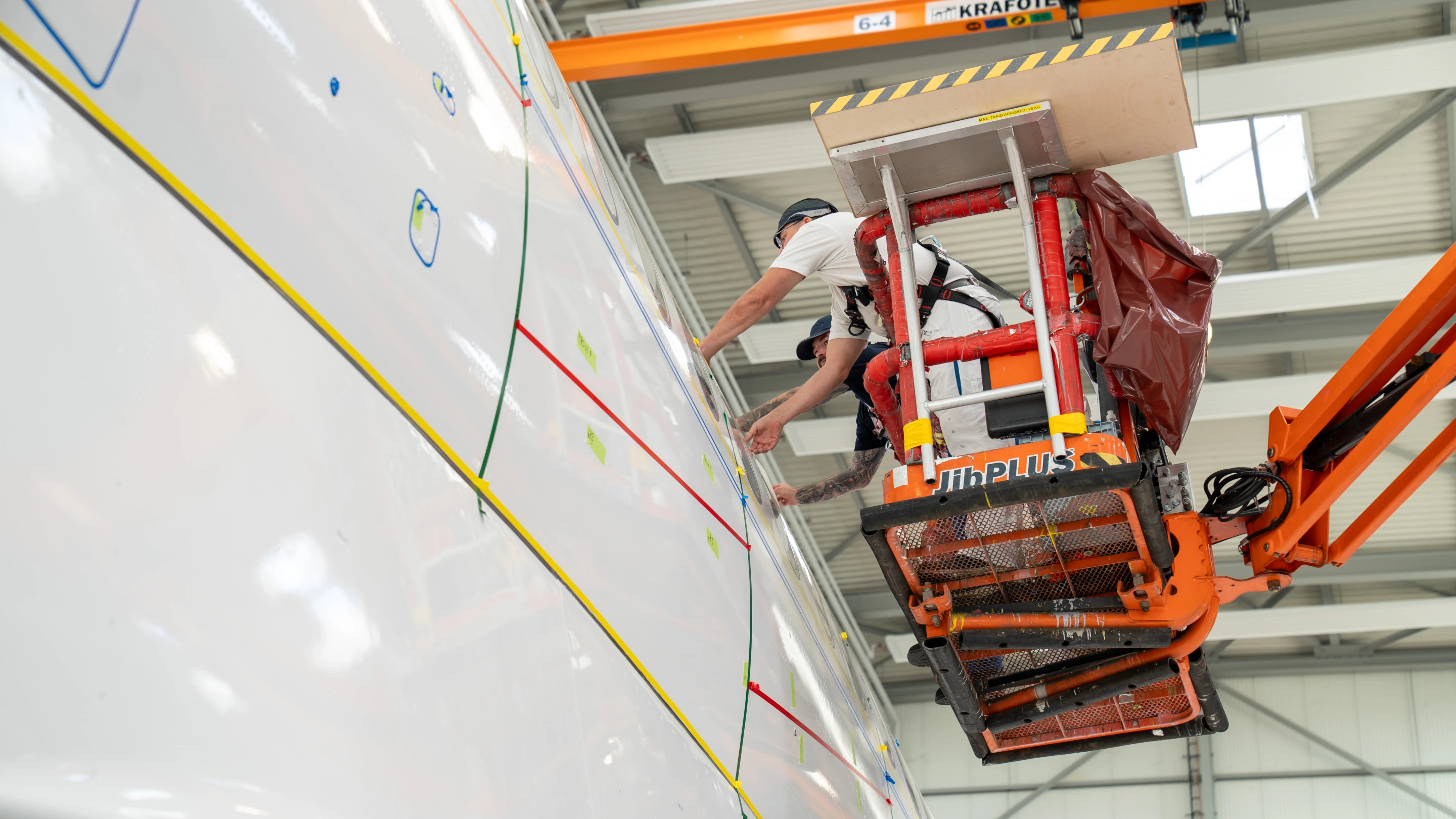
In order to complete the certification work, Lufthansa Technik has launched relevant testing plans in Dresden, Germany. An A330-300 passenger aircraft belonging to Discover Airlines will undergo modifications and undergo multiple rounds of flight verification to evaluate the impact of this technology on flight performance, safety and operational reliability.
At the same time, the R&D team is also advancing the development of the next generation AeroSHARK material, hoping that in the future it will not only cover the fuselage and engine fairing, but also be applied to areas that bear greater aerodynamic loads, such as wings, horizontal tails and vertical tails.
Industry insiders believe that as the aviation industry faces increasingly stringent emission reduction requirements, bionic technologies like AeroSHARK that directly draw on natural design are becoming an important direction to improve aviation efficiency. For airlines, even if fuel consumption is reduced by only 1%, it will also mean considerable operating cost savings and carbon emission reduction effects in the huge global route network.
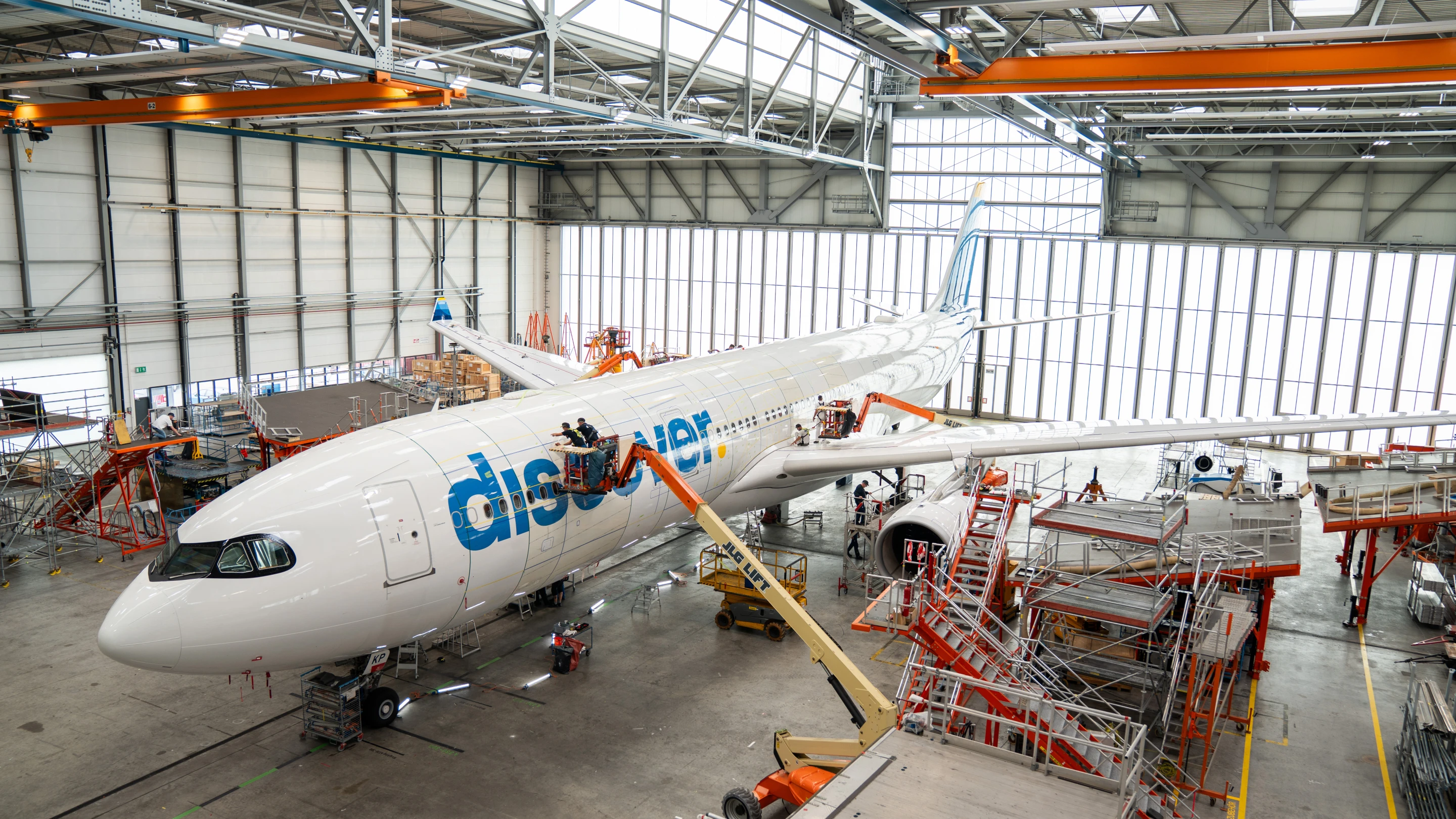
The addition of the Airbus A330 to the test program also means that bionic technology derived from shark skin is expanding to a wider range of civil aviation fleets.
Comments