
Abstract:
Recently, a netizen posted on the Reddit forum asking whether the Intel Core i3-6100 in his hand can still be overclocked.
You must know that this processor has been released for more than 10 years, and it is a non-K model with a locked multiplier. Under normal circumstances, it is not a product that can be freely overclocked.
However, someone in the comment area quickly pointed out that if paired with a specific Z170 motherboard and a suitable BIOS, this i3-6100 can actually be overclocked by adjusting the BCLK (external clock).
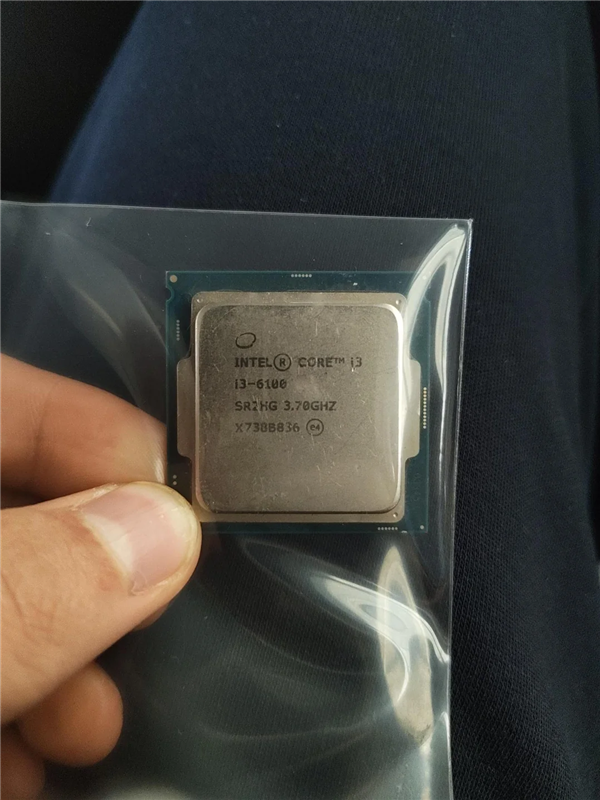
It is understood that the i3-6100 belongs to Intel's sixth-generation Core Skylake architecture, using a dual-core four-thread design with a default main frequency of 3.70GHz. Unlike processors with a "K" suffix, its multiplier is locked and traditional overclocking cannot be performed by increasing the multiplier.
But in the Skylake era, there was a special period: some Z170 motherboards used BIOS functions to bypass the multiplier restrictions of non-K processors and squeeze extra performance out of multiplier-locked processors by increasing BCLK.
A netizen introduced in the original post that if an ordinary motherboard is used, the BCLK of the i3-6100 can usually only be increased to about 106MHz, which is equivalent to an overclocking range of about 6%. However, a few special Z170 motherboards can support higher BCLK. In the past, some people even pushed the FSB of non-K processors such as i3-6100 and i5-6400 to more than 125MHz.
This means that the i3-6100, which defaults to 3.70GHz, is theoretically expected to even exceed 4GHz when paired with the right platform.
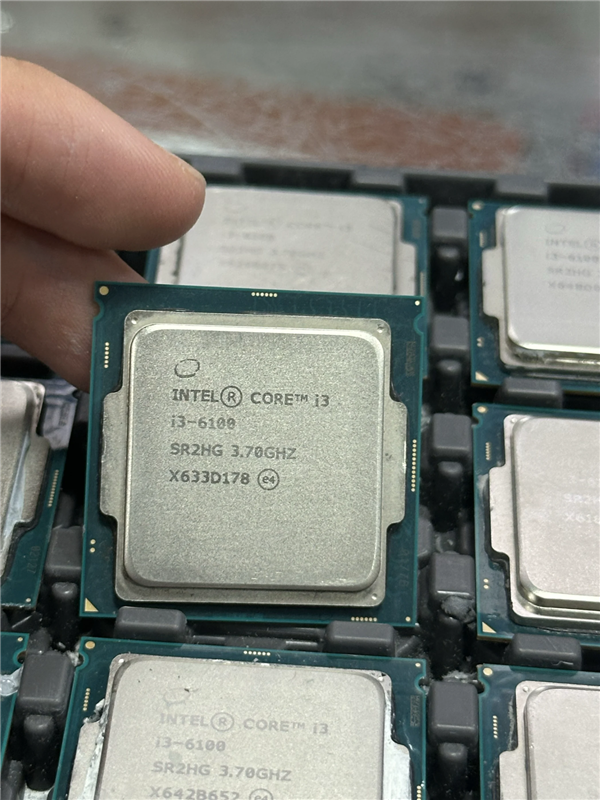
It should be noted that this gameplay is not as simple as imagined. Since BCLK not only affects the CPU core frequency, but also the memory, Ring Bus and other frequencies will also fluctuate accordingly. Once the system becomes unstable, the problem may not lie in the CPU core itself.
It is recommended to lower the memory frequency by one or two gears before trying it to prevent the memory from becoming the first part to fail during the overclocking process.
And the more troublesome part is the BIOS. If the motherboard is still using the original BIOS from the early days of Skylake (that is, it has never been updated), non-K overclocking can be performed directly in some cases. If the motherboard has been upgraded to a later version of the BIOS, the BIOS may need to be modified to unlock this feature again.
The netizen said that he seemed to have an ASUS or ASRock motherboard that met the requirements, so he began to seriously consider using the old CPU he bought for $6. However, so far, the netizen has not confirmed the motherboard model, nor has he disclosed whether the overclocking was successful.
Comments