
Abstract:
Researchers at the University of Sheffield in the UK have successfully recreated the unique color-changing effect of an ancient Roman glass that is more than 1,600 years old. This glass appears emerald green when light reflects off the surface, but turns to a vivid ruby color when light penetrates the glass. Although modern science has long understood the physics behind this phenomenon, glass manufacturers have struggled to replicate it stably. Now, the research team has finally achieved this effect through a new set of material formulas and experimental processes.
This study was inspired by the famous ancient Roman Lycurgus Cup. This glass was made in the 4th century AD and is now collected in the British Museum. It is one of the most complete preserved works among the approximately 40 ancient Roman reticulated glasswares in existence. It is also the only ancient glassware currently known to be able to exhibit this special discoloration effect.
The decoration of the Lycurgus Cup depicts the mythical Thracian king Lycurgus. He is entangled with vines, representing the story of being punished for his own mistakes. In 2022, an international jury composed of artists and cultural relic conservation experts named it one of the seven wonders of glass in the world, recognizing its exquisite craftsmanship, unique color and excellent state of preservation.
Scientists believe the secret to this glass lies in the tiny amounts of gold and silver that ancient Roman craftsmen added during the production process. Under certain conditions, these metals can form nanoparticles of extremely small sizes and distribute them in different structures inside the glass. The size of these particles is much smaller than a grain of sand, even smaller than the wavelength of visible light, and can produce strong absorption and scattering of light. Because the particles vary in size, shape, and arrangement, the glass displays colors that change depending on how light travels.
This phenomenon is called dichroism. Simply put, when an observer sees light reflected from the surface of the glass, the glass appears green; when light passes through the back of the glass, the transmitted light appears red. This effect is not caused by ordinary pigments, but the result of the interaction between the metal nanostructures inside the glass and light.
However, understanding the principles does not mean that they can be easily copied. There is still no clear answer to what kind of recipes, furnace conditions and processing steps the ancient Roman craftsmen used. Although modern researchers have made many attempts before, it has always been difficult to stably obtain a color change effect similar to that of the Lycurgus Cup.
The breakthrough began with a commission from Christina Metcalfe, head of the Molecular Photonics Program at the University of Sheffield. In 2025, she invited Lisa Hollands, a technical expert with more than 25 years of experience in glass research and production, to recreate this special glass for the University's LightFest event.
Hollands first cooperated with Professor Caroline Jackson, an expert on Roman glass, to study the known composition and production characteristics of ancient glass, and used modern raw materials to prepare a basic material that simulated ancient Roman glass. Then the really hard work begins: how to get small amounts of gold and silver into the glass in the right form, and ultimately form nanostructures with special optical properties.
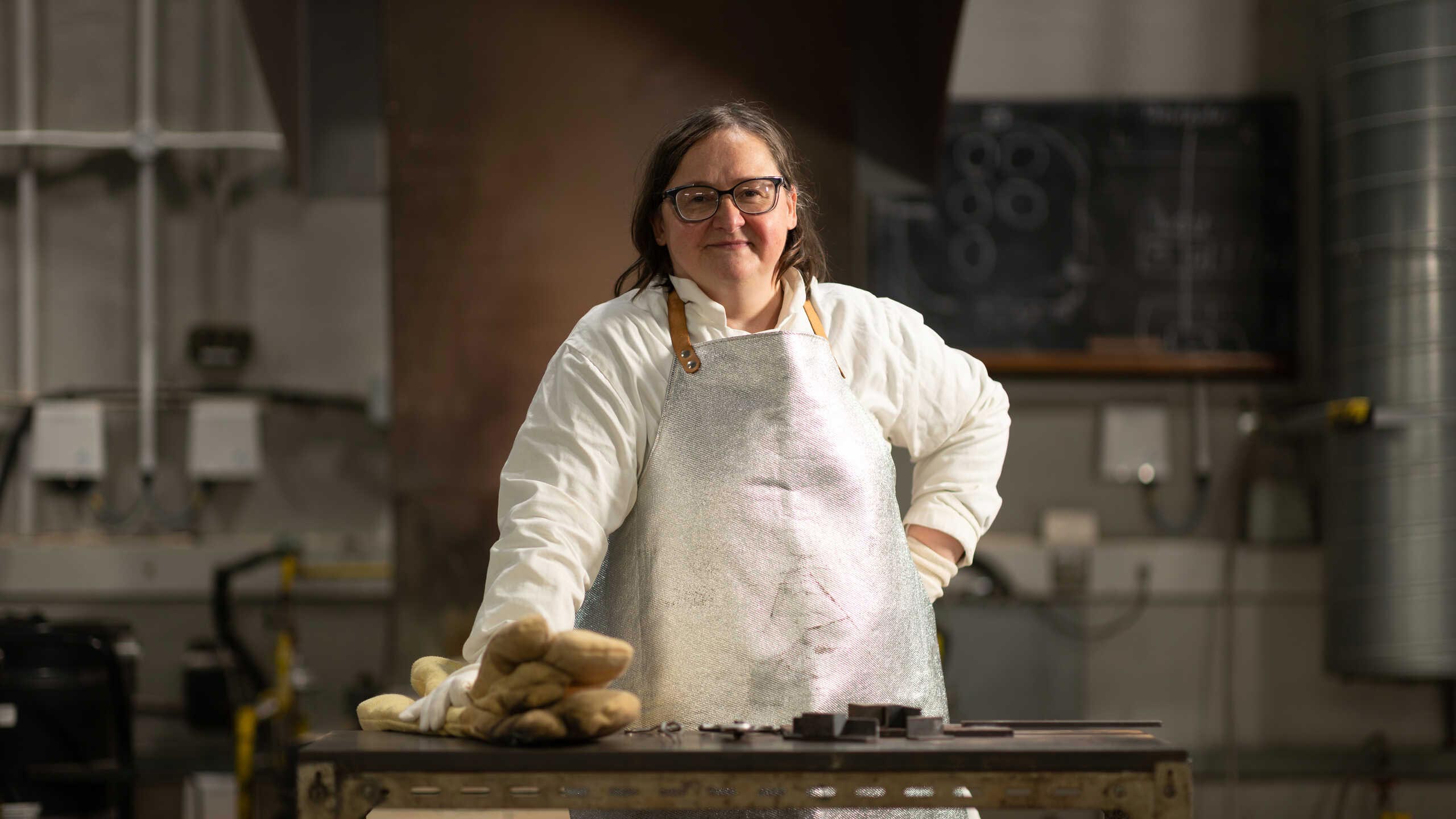
To do this, she experimented with different types of furnaces, raw material combinations and oxygen levels, and even tested the effects of adding sugar to the glass recipe. After much experimentation, she finally succeeded in creating a glass sample that appeared opaque green in reflected light and turned red when backlit.
This achievement proves that the special optical effects of the Lycurgus Cup can be recreated using modern materials and experimental techniques. However, the researchers do not claim to have completely restored the original recipe of ancient Roman craftsmen. Modern experiments use materials and processes that achieve the same visual results, but this does not mean that the Romans of 1,600 years ago used exactly the same methods.
After completing the recipe, the research team decided to go one step further and create a modern piece of art that would showcase the unique properties of this glass while paying homage to ancient craftsmen. They invited British glass artist Elliot Walker to participate in the creation. Walker won the second season of Netflix's glass art competition show "Blown Away."
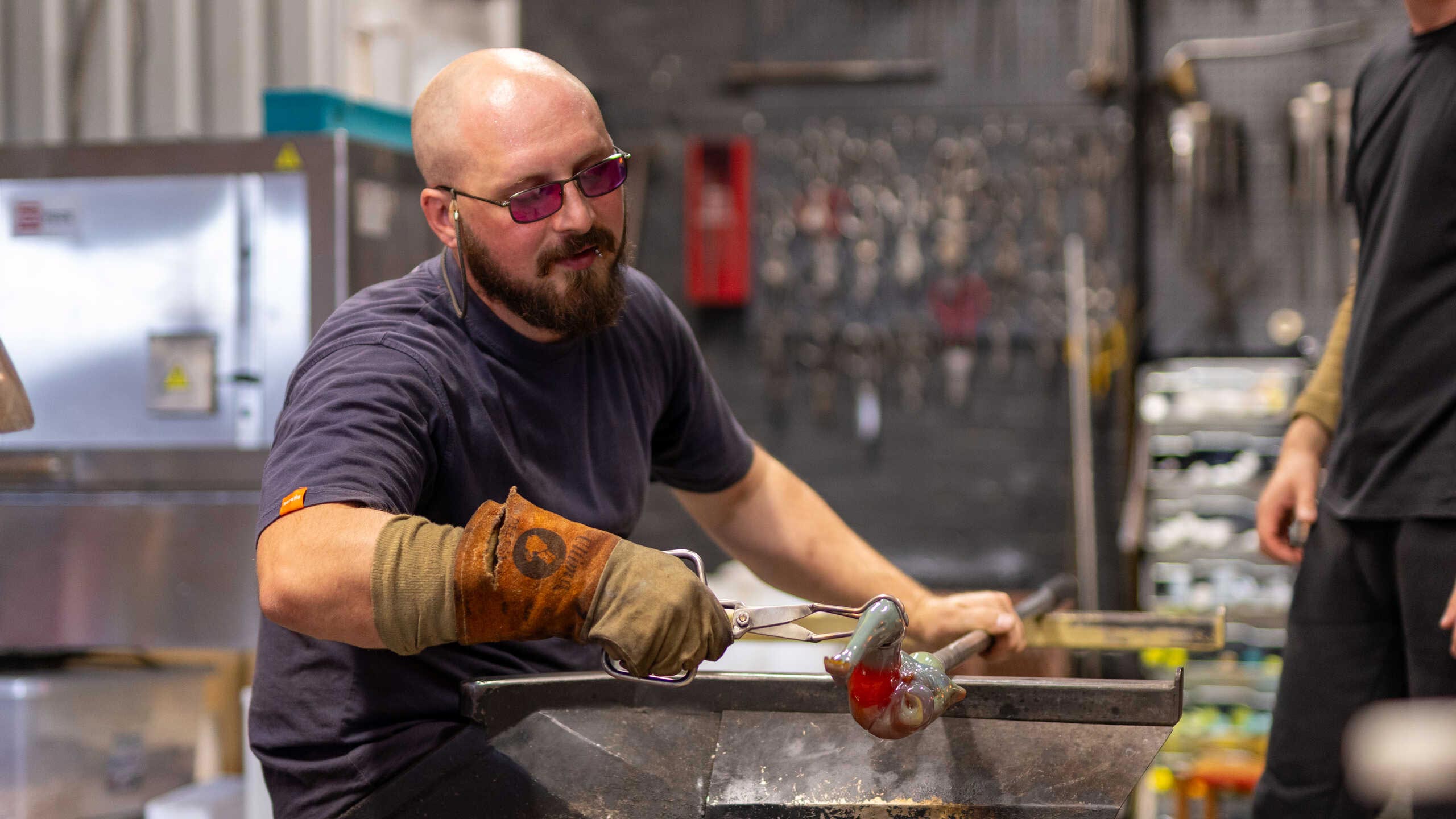
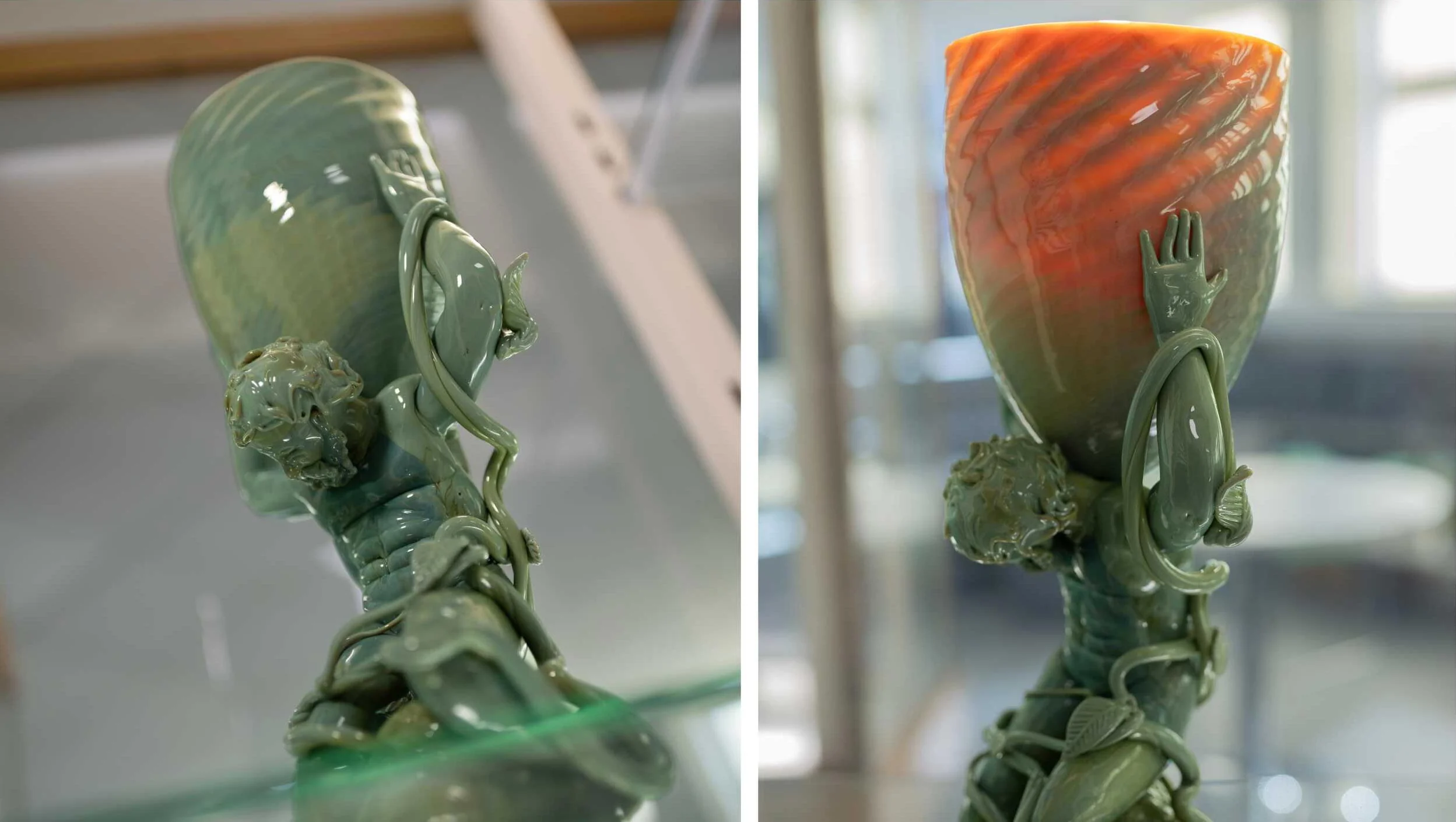
Walker drew inspiration from the myth of the Lycurgus Cup and the ancient Greek and Roman sculpture "Farnese Atlas" to design a modern sculpture that combines elements of both classical arts. The work retains the theme of the story of Lycurgus and replaces the sphere that originally symbolized the celestial body with a glass. At the same time, the blown glass structure is specially designed to allow the audience to intuitively observe the color changes of the material under different lighting conditions.
This work is scheduled to be exhibited for the first time at the Millennium Gallery during the Festival of the Mind at the University of Sheffield from 6 to 15 November 2026. Once the exhibition closes, it will become part of the permanent collection of the Turner Museum of Glass at the University of Sheffield.
The significance of this research is not limited to art and ancient glass craftsmanship. The researchers pointed out that understanding how metal nanoparticles are formed inside glass is expected to help develop new photonic materials. Such materials can use light rather than traditional electronic signals to achieve specific functions, and have potential applications in fields such as solar energy, quantum technology and medical diagnosis.
In addition, the University of Sheffield has a team specializing in vitrification technology for radioactive waste. The team works to immobilize complex nuclear waste in glass structures so hazardous materials can be safely contained for long periods of time. The experience in glass composition design and microstructure control accumulated in this research may also provide reference for the development of nuclear waste solidified glass with more advanced properties.
In a sense, modern scientists' re-creation of the Lycurgus Cup is not only a reproduction of ancient craftsmanship, but also reveals the nanomaterial science contained in ancient Roman glass manufacturing technology. Craftsmen more than 1,600 years ago may not have understood the interaction between metal nanoparticles and light, but they have created amazing optical materials through experience and craftsmanship.
Comments