
Abstract:
Researchers at Kobe University in Japan have developed a new pigment-free coating technology that produces bright colors through the special interaction between silicon nanoparticles and light. It can achieve a gloss effect close to the original car paint without the use of traditional dyes or pigments. This technology can not only be applied to the surface of complex three-dimensional objects, but also maintain the original color after adding a protective coating. It is expected to bring new options for surface treatment of automobiles, aircraft and other large industrial products.
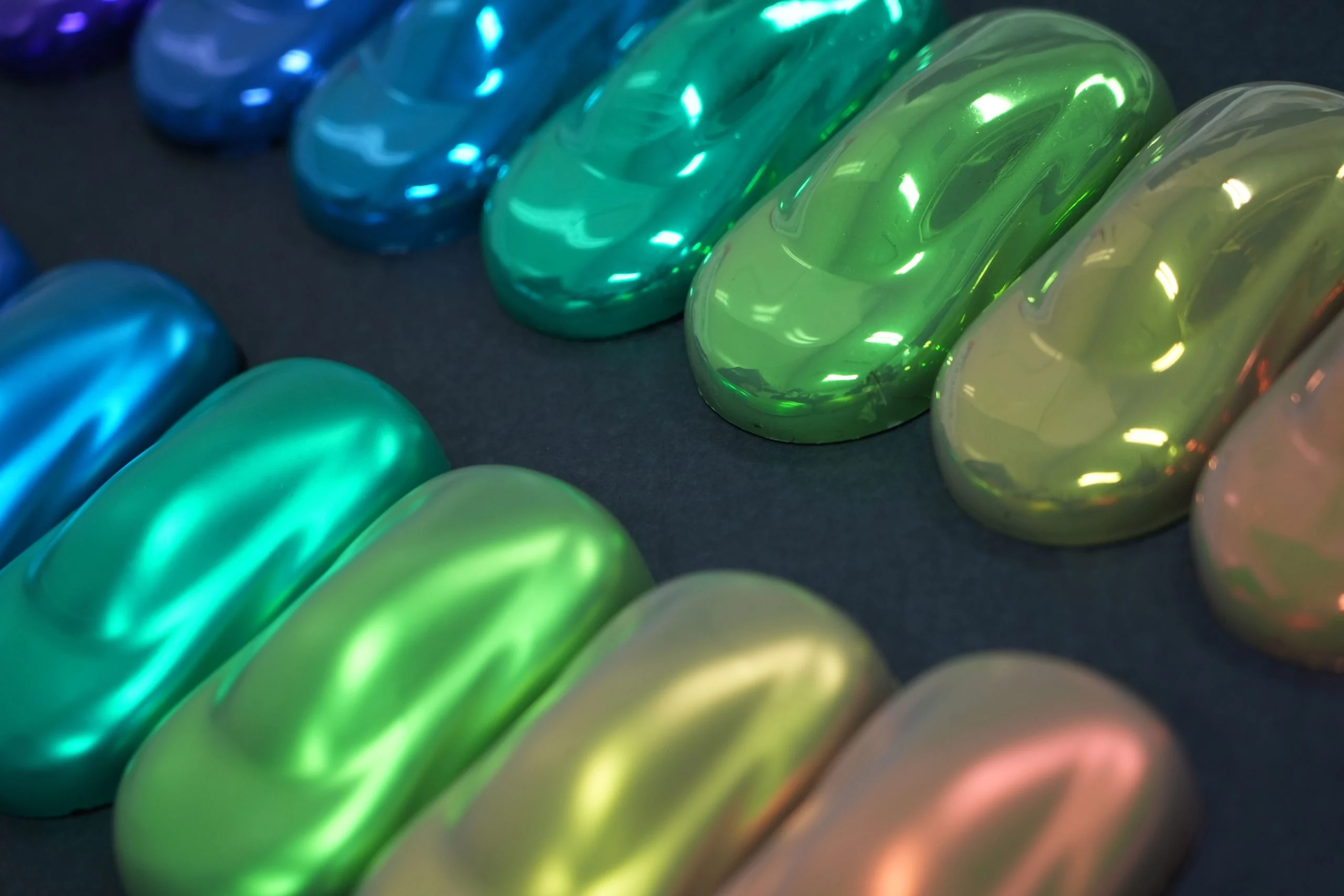
Traditional automotive paints usually rely on pigment molecules to absorb light of specific wavelengths and then reflect light of other wavelengths to present different colors. This technology has developed quite maturely, but it also has some inherent flaws. For example, some organic pigments will degrade after being exposed to ultraviolet rays from the sun for a long time, causing car paint to fade. In addition, traditional paints often require thicker coats to achieve adequate coverage and color saturation, adding weight to cars and other vehicles.
The team led by Hiroshi Sugimoto, a materials engineering researcher at Kobe University, chose a different technical route: no longer relying on the chemical properties of the pigment itself, but controlling the reflection and scattering of light through nanoscale material structures, allowing originally colorless materials to appear brightly colored.
This phenomenon is called structural color and is not uncommon in nature. The brilliant colors of peacock feathers, butterfly wings and some beetle shells do not come entirely from pigments in the traditional sense, but are produced by the interaction of microstructure and light. By tuning these microstructures, the material can selectively reflect specific wavelengths of light, resulting in different colors.
However, it is not easy to truly apply structural color technology to industrial coatings. Although past research has been able to create brightly colored structural color materials, there is often significant angle dependence, that is, the color of the material may change when the observer looks from different directions. Additionally, many structural color coatings struggle to simultaneously achieve the high gloss, uniform coverage and long-term durability required of traditional automotive paints.
Hiroshi Sugimoto's team has previously demonstrated that silicon nanospheres can produce structural colors that are not easily changed with the viewing angle, and developed a method to create related coatings using inkjet printing technology. However, there was a problem with the early plans: the surface of the material was prone to excessive diffuse reflection, and the final effect was relatively dull, lacking the smooth mirror texture common in automotive paint.
To solve this problem, researchers redesigned silicon nanoparticles.
The new solution wraps a thin silica shell around the silicon nanospheres. These shells not only protect the particles inside, but also precisely control the distance between them, making it easier for the nanoparticles to form well-aligned structures.
In this way, the researchers reduced the random scattering of light within the material, making the reflected light more concentrated, resulting in brighter and more uniform colors, while being able to adjust the glossiness of the surface as needed.
The diameter of the silicon nanospheres used in this study is about a quarter of a micron, equivalent to about 250 nanometers, which is only about one percent of the diameter of a human hair. By properly arranging these particles, the researchers were able to achieve high opacity and color brightness with just one layer of nanoparticles.
One of the most important breakthroughs of this research is the successful solution of the application problem of structural color coatings on complex three-dimensional surfaces.
Traditional structural color materials often require very precise planar microstructures. Once applied to curved surfaces or complex shapes, color unevenness is prone to occur. The new technology demonstrated by the Kobe University team can be applied to the surface of large and complex three-dimensional objects, making it no longer limited to flat samples in the laboratory.
Another important development is the compatibility of protective coatings.
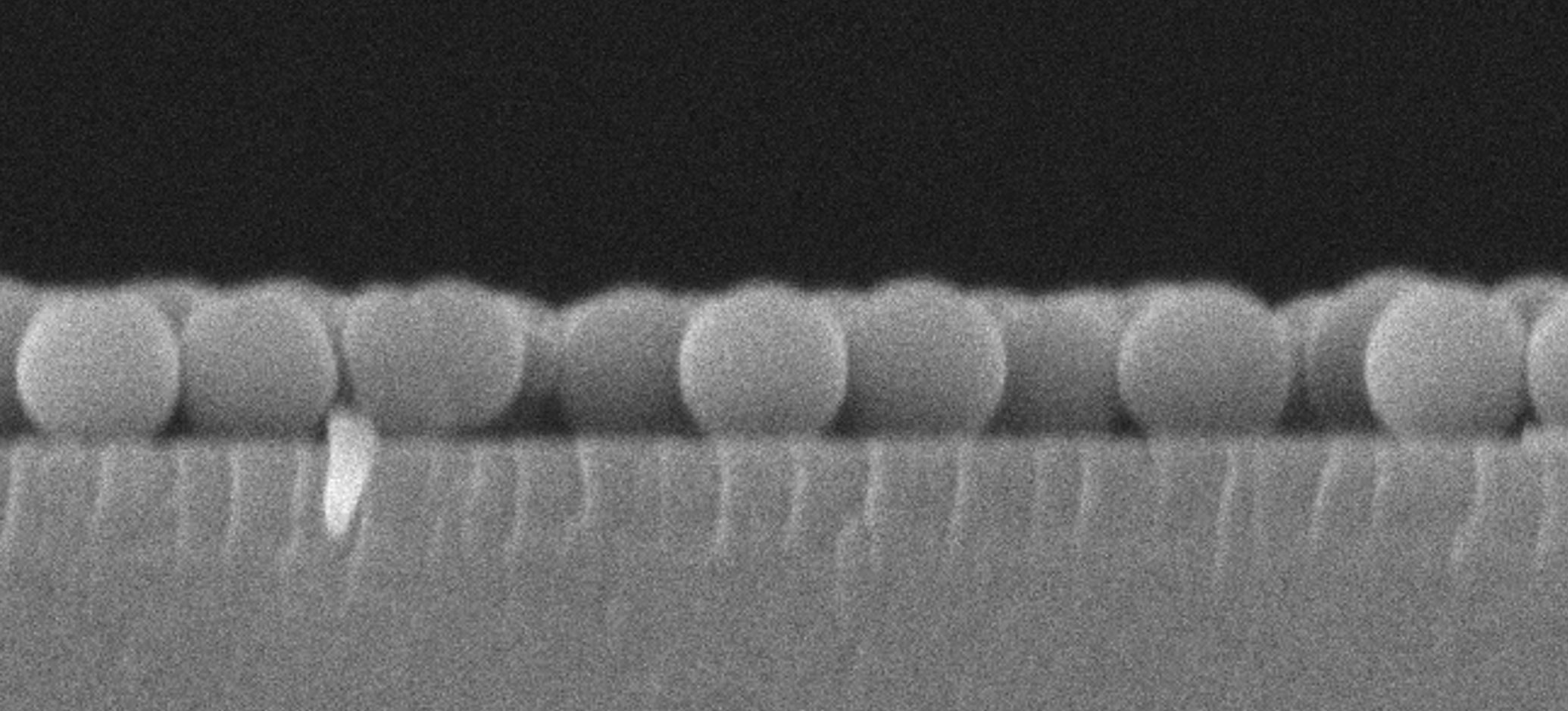
Automotive paint often requires an additional clear protective layer to resist scratches, chemicals, UV rays, and daily environmental damage. However, for traditional structural color materials, an additional layer of protective material may change their optical properties, resulting in a color shift.
The researchers found that adding a protective layer to the new silicon nanoparticle coating did not significantly change the final color. This means that it has the opportunity to adopt a multi-layer coating structure like traditional automotive paint to meet the appearance and protective performance requirements of actual industrial products.
Besides appearance, the most interesting potential advantage of this technology is weight.
Traditional aircraft painting requires a large amount of paint, and the coating weight of a wide-body passenger aircraft may reach hundreds of kilograms. For airlines, aircraft weight is directly related to fuel consumption and operating costs, so any technology that can reduce the weight of the fuselage has real value.
The research team estimates that if this silicon nanoparticle structural color coating is used, the coating weight of the same area can theoretically be reduced from about 300 kilograms to about 300 grams, a reduction of nearly 99.9%.
It should be emphasized that this number is a theoretical estimate made by researchers based on material properties, and is not an application test that has been completed on an actual passenger aircraft. But it speaks volumes about the weight advantages ultra-thin structural color coatings can have in aerospace.
In terms of environmental protection, this technology also has potential value. Some organic pigments in traditional paints rely on complex chemical synthesis processes and may degrade with long-term exposure to light. In contrast, the new technology mainly uses silicon and silica as base materials.
Silicon is a material widely used in the semiconductor industry and can be obtained through mature industrial supply chains; silicon dioxide is an abundant substance in the earth's crust. Because structural colors do not rely on traditional organic pigments that are susceptible to photochemical degradation, the need for repainting due to fading is expected to be reduced in the future.
However, the researchers also pointed out that the complete environmental benefits of this coating in large-scale industrial production cannot yet be determined. Nanoparticle manufacturing, coating processing, and final recycling processing still require further evaluation.
To commercialize the technology, Sugimoto is helping to establish a start-up that hopes to turn laboratory results into industrial coatings that can be mass-produced.
It is worth noting that this material does not necessarily require a complete disruption of existing painting production lines. The research team stated that its manufacturing process is expected to be compatible with mature industrial technologies such as spray coating, slot coating, and roll-to-roll processing. This means that in the future, corresponding coating methods can be selected based on the shape and production needs of different products without having to build a completely different manufacturing system from scratch.
The researchers' long-term goals aren't limited to automotive and aircraft coatings, either. They hope that by tuning the optical properties of silicon nanoparticles, the material will have more functions, such as detecting environmental changes, promoting photocatalytic reactions and participating in energy management.
This means that future coatings may no longer just give products a beautiful appearance, but can also undertake environmental sensing, light energy utilization and other functions.
Relevant research results were published in the academic journal "Small Structures" on September 3, 2026. The paper is titled "Using a single layer of all-dielectric nanoparticles to achieve high-gloss, non-iridescent conformal structural color coatings for three-dimensional objects."
From the perspective of the automotive industry, the most noteworthy aspect of this technology is that it attempts to simultaneously solve several long-standing problems faced by structural color materials: color changes with viewing angles, insufficient surface gloss, difficulty in covering complex curved surfaces, and incompatibility with traditional protective coatings.
If its cost, weather resistance and scratch resistance can be verified through large-scale production in the future, this pigment-free coating will have the opportunity to enter the field of automotive exterior painting. For aircraft manufacturers, the potential economic value of reducing the weight of coatings is also considerable.
Of course, long-term verification is still needed from laboratory results to actually replacing mature automotive paint systems. But this research shows a promising direction for material development: the color of future cars may no longer need to rely on a large number of chemical pigments, but can directly control light through nanostructures to allow the material itself to produce color.
Comments