
Abstract:
Google's "Suncatcher" prototype space data center satellite has been officially put into operation and has successfully established communications with the ground. The satellite was launched earlier this month aboard a SpaceX Falcon 9 rocket and entered orbit with more than 100 spacecraft, marking an important step in Google's expansion of artificial intelligence computing capabilities into the space environment.
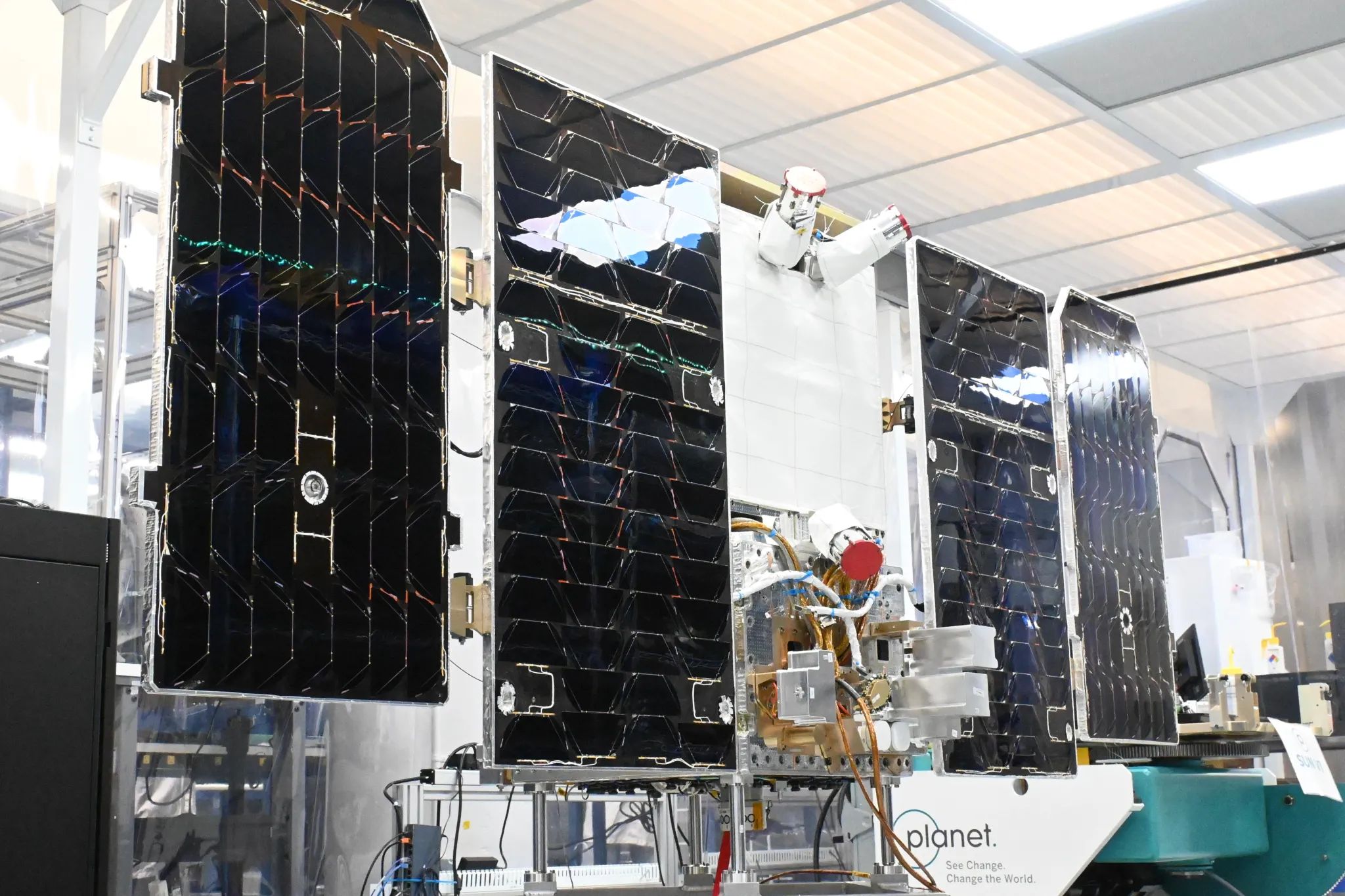
This satellite is equipped with a Google Tensor Processing Unit (TPU) artificial intelligence acceleration chip and can generate up to about 1 kilowatt of electricity. The goal of the project is to pave the way for a future "orbital data center network" composed of multiple closely spaced cooperative satellites, so that large-scale AI inference tasks can be completed directly in space.
However, current technology still faces many challenges. Due to the high power consumption of the TPU, the satellite can only activate the chip for about 20 minutes at a time, which makes the already complex space-to-ground communication work more difficult. After about three weeks of on-orbit testing and system calibration, the satellite finally entered the official operation stage.
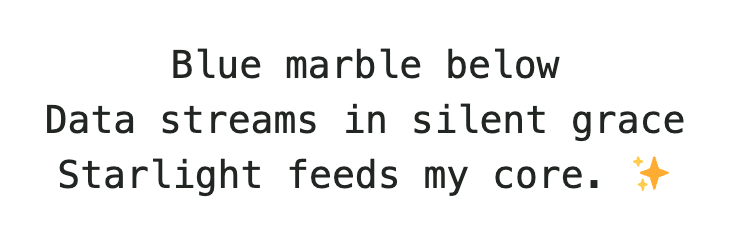
In order to verify the system's functionality, Google engineers sent prompt instructions to the satellite for the first time this week, asking the Google DeepMind Gemma 4 model pre-installed on the satellite to create a haiku about space. The main idea of the work given by the model is: "The blue planet shines quietly below, the data flow flows safely, and the starlight nourishes my core."
In addition to letting AI write poetry in space, Google also uses this model to collect and report information about the orbital environment around satellites. A Google spokesperson said that the satellite is currently operating normally and all systems are working as expected.
Next, Google will focus on evaluating the reliability of TPU chips in extreme environments in space, including thermal stress caused by temperature changes and the impact of cosmic radiation on hardware. Although Google has previously conducted extensive testing of TPUs in ground-based particle accelerators, long-term performance in real space environments still requires further verification.
One of the most concerning issues is the phenomenon of radiation-induced "bit flipping," in which data bits in computer memory change unexpectedly due to the action of high-energy particles. This situation may cause data corruption that may not be detected in time by conventional monitoring systems.
Previous ground experiments have shown that the impact of radiation on AI inference tasks is relatively limited, but it may cause more obvious problems during model training. Now, Google is finally able to verify these speculations with actual on-orbit operation data, rather than relying solely on laboratory simulation results.
If this mission proves that TPU can operate stably in space, Google plans to launch two more follow-up satellites using more advanced chips in 2027. The new generation of satellites will have greater power generation capabilities and demonstrate optical communication link technology between satellites.
The space data center solution envisioned by Google is different from other projects in the current industry. The core idea is to establish a high-speed interconnection network between satellites in orbit so that multiple satellites can collaboratively process the same workload, thereby forming an orbital computing platform with distributed computing capabilities. In contrast, although some competing solutions also plan to use laser communications, the distance between satellites is long, making it difficult to achieve efficient collaborative computing.
As artificial intelligence’s demand for computing power and energy continues to grow, Google is trying to expand its data centers from the ground to space. The successful operation of the Suncatcher satellite not only verified the feasibility of related concepts, but also took a key step towards building a real orbital AI computing infrastructure in the future.
Comments