
Abstract:
Google is advancing a space data center plan called "Suncatcher" and launched its first experimental satellite to verify key technologies of the project on October 1. However, Google's own research also revealed a very real problem: If a large-scale AI data center is really to be built in orbit in the future, SpaceX's current rocket capabilities alone are far from enough. The cost of entering orbit must be reduced to about US$200 per kilogram, and this goal may require about 1,800 starship launches to gradually be achieved.
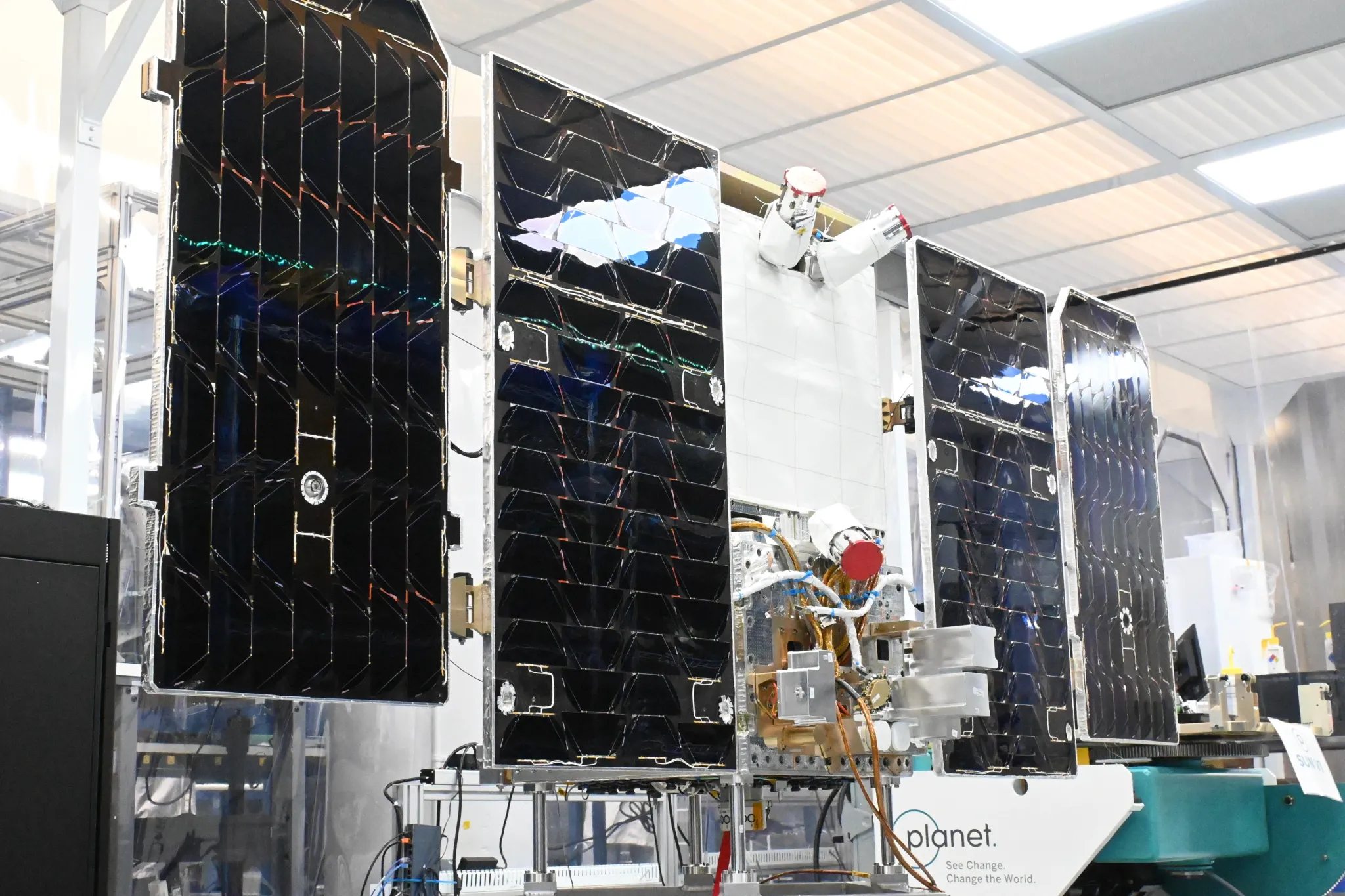
The experimental satellite was manufactured by Planet Labs and equipped with the Tensor Processing Unit, or TPU, independently developed by Google. This is the first time that Google has sent its own AI-specific processor into space for actual operational testing. The satellite will verify whether the TPU can work for a long time in the orbital environment, including key issues such as power supply, heat dissipation, and running AI models in the space environment.
This experimental satellite can be regarded as a technology verification platform for the Google Suncatcher project. Its scale is still very limited. It only has a small number of TPUs inside and does not have the computing power of a real data center. Google hopes to confirm one of the most basic questions through this mission: whether AI computing chips can work reliably in an orbital environment.
If the answer is yes, Google will further try to form a large number of computing satellites into an orbiting computing cluster in the future, use solar energy to power AI processors, and use high-speed communication connections between satellites to form a computing infrastructure similar to a data center.
The reason why Google considers putting its AI data center in space is related to the increasingly serious energy problems in ground data centers. Large-scale AI data centers consume a lot of power, and as the scale of AI models continues to expand, the demand for computing power is still growing rapidly. Ground data centers not only need to build a large number of power generation and transmission facilities, but also need to solve problems such as land, cooling and power grid capacity.
In contrast, the orbital environment can obtain relatively stable solar energy, and satellites do not need to occupy ground land. Google's research believes that under certain conditions, space solar energy can become a potential source of energy for AI computing.
But the problem is that the cost of sending data centers into space is still very high.
The Suncatcher technical paper released by Google estimates that if we hope to reduce the transportation cost of orbital data centers to about US$200 per kilogram, we will need a new generation of launch vehicles to achieve large-scale reuse and significantly increase the launch frequency. According to Google's model, approximately 370,000 tons of additional payload would be needed just to put the cumulative mass needed to achieve this cost target into orbit.
If calculated based on the fact that each starship can transport about 200 tons of payload to orbit, it is equivalent to about 1,800 starship launches.
This does not mean that Google needs to launch 1,800 starships before launching its first space data center, but it is a calculation used to measure the scale of the entire industry and transportation costs in the future. Google's research believes that if the entire aerospace industry hopes to reduce the cost of orbiting to approximately US$200/kg and establish transportation capabilities sufficient to support large-scale space data centers, it will need to achieve a cumulative launch scale of this order of magnitude.
According to this model, an average of about 180 starship launches will be needed per year in the future to maintain the corresponding transportation speed. Google believes that although this launch frequency is very high, it theoretically does not exceed SpaceX’s long-term starship development goals.
SpaceX has begun positioning starships as the core vehicle for future large-scale space infrastructure in recent years. The company believes that if the starship can be fully reused and eventually achieve the ability to launch once an hour and deliver about 200 tons of payload to orbit at a time, millions of tons of equipment can be transported to space every year.
SpaceX has even proposed a more radical idea, which is to build orbital AI computing infrastructure through large-scale launches. According to SpaceX's own estimates, if each ton of orbiting satellites can provide about 100 kilowatts of computing power, then deploying 1 million tons of equipment into space every year may add about 100 GW of AI computing power.
However, there is still a huge gap between these goals of SpaceX and its current actual capabilities. Although the Starship has conducted many test flights, its full reusability, stable commercial launch capabilities and high-frequency launch capabilities still need to be further verified.
Google itself has not ignored this issue. The economic model of the Suncatcher project actually relies heavily on the ability of next-generation reusable rockets to significantly reduce the price of orbit.
The current orbital cost of traditional commercial rockets is still much higher than what Google needs. Previous Google research estimated that if orbital data centers are to compete economically with terrestrial data centers, launch costs need to drop significantly from the current level of thousands of dollars per kilogram to a few hundred dollars or even less.
Google's research even gives a clearer long-term goal: by around 2035, if the cost of entering orbit is reduced to less than US$200 per kilogram through a new generation of launch vehicles, then space data centers may truly have the economic basis for large-scale expansion.
In addition to rocket costs, space data centers have another issue that is easily overlooked, and that is the manufacturing cost of the satellite itself.
Even if the cost of sending computing chips into orbit is reduced, if the satellites used to carry these chips themselves are still very expensive, then the overall business model will still be difficult to establish. Space data centers require a large number of solar panels, cooling equipment, communication equipment, computing modules and radiation-resistant hardware, and the manufacturing costs of these equipment must be further reduced.
Heat dissipation in particular is a particular problem. Ground data centers can use air, water cooling systems or other liquid cooling technologies to remove heat, but vacuum environments cannot dissipate heat through air convection. Orbital data centers must mainly rely on radiation to release heat into space, so a large-area heat dissipation structure needs to be designed.
On the other hand, cosmic radiation in the space environment will also affect AI chips. An important purpose of Google's experiment is to observe whether TPU will be affected by radiation in a real orbit environment, and whether the system can detect and recover when an error occurs.
Communication is also key to the success of orbital data centers. A large number of computing satellites must be connected through high-speed links, otherwise it will be impossible to form unified computing resources similar to ground AI clusters. Google therefore needs to solve the problem of high-speed data exchange between satellites and data transmission between satellites and the ground.
Google currently plans to use solar energy to drive these orbital computing devices and use communication links between satellites to form a large-scale computing network. Since solar energy can provide a relatively stable supply in orbit, this solution can theoretically avoid the problem of ground data centers constantly increasing grid capacity.
But from the current stage, Google's Suncatcher is still an early experimental project. The satellite launched this time is only to verify "whether TPU can work in space", and there is still a long way to go before the actual establishment of an AI data center composed of hundreds or even thousands of satellites.
At the same time, Google is not the only company researching orbital data centers. SpaceX has publicly discussed deploying large-scale AI computing satellites in orbit, startups such as Starcloud are also studying similar solutions, and other technology and aerospace companies have also shown interest in using space solar energy to run AI computing facilities.
The biggest disagreement in this area right now is cost. Proponents argue that as AI data centers' demands for power and land continue to grow, terrestrial infrastructure may eventually become increasingly expensive, while advances in reusable rockets, mass manufacturing of satellites, and solar energy have the potential to make space-based computing economically competitive in the future.
But another view is that orbital data centers must also bear additional costs such as satellite manufacturing, rocket launches, space cooling, radiation protection and communications. Therefore, even if starships are successfully reused on a large scale, it cannot be simply assumed that space data centers will necessarily be cheaper than ground data centers.
At present, Google's own research has not concluded that "space data centers will soon replace ground data centers." On the contrary, the number of 1,800 starship launches just shows that for orbital computing to truly reach the level of large-scale commercialization, the cost and launch capabilities of the entire space transportation industry will require huge changes.
The launch of the Suncatcher prototype satellite is therefore more like the first step of the entire plan. Google first needs to prove that TPU can operate in space for a long time, then solve engineering problems such as heat dissipation, communication and radiation, and finally expand the experimental orbital computing platform into a real data center through large-scale satellite manufacturing and low-cost high-frequency launch.
If a new generation of heavy-duty reusable rockets such as future starships can really achieve the launch cost and frequency envisioned by Google's model, then 1,800 launches will not be a task that needs to be completed at one time, but may become a transportation capability gradually accumulated in the process of building new space infrastructure. For Suncatcher, which is still in the experimental stage, what really determines the success or failure of the project is whether these numbers can be transformed from an economic model on paper into real engineering capabilities.
Comments