
Abstract:
SpaceX plans to conduct the 14th test flight of "Starship" on September 28, and attempt to put the starship into orbit and fly around the earth for the first time. The U.S. Federal Aviation Administration approved the launch and reentry operations on September 26, giving the go-ahead for this critical test.
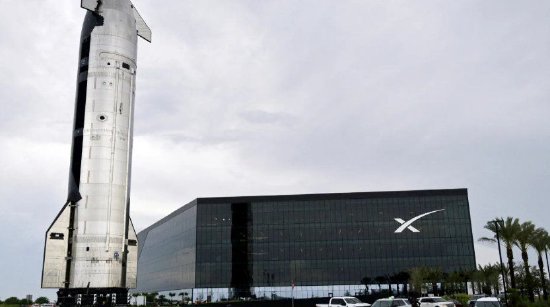
According to the plan announced by SpaceX, the launch window will open at 8:15 a.m. Eastern Time in the United States at Starbase, Texas. Unlike the previous 13 tests, which mainly focused on flight performance, reentry and recovery capabilities, the goal of the 14th test flight will be further advanced to a complete orbital flight.
The 14th test flight aims to enter orbit for the first time
SpaceX’s previous 13 starship tests did not have the main goal of completing orbital flight, but this time the company hopes to complete the starship’s flight around the earth, which will become an important technical hurdle for the entire project.
The Starship is composed of the Starship spacecraft and the Super Heavy first-stage booster. The design goal is to achieve complete reuse and put larger payloads into orbit at a lower cost. For SpaceX, truly achieving stable orbital entry is a necessary step for the starship to move from an experimental test project to a commercial and government mission platform.
This test flight will also verify the complete mission chain of launch, orbital flight and reentry, so it requires higher maturity of the entire system than previous tests.
26 Starlink V3 satellites will be deployed at the same time
In addition to attempting to enter orbit for the first time, SpaceX also plans to deploy 26 new-generation Starlink V3 satellites in this mission.
The V3 satellite is larger and more powerful. Its solar array has approximately twice the power generation capacity of previous models and has higher data transmission capabilities. Due to the increase in satellite size and weight, SpaceX needs to rely on the large-scale carrying capacity of the starship to more efficiently deliver the new generation of Starlink satellites into orbit in batches.
SpaceX currently has about 11,000 active satellites in orbit, which is much higher than the approximately 650 satellites of its main competitor Eutelsat OneWeb. Starlink is currently one of SpaceX's most important businesses, and the deployment speed of higher-performance V3 satellites will be directly related to its future network capacity and coverage expansion.
Therefore, this test flight is not only a technical test of the starship itself, but also an important step in SpaceX's attempt to truly integrate the starship into the Starlink commercial system.
Starship will become a key capacity for SpaceX to expand the scale of Starlink
SpaceX has always hoped to significantly reduce the launch cost of a single satellite through starships while increasing the number of payloads per mission.
The existing Falcon 9 has supported Starlink to complete large-scale constellation deployment, but as the size and power of V3 satellites continue to increase, the larger payload capacity of the starship will become more important. If the Starship can achieve high-frequency, reusable launches, SpaceX can deploy more and larger satellites at one time, thus accelerating the upgrade of the Starlink network.
Musk previously said that Starlink may assume a large proportion of the world's Internet connection business in the future. Under this goal, the role of Starship is no longer just a new generation launch vehicle, but an important infrastructure for Starlink to further expand its scale.
NASA’s lunar mission also relies on starship maturation
The significance of Starship is not limited to SpaceX’s own business.
The company is preparing the starship for an important NASA test mission next year, and plans to eventually use the starship to return American astronauts to the lunar surface.
Therefore, the progress of starship testing in the future will also directly affect the U.S. manned moon landing plan. The previous consecutive test flights were mainly used to solve flight control, re-entry and hardware reliability issues. If the first complete orbit can be successfully completed, it will further verify the starship's ability to perform more complex deep space missions.
SpaceX also plans to use starships to deploy space AI computing platforms
In addition to communications satellites and lunar missions, SpaceX also plans to use Starship for new space computing infrastructure.
SpaceX Chief Operating Officer Gwynne Shotwell said this month that the company plans to use Starship to launch "AI computing satellites" in 2027 to deploy "supercomputing" capabilities in orbit.
This idea means that the main payload of the starship in the future may no longer be limited to communication satellites, but will be expanded to larger and higher-power computing platforms. Compared with traditional launch vehicles, Starship’s larger transport capacity and reusable design are more suitable for deploying large-scale space infrastructure at one time.
Therefore, the core focus of the 14th test flight is not just whether the starship can complete a flight around the earth. For SpaceX, the first real entry into orbit is a key step from the test phase to Starlink expansion, NASA lunar missions and future space AI computing platforms.
Comments