
Abstract:
SpaceX announced that its super-heavy starship will perform its 14th test flight on September 22, and will make the first official attempt to put the upper stage of the starship into earth orbit. If the mission is successful, it will become an important milestone in the development of the Starship project. It will also be the first time SpaceX uses Starship to perform a launch mission that can generate actual commercial revenue.
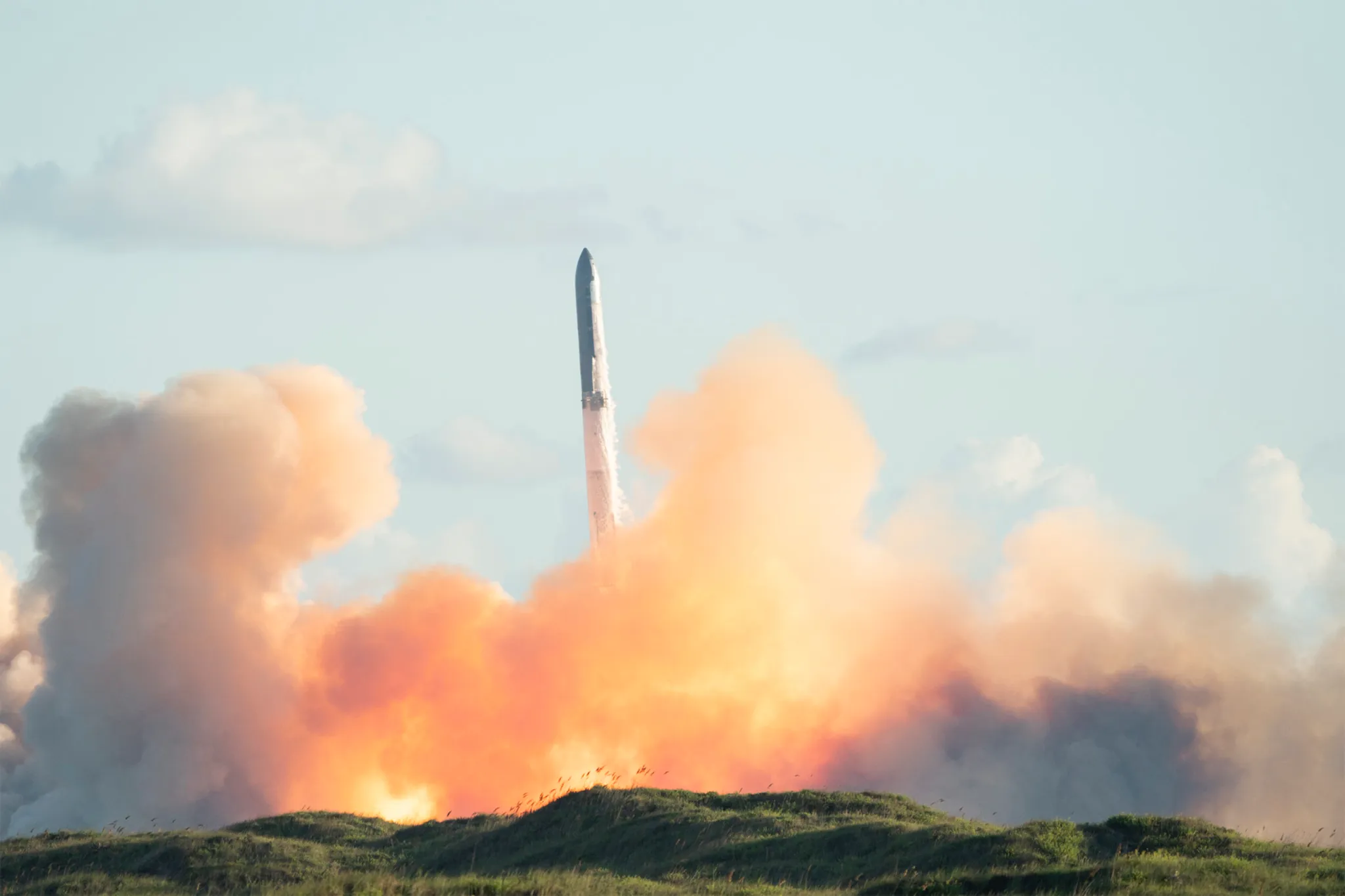
The launch is scheduled for September 22, and the launch window will open at 7:15 a.m. Central Time that day and last 75 minutes. The mission will take place from SpaceX's Starbase in southern Texas. According to the current plan, the Starship upper stage will release 26 third-generation Starlink V3 satellites after entering orbit. This will be the first time that V3 satellites have officially joined SpaceX’s current Internet constellation of approximately 10,000 satellites.
If the mission is successfully completed, this will be the first time a Starship has carried out a true commercial payload mission. Although the cost and related revenue of this launch ultimately came from different business units within SpaceX, for the company's launch business, this still means that the starship has begun to move from a pure research and development test platform to a commercial launch system.
This is also the second Starship test flight conducted by SpaceX since it became a listed company. SpaceX completed the largest IPO in history and went public in June this year, and its first starship test mission was conducted in July. At that time, Starship had successfully released the V3 Starlink satellites, but those satellites were mainly used to verify the Starship's satellite deployment capabilities. They were not planned to stay in orbit for a long time. Instead, they re-entered the atmosphere and burned up about 20 minutes after entering space.
In contrast, the September 22 mission will actually attempt to put the Starship upper stage into Earth orbit and allow it to perform orbital missions. This step is significant for SpaceX, as the company has invested billions in the project and hopes to eventually use Starship to replace the Falcon 9 and Falcon Heavy rockets currently responsible for the main launch tasks.
SpaceX founder and CEO Elon Musk has previously stated that the company will phase out the Falcon 9 and Falcon Heavy rockets only after the Starship can achieve reliable flights several times a week. One of the purposes of this is to focus limited engineering and production resources on the starship platform.
The key to whether the starship can achieve this goal is not only to enter orbit, but also to return to Earth and be quickly reused. SpaceX proposed a very aggressive launch frequency target during the listing process, so the starship needs to prove that it can stably complete the entire mission process, rather than only completing an orbital flight occasionally.
However, the 14th test flight will not attempt to complete the complete recovery process of the starship. Musk has recently given up on his previously proposed plan to try to use the launch tower's robotic arm to directly "capture" the upper stage of the starship during this mission. Musk said that if an explosion occurred during the capture attempt at this stage, it might cause too serious a setback to the entire Starship project, so the company decided not to take this risk for the time being.
At the same time, SpaceX will not try to capture the Super Heavy booster this time. In previous test flights, the booster has always had problems of varying degrees. During its most recent flight, Flight 13, Super Heavy once again had difficulty trying to re-ignite after separating from the starship's upper stage.
In response to the problems exposed in the 13th mission, SpaceX stated that it has made a number of hardware and software modifications to the Super Heavy booster used in this mission, hoping to solve the problems discovered in previous tests. This means that in addition to verifying the starship's first orbital flight capability, the 14th flight will also continue to test the improved Super Heavy system.
The performance of the starship upper stage in the 13th flight was relatively good. Although it did not enter orbit in the end, the entire flight process was relatively smooth and it completed the task of simulating a landing in the Indian Ocean. More importantly, the upper stage did not explode immediately after falling into seawater and capsized, giving SpaceX a rare opportunity to recover the complete vehicle and conduct follow-up research.
SpaceX subsequently spent several months salvaging the upper stage and slowly towed it back to its Texas headquarters for inspection. The engineering team obtained a large amount of data through the study of recovered aircraft and further adjusted the starship's heat insulation system accordingly. SpaceX said that the Starship used in the 14th flight has made additional improvements to the heat shield based on the experience gained from previous tests.
If the mission on September 22 can successfully put the upper stage of the Starship into orbit, SpaceX will officially cross one of the most important technical thresholds of the Starship project. For this super-heavy rocket designed to be fully reusable, entering orbit for the first time not only means that the engine, flight control, interstage separation and orbital flight systems have been further verified, but will also lay the foundation for the large-scale deployment of third-generation Starlink satellites in the future.
However, even if the 14th flight successfully enters orbit, SpaceX still has a long way to go before realizing the rapid and complete reuse of the starship. This mission will focus on verifying the key link of entering orbit, and the ability to reliably recover the booster and upper stage, capture the launch tower, and quickly fly again needs to be gradually verified in subsequent missions.
Comments