
Abstract:
As the artificial intelligence industry continues to expand, the demand for energy in U.S. data centers is growing at an unprecedented rate. The latest research shows that by 2035, the total amount of natural gas consumed by U.S. data centers may exceed the current natural gas consumption of Germany and Japan combined, becoming an important force driving the growth of U.S. natural gas demand.
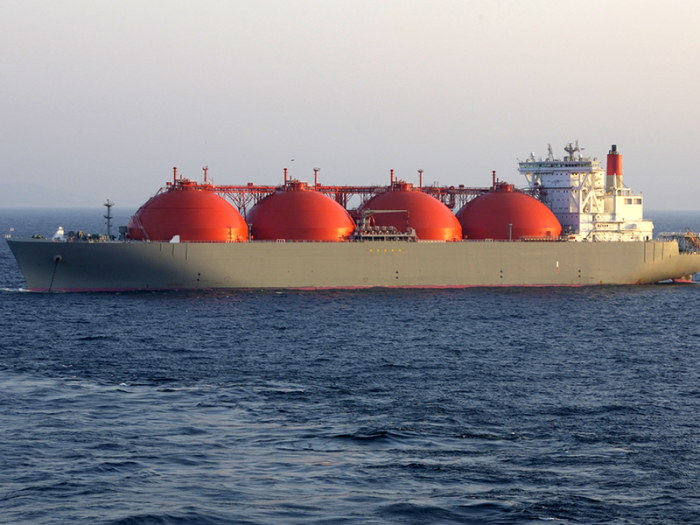
According to the latest forecast report released by BloombergNEF, data centers will become the second largest driver of natural gas demand growth in the United States over the next decade, second only to the liquefied natural gas (LNG) export business. The report predicts that U.S. data center-related natural gas consumption will reach about 18 billion cubic feet per day by 2035, nearly double the agency's forecast nine months ago.
It is worth noting that this forecast has taken into account that some announced data center projects may not be actually completed in the future, so it is considered relatively conservative.
In recent years, technology giants have invested in new energy infrastructure to meet the huge power demands required for artificial intelligence training and inference. Companies such as Meta, Microsoft, Google and Amazon have all announced the construction of natural gas power generation facilities dedicated to serving data centers. This type of "self-generated" data center has become the focus of the industry in recent years because they can bypass the traditional power grid and directly obtain stable power supply.
The report predicts that by 2035, these data centers with their own natural gas power generation equipment will consume approximately 2.9 billion to 3.4 billion cubic feet of natural gas per day. This scale is close to the current total natural gas consumption of all data centers in the United States, including the indirect use of natural gas for power generation through the public grid.
However, according to Bloomberg New Energy Finance, self-built power generation facilities are only a small part of the overall demand growth. The really big growth will come from data centers connected to the public grid.
Research shows that by around 2035, data centers connected to the grid are expected to drive an additional 15 billion cubic feet of natural gas consumption per day in the U.S. power industry. For comparison, this increase is equivalent to five times the increase in natural gas demand from all other grid-connected industries combined over the next ten years.
Analysts pointed out that if this prediction becomes reality, U.S. natural gas market prices may face significant upward pressure. Many data center investment plans are currently based on relatively stable natural gas prices, but some energy agencies have begun to warn that this assumption may not hold true in the future.
Some market researchers believe that a data center construction boom that coincides with the expansion of liquefied natural gas exports may jointly push up domestic natural gas prices in the United States. Although large technology companies have strong cost tolerance, the energy burden of ordinary residents and business users may increase as a result.
In addition to the economic impact, environmental issues have also become a focus of attention from the outside world. According to the International Energy Agency, for every cubic foot of natural gas burned, greenhouse gas emissions equivalent to 60 grams of carbon dioxide are released throughout the entire process from extraction to processing to final use.
According to the latest forecasts, the new natural gas demand in data centers alone may produce approximately 1 million tons of additional greenhouse gas emissions every day. This is equivalent to approximately 12% of the current total national greenhouse gas emissions in the United States, further highlighting the contradiction between the artificial intelligence industry and climate goals.
The report pointed out that the abundant and relatively cheap natural gas resources in the United States, as well as the ability of natural gas power stations to quickly respond to the round-the-clock operation needs of data centers, are important reasons why large technology companies continue to choose natural gas. Current forecasts indicate that approximately 69% of the future new electricity demand for newly built grid-connected data centers will be met by natural gas power generation.
As the artificial intelligence industry enters a new round of infrastructure competition, data center construction is profoundly changing the U.S. energy landscape. In the next ten years, the development of artificial intelligence will not only affect the competitive landscape of the technology industry, but may also reshape the development direction of the U.S. natural gas market, energy policy, and emission reduction strategies.
Comments