
Abstract:
As the artificial intelligence industry continues to drive the growth in demand for high-bandwidth storage, Samsung Electronics is further increasing its HBM4 layout. According to information disclosed by Korean media, Samsung's foundry business unit has dedicated a considerable part of its 4-nanometer process capacity to HBM4 bottom chip (Base Die) manufacturing, and the proportion is said to have reached about half of the entire 4-nanometer production capacity.
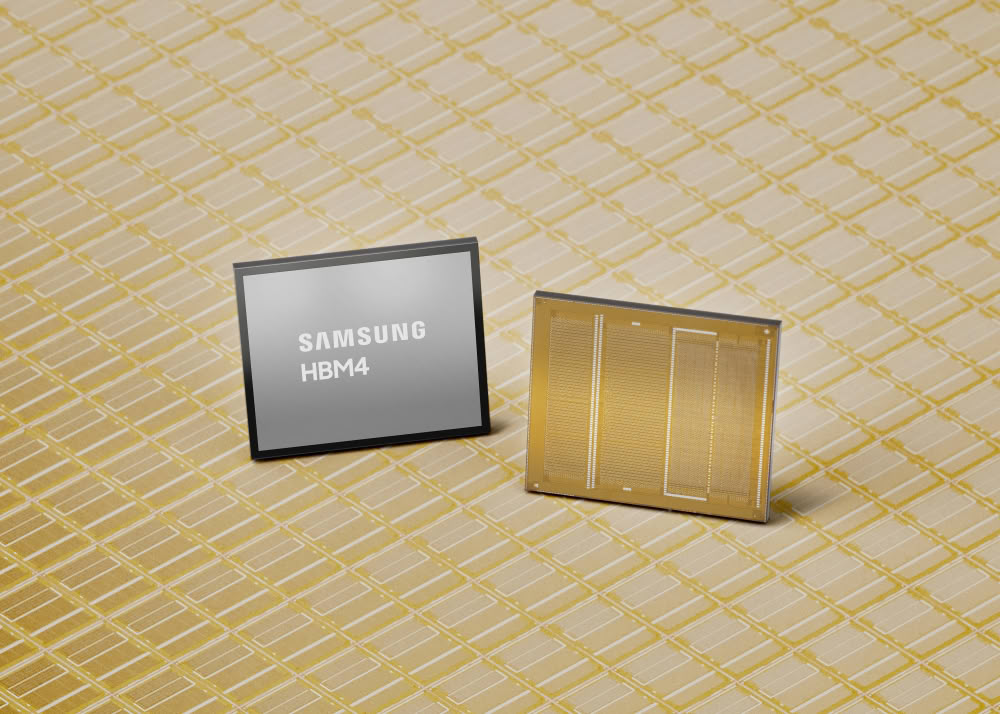
HBM4 is the latest generation of high-bandwidth memory technology and an important component of future high-performance AI accelerators. Compared with previous generations of products, HBM4 is more important to the underlying chip. This part of the chip is located under the multi-layer stacked DRAM die, responsible for data transmission between the memory and the computing core, and can integrate more logic circuit functions.
Samsung currently uses its own 4-nanometer SF4 process to produce HBM4 underlying chips, and related production is mainly carried out at the S5 and S6 production lines in Pyeongtaek’s second and third parks. As AI chip customers' demand for HBM4 continues to grow, the company is significantly increasing the proportion of relevant production capacity allocation. According to industry insiders, Samsung's 4-nanometer production line is currently operating at nearly full capacity, and about 50% to 60% of its production capacity is being used for HBM4 underlying chip manufacturing, and this proportion is expected to remain high in the coming months.
One of the important reasons driving this change is the rapid increase in market demand for customized HBM solutions. More and more customers hope to directly integrate dedicated logic modules, such as memory controllers, PHY interface circuits and other functional units optimized for specific applications, into HBM4 underlying chips. In this way, some circuits that originally need to be placed on the main computing chip can be transferred to the HBM underlying chip, thereby reducing the area occupied by the computing chip, improving the overall design efficiency, and freeing up more space for computing unit deployment.
This trend is particularly evident in the ASIC market. As Google, Microsoft, Amazon and other large cloud service companies continue to develop self-developed AI accelerators, the demand for HBM4 products with customization capabilities continues to grow. Samsung also owns memory, wafer foundry and advanced packaging businesses, and is considered to have unique advantages in providing customized HBM solutions.
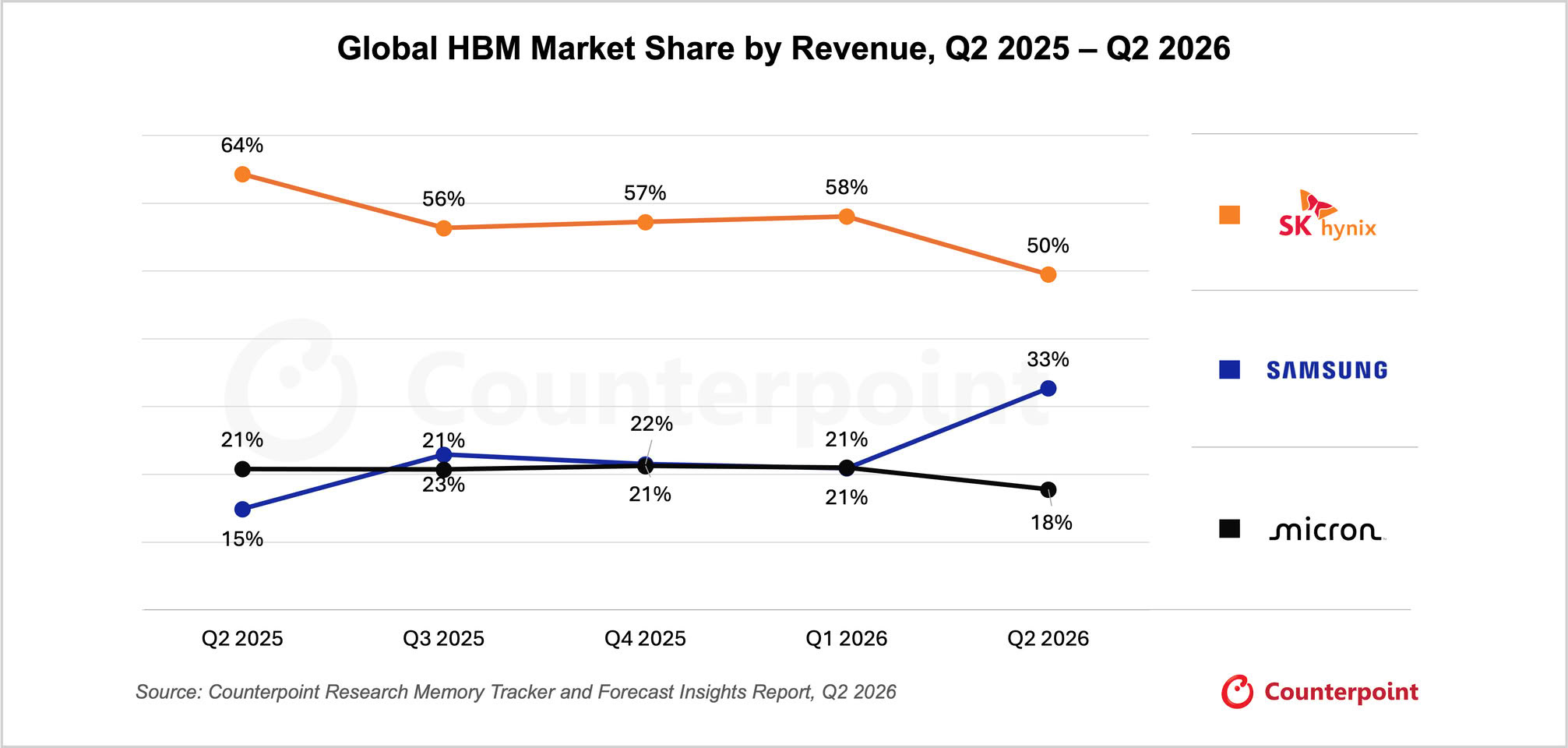
Market share changes also reflect Samsung’s rapid catch-up in HBM business in recent years. Data shows that Samsung's HBM market share in terms of revenue has reached 38% in the second quarter of 2026, a significant increase from the level of about 15% a year ago. At the same time, the market share of SK Hynix, which has long been dominant, dropped from 64% in the second quarter of 2025 to 50% in the second quarter of 2026. More and more customers are beginning to adopt a multi-supplier strategy and purchase more HBM products from Samsung to reduce supply chain risks.
Samsung has previously begun to provide HBM4 samples to customers and plans to fully expand shipments in the second half of 2026. The company expects HBM4 business revenue in the third quarter to more than triple from the previous quarter, and in the second half of the year, HBM4 revenue is expected to account for more than 60% of Samsung HBM's total revenue.
Analysts believe that investing more than half of its advanced 4-nanometer production capacity into HBM4 underlying chip production reflects Samsung's strong bet on the AI market. As NVIDIA's next-generation Rubin platform and more cloud computing companies' customized AI chips enter the mass production stage, HBM4 is likely to become one of the fastest growing areas in the semiconductor industry in the next few years. For Samsung, relying on customized underlying chips, advanced process technology and continued expansion of production capacity, the company is expected to further narrow the gap with SK Hynix in the future and compete for more AI memory market share.
Comments