
Abstract:
Stoke Space, an American commercial rocket start-up company committed to breaking the monopoly of commercial space launches, officially announced the completion of a new round of huge financing of US$1 billion. All the funds will be used to expand production and manufacturing infrastructure, expand launch vehicle specification design, and accelerate the development and launch testing process of its flagship medium-sized launch vehicle "Nova", thereby fully facing Musk's SpaceX.
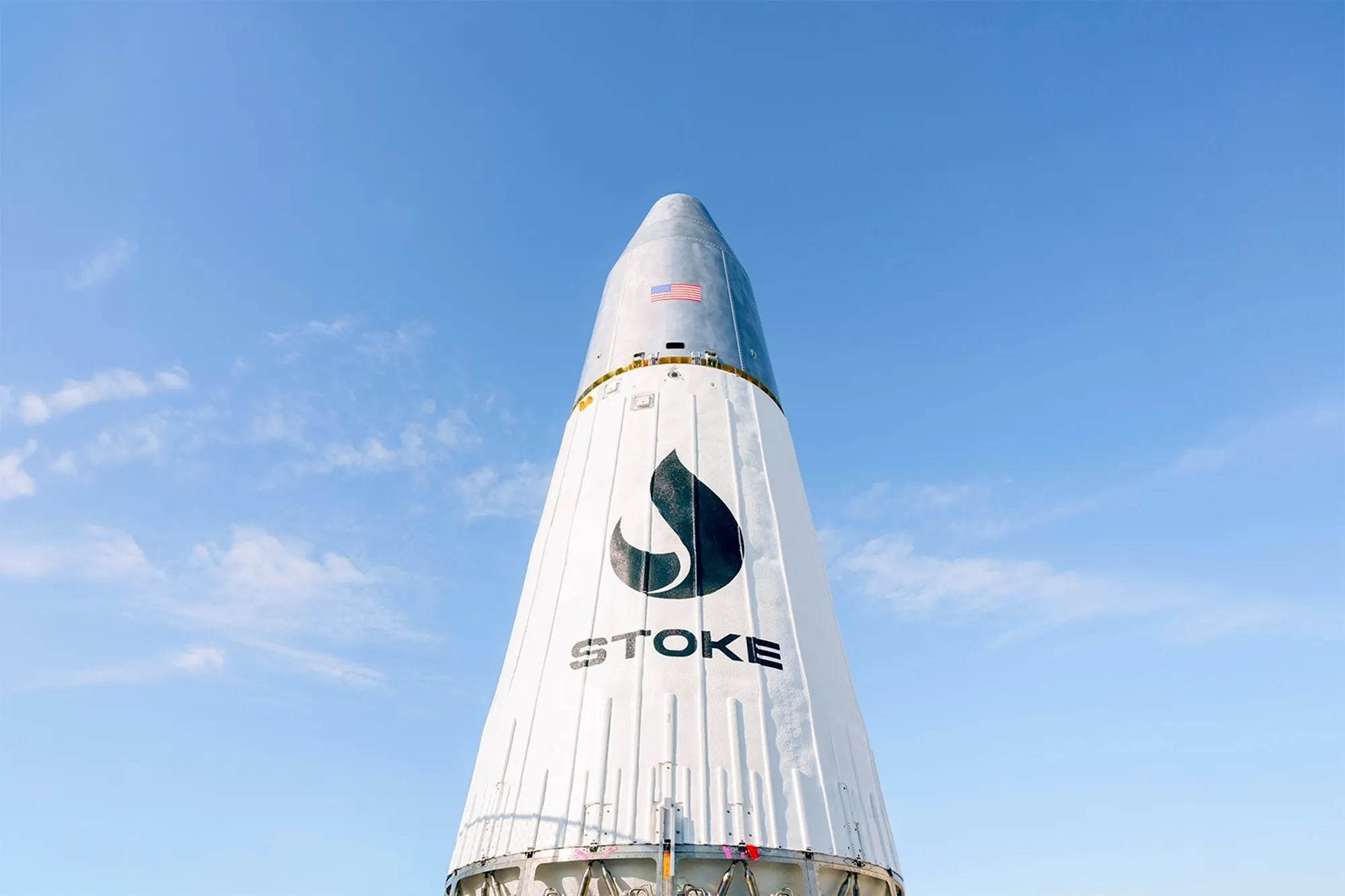
Unlike the current semi-reusable mode of the SpaceX Falcon 9 rocket, which only realizes the recovery of the first-stage booster and the complete discarding of the second stage, Stoke Space has locked in a more extreme technical path since its inception - to create a fully reusable orbital rocket that can fully recycle both the first and second stages and fly again as quickly as a civil airliner. In order to overcome the ultra-high temperature and severe aerodynamic challenges faced by the rocket's second stage when re-entering the atmosphere at high speed, the company developed a highly innovative annular propulsion system combined with an active regenerative cooling heat shield, and has verified the feasibility of key technologies in early vertical take-off and landing tests. By achieving 100% reusability of both stages of the rocket, Stoke Space aims to reduce orbit launch costs and hardware losses to unprecedented levels.
The US$1 billion in fresh capital gained this time not only greatly enriched the company's R&D fund reserves, but also further consolidated its status as one of the few "deep space dark horses" capable of competing with industry giants. It is reported that the huge funds raised in this round will be used mainly to expand ultra-large-scale rocket production lines around the Seattle headquarters and major manufacturing parks, while also promoting the in-depth reconstruction and ground support system construction of the historical launch site at Cape Canaveral.
In terms of rocket specifications and mission schedule, Stoke Space, with the support of abundant funds, is further expanding the payload carrying capacity of the Nova rocket to meet the future needs of huge satellite Internet constellation networking and defense security payload launches. The official planning team has anchored the orbital stage verification flight time of the first full-scale Pathfinder test rocket at the beginning of 2027, striving to use a faster manufacturing iteration cycle to go through the entire process from ground bench testing to actual orbit recovery.
Aerospace business analysts pointed out that although SpaceX currently occupies an absolutely dominant position in the orbital launch market with the high-density go-around of Falcon 9 and the experimental testing of starships, global commercial satellite operators and military customers have extremely high expectations for the second reliable, cheap and high-frequency full multiplex launch service provider. Stoke Space's success in leveraging billions of dollars in funding amid the cold capital winter and the high-threshold hard technology track marks that the venture capital community has strong confidence in the second generation of reusable aerospace technology. The battle for full reuse in the commercial rocket field is accelerating into a white-hot stage.
Comments