
Abstract:
On September 28, the SpaceX Starship was launched from the Starbase complex on the Gulf Coast of Mexico for its 14th mission. The flight entered orbit for the first time and deployed 26 Starlink satellites at an altitude of approximately 269 kilometers. Due to an engine failure, the mission ended 7 hours earlier than planned. On the same day, Musk wrote on social media, "Starship is still 2-3 years away from hourly flights."
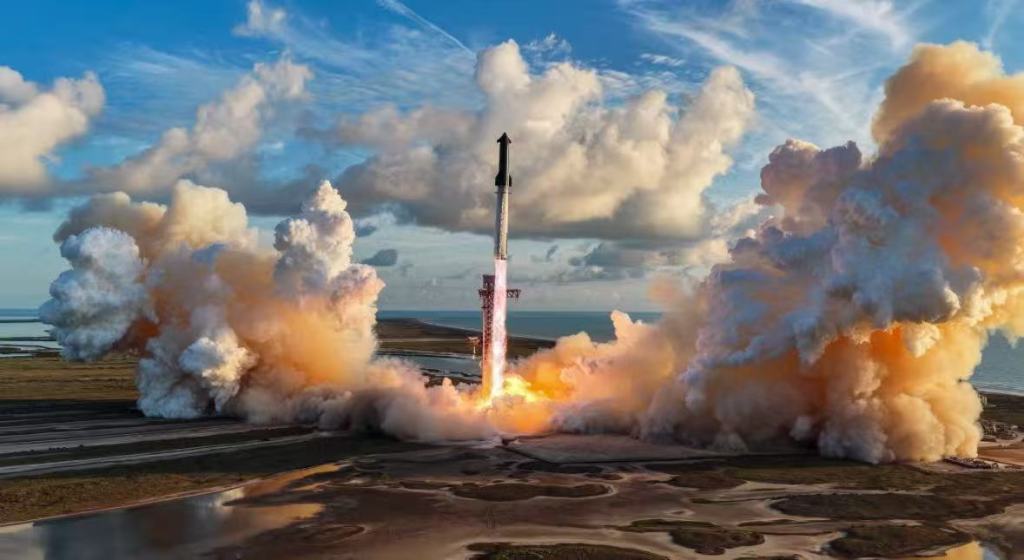
The starship carried out its 14th mission and entered orbit for the first time.
Accu Components quality manager and aerospace engineer Dean Sladen said that deploying 26 Starlink V3 satellites into the target orbit is a huge victory, and it also marks the first revenue-generating commercial flight of Starship.
Starship is designed to be the world's first fully reusable spacecraft, consisting of a super-heavy booster and a Starship spacecraft on top. Since 2023, the previous 13 test flights of Starship have been limited to suborbital space flights, and this flight has entered orbit for the first time. After the super-heavy booster sends the upper stage of the starship into space, it returns to the waters of the Gulf of Mexico and controls the splashdown through the engine. When the rocket hit the sea, the bottom was engulfed in flames, then rolled over and a huge fireball appeared. SpaceX has no plans to recover the rocket from the sea.
Unlike past Starship flights, this mission is both a high-risk test of the next generation of rockets and an actual revenue-generating operation, putting millions of dollars worth of Starlink satellites into orbit. According to SpaceX, the data processing capabilities of V3 Starlink satellites are 10 times that of the previous generation V2 microsatellites.
After the satellites were successfully deployed, Musk wrote on Musk said that SpaceX is building large-scale infrastructure for the future.
From an engineering perspective, the real concern is how the team handled the engine failure during ascent.
The mission was originally planned to last 10 hours, but after the starship separated from the super-heavy booster, one of the three main engines shut down early and the mission was shortened to 3 hours. This is also the latest technical failure since the start of the starship test flight in 2023. Starship has also experienced engine problems on previous suborbital missions, and engine problems remain a long-term challenge. Although the deployment of Starlink satellites in low orbits has lower functional requirements for engines, future starships to send NASA astronauts to the moon will place higher requirements on engines.
The construction goal of the Starship is to launch SpaceX’s Starlink satellites more frequently and carry NASA’s future lunar landing missions. Orbital insertion is the primary benchmark for any rocket designed to launch a payload into space, and for Starship, this achievement has been long overdue. Musk had predicted it would happen in 2022, followed by satellite deployment in 2023. Musk had envisioned eventually conducting hundreds or even thousands of Starship missions per year, a launch pace unprecedented in the space industry.
Comments