
Abstract:
Just imagine: every time you arrive at your destination by plane, the airline has to throw the plane away and get a new one. Or your car can only make one trip before being scrapped. SpaceX CEO Elon Musk told the audience at the 2025 X Takeover event that rocket launches used to be like this.
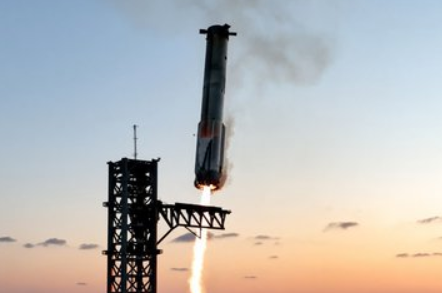
"If you throw the car away every time you drive to a place, you will definitely think: This car is too outrageous. You have to throw it away after driving it once. But this is how rockets used to work." Musk told the audience.
However, that is the past model. Blue Origin, SpaceX and a growing number of emerging rocket companies are developing reusable space launch systems, which is expected to fundamentally change the cost structure and sustainability of space missions.
Casey Dreier, director of space policy at the American Planetary Society, said in an interview: "Relatively speaking, the cheapest part of a launch is actually the fuel. Therefore, reuse, especially rapid reuse, which requires only a small amount of maintenance, can significantly reduce the cost of launch into orbit and increase the total amount of payload sent into space. This is also the direction that SpaceX has been working hard to promote."
SpaceX’s Starship is expected to become the first fully reusable rocket and spacecraft in human history. But to achieve this goal, SpaceX must prove that the two-stage rocket body of the world's largest and most powerful rocket can return to the launch site and be captured by the huge mechanical "chopsticks" of the launch tower.
Dreier said: "This is a giant rocket. Being able to successfully capture it is a major verification and a key step in achieving the goal of reuse and rapid reuse. In a sense, this is the foundation of all its subsequent plans. They need to complete preparations for relaunch within a few days, preferably within one day, and to do this, the rocket must be captured and recovered."
If weather and rocket status conditions permit, SpaceX plans to conduct the 15th test flight of the Starship at the Star Base in Cameron County, Texas, at 5:45 pm Eastern Time on Friday, attempting to complete this milestone for the first time. The launch window is 75 minutes long. If it times out, the launch will be cancelled.
"You build an extremely complex and expensive device and throw it away after use. Then why not find a way to reuse it and launch it multiple times?" Austin Spiegel once worked as a SpaceX engineer and is currently the CEO of Sift, a company that provides test data collection and analysis services to rocket manufacturers.
Musk often says a famous saying: "Rockets are difficult." And Spiegel said that Musk also has another sentence to explain why it is more difficult to achieve rocket reuse.
“It’s like trying to land a toothpick in a hurricane,” Spiegel said.
The process of this mission is generally the same as that of previous starship test flights. The 407-foot-tall Super Heavy booster and Starship spacecraft assembly lifted off from the launch pad. About 6 minutes later, the first-stage booster returned to the launch site and was attempted to be captured by the launch tower's robotic arm. SpaceX has previously completed three captures with previous generation boosters, but this is the first capture attempt with the latest version of the booster.
Starship will then release 26 V3 version Starlink satellites to expand the capacity of SpaceX’s orbital communication network.
The flight will take more than 22 hours. The starship will circle the earth approximately 14 times, and SpaceX will monitor the status of the rocket body throughout the entire flight. The company said this set of flight profiles reserves multiple opportunities to deorbit over the ocean in advance if a malfunction occurs.
If everything goes well and the rocket body is in normal condition, the highlight will be staged at around 4:15 pm Eastern Time on Saturday: the starship will return to the launch pad after completing deorbit braking, and SpaceX will make its first attempt to capture the starship's upper stage using the mechanical "chopsticks" of the launch tower. If both stages are successfully captured, Starship will become the first orbital-stage rocket in history to be fully recovered.
But even if the 15th test flight is successful, it does not mean that space launches will become as normal as civil aviation flights.
Dreier believes that the biggest bottleneck in achieving rapid reuse of starships is the thermal protection layer, which is the heat insulation tile that prevents the spacecraft from being burned when it re-enters the atmosphere.
"For such a huge spacecraft to return to Earth, it needs to dissipate a huge amount of heat. The spacecraft is covered with insulation tiles. We need to be able to quickly check whether the tiles have cracks and repair them quickly, instead of spending several months inspecting them one by one to make it ready for launch again."
Musk also admitted that developing a thermal protection system that supports rapid reuse is a huge engineering problem, and no one has ever done it before.
Dreier said: "My opinion is, don't bet against SpaceX easily, especially with this kind of engineering problem. If any company can do it, it must be it."
Comments