
Abstract:
SpaceX launched the giant "Starship" from the Starship Base at the southern tip of Texas on September 28, local time. The largest and most powerful rocket ever built by mankind successfully entered the Earth's orbit for the first time, marking key progress for this super-heavy launch system for missions to the moon and Mars. The goal of this test flight is not just to enter space briefly, but to have the starship fly around the earth six times at an altitude of about 275 kilometers. The entire mission lasts nearly 10 hours, and finally completes a controlled re-entry and splashdown in the Pacific Ocean near Chile.
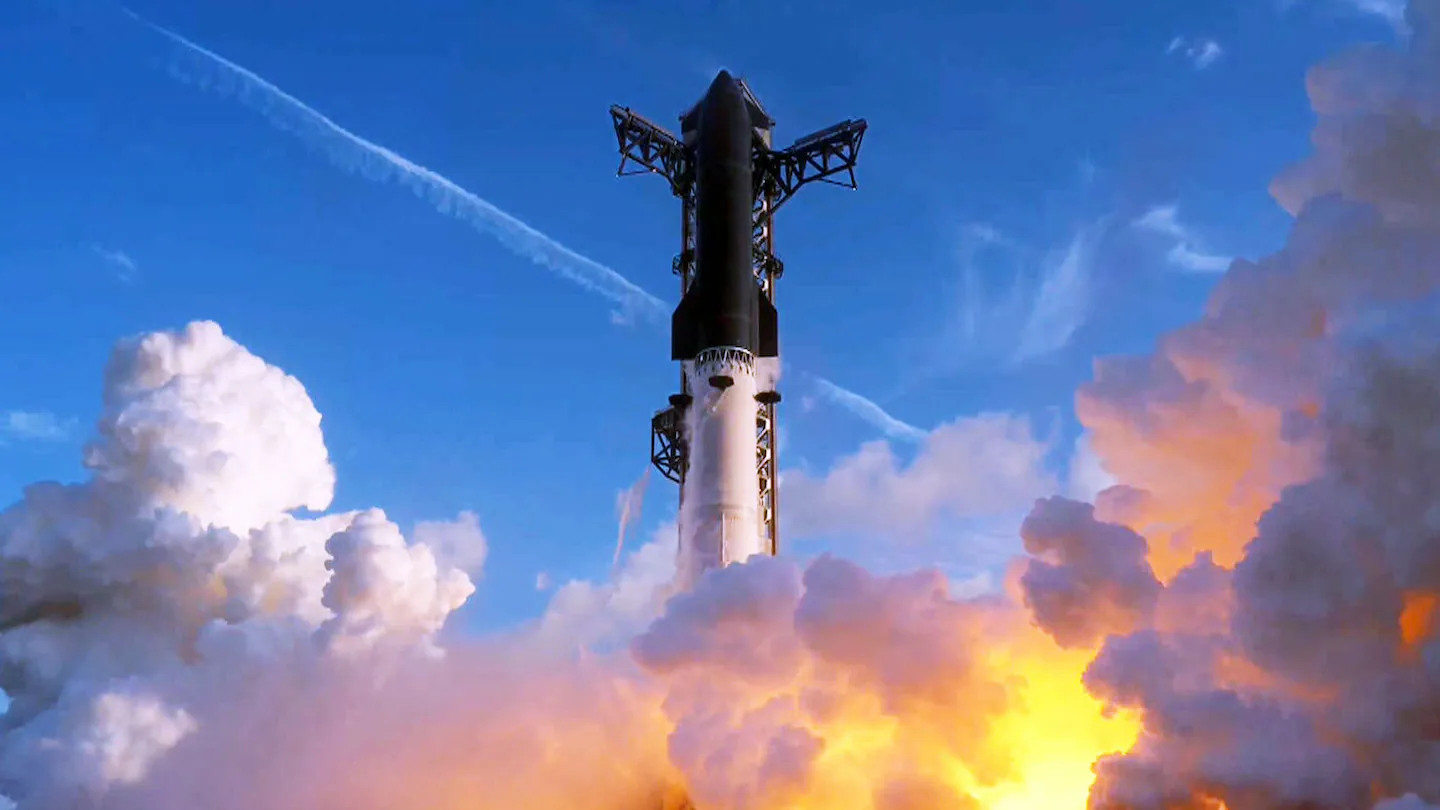
The mission almost failed to achieve its goal of entering orbit. After launch, one of the engines shut down early, causing the mission control center to go through a tense judgment process for several minutes. However, since the other engines were operating normally and the engine that was shut down early would no longer perform critical tasks in subsequent stages of flight, the flight control team ultimately decided to continue executing as planned. The mission control center then announced that "the starship has entered orbit," and SpaceX personnel at the scene and watching the live broadcast immediately burst into cheers.
This time the starship also undertook an important commercial mission. The spacecraft carries 26 of the latest generation and currently the most advanced Starlink satellites, which are released one by one after entering orbit. These satellites will join the approximately 11,000 older-generation Starlink satellites currently deployed in orbit, further expanding SpaceX’s global Internet satellite network.
This is SpaceX’s 14th full-scale Starship test flight launched from Texas. In the past three years, previous test flights of Starships have only flown as far as halfway around the world, reaching near the Indian Ocean. Some missions even ended in explosions or loss of control after approaching the edge of space.
This mission is the first time that it is truly launched according to the idea of a complete orbital mission. The starship plans to fly around the earth six times at an altitude of about 275 kilometers, instead of only one suborbital or half-way flight before. The entire mission is expected to last nearly 10 hours, and the spacecraft will eventually complete reentry and splashdown in the Pacific near Chile.
At the same time, the "Super Heavy" booster responsible for the first-stage boost mission did not attempt to return to the interstellar base this time. According to the mission design, it will crash into the Gulf of Mexico minutes after launch. In other words, the focus of this flight is not to recover the booster, but to first verify the starship's ability to complete a complete orbital flight.
SpaceX founder Elon Musk has previously emphasized that the company wants to ensure that the starship can work stably in orbital missions before it truly has the ability to return to the launch site. He said that if the Starship disintegrates during the return process and the wreckage lands in a densely populated area, the company's reputation will be quickly affected, so SpaceX will take a very cautious approach at this stage.
If this orbital test flight is ultimately completed successfully, SpaceX will next try to return the starship to the interstellar base and use the huge mechanical arm on the top of the launch tower to directly "clamp" the descending spacecraft. This is one of the key steps for SpaceX to achieve full reuse of starships in the future.
Musk previously believed that the robotic arm has at least a 50% chance of successfully capturing the returning starship, and may even be slightly higher than this probability. If the capture test is successful, SpaceX plans to launch the same type of starship again at the end of this year or early next year.
The entire starship system is about 124 meters high and is the largest rocket ever built by mankind. SpaceX designed it as a fully reusable launch system from the beginning, hoping to significantly reduce the cost of getting into orbit through reuse.
In previous tests, SpaceX has begun to accumulate experience in recovering and maintaining starships. In July this year, the company successfully recovered its last starship from the Indian Ocean. Engineers then conducted an on-site inspection of the recovery spacecraft and modified the heat insulation system of the launch starship based on the actual data obtained. Previously recovered starships are currently being towed back to the starbase for further analysis.
Whether the starship can complete a stable orbital flight is an important prerequisite for the advancement of SpaceX's future moon and Mars plans. NASA is currently advancing the "Artemis" manned lunar landing program, and Starship has been selected as one of the important lunar landing systems.
NASA’s Artemis III mission could take place as early as next summer. The mission will involve three launches and a complex low-Earth orbit rendezvous and docking. By then, an "Orion" spacecraft carrying astronauts will dock with lunar landers near the Earth's orbit, including the "Blue Moon" lander of Jeff Bezos' Blue Origin company and SpaceX's Starship.
According to the current mission plan, Blue Origin's Blue Moon lander will be launched first, then the Orion spacecraft will take off and approach it, and then the SpaceX starship will be launched into orbit and dock with the Orion spacecraft.
If the Artemis III mission proceeds as planned, Artemis IV will be executed no earlier than 2028. At that time, astronauts will go to the moon on one of the Blue Moon or Starship lander, which system will be used depends on which set of lander is ready at that time. Subsequent lunar landing missions are planned to alternate between two commercial lunar landing systems.
Starship was not originally developed for the moon. Musk's original goal was Mars, hoping to launch dozens of starships at a time in the future to send a large number of equipment and personnel to Mars to provide transportation capabilities for the establishment of human settlements.
But currently SpaceX has shifted its focus more to the moon and plans to use starships to transport a large number of satellites to orbit at one time. The company also hopes to gradually reduce its reliance on Falcon 9 rockets over the next few years as Starship matures.
SpaceX is also currently building more starship launch facilities. A second Starship launch site at the Kennedy Space Center in Florida is nearing completion, and a third launch facility is planned in Louisiana.
If the mission finally completes the scheduled 6-circle flight and splashdown in the Pacific Ocean, the Starship will take an important step towards becoming a true orbital-grade, reusable heavy-duty launch system from an experimental vehicle that has been continuously undergoing short-range tests before. For SpaceX, the real key challenge in the next stage will no longer be just getting the starship into orbit, but enabling it to return safely, be captured by the robotic arm, and ultimately achieve rapid repeat launches.
Comments