
Abstract:
NASA is seeking proposals from commercial aerospace companies to evaluate whether it can raise the orbit of the Hubble Space Telescope, perform on-orbit maintenance, or arrange for safe disposal at the end of the mission. The agency issued an information request on October 29, and the deadline for responding is November 30 at 3 p.m. Eastern Time; NASA hopes that the relevant mission will be implemented no later than 2032, and the telescope must not be damaged.
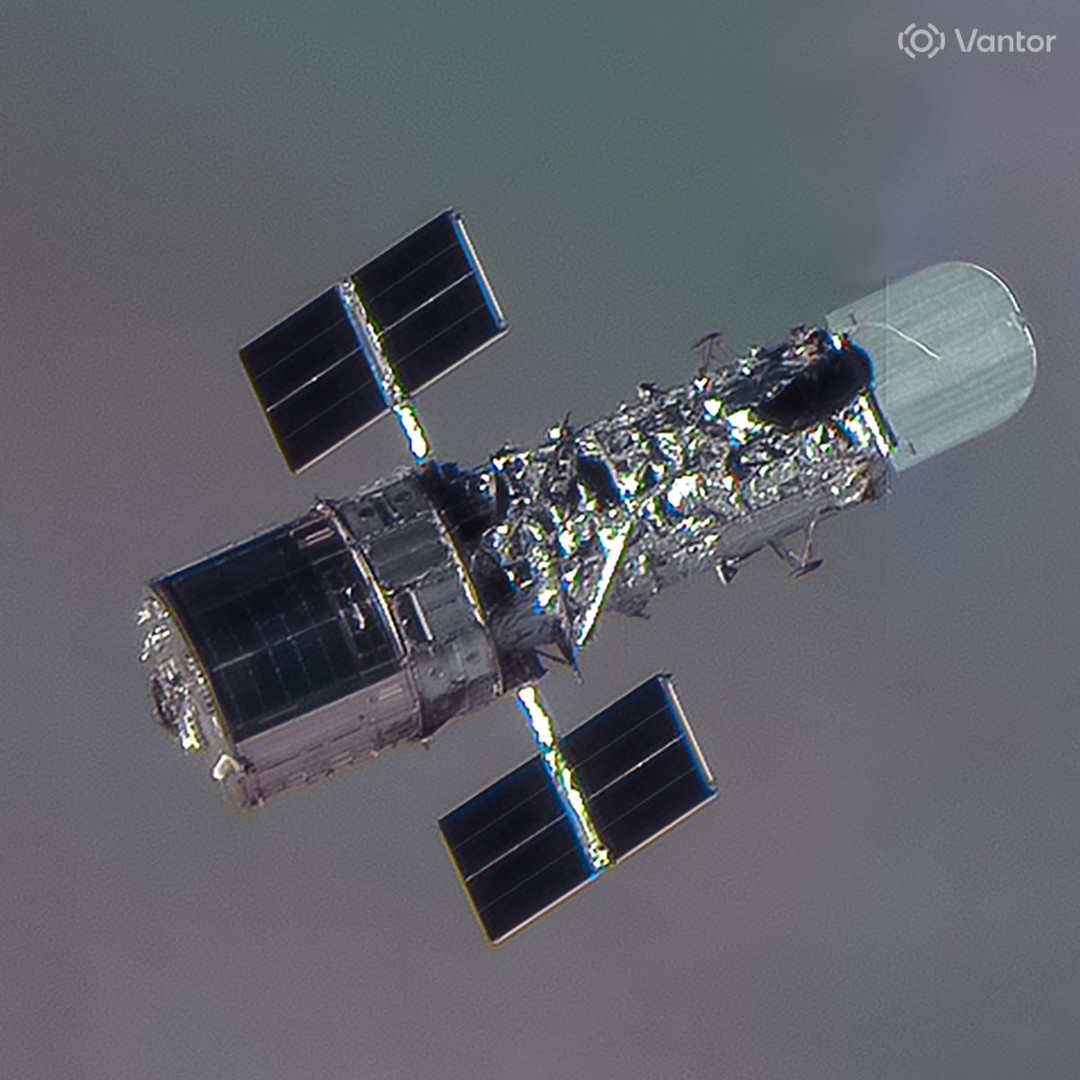
Hubble does not have its own propulsion system. It has been affected by the resistance of the thin atmosphere for a long time, and its orbital altitude has gradually decreased. NASA estimates based on a lifetime analysis in July 2026 that the probability of Hubble re-entering the atmosphere before September 2032 is 10%, rising to 50% by December 2033; if no measures are taken, it will eventually re-enter the atmosphere in an uncontrolled manner. NASA hopes to know whether companies can capture Hubble currently and in the near future and raise it to an orbit of at least 600 kilometers. NASA also seeks solutions to enhance the performance of the telescope, extend its service life, or implement controlled reentry.
Hubble's current orbital altitude is about 470 kilometers. The last time it was raised to orbit was during the maintenance mission of the space shuttle Columbia in 2002, at an altitude of about 583 kilometers; it was not raised again in 2009 during the last space shuttle maintenance mission. According to reports, if Hubble is raised to about 600 kilometers, it may remain in orbit for at least 25 years.
This solicitation is not a formal tender, nor does it represent NASA's commitment to procurement tasks. Currently, the agency has not allocated funds for Hubble's orbit raising or maintenance tasks. If the project is launched in the future, the contractor is expected to be required to provide its own launch vehicle, service spacecraft, mission operations and, where applicable, crew. NASA hopes to use this to understand potential participating companies, feasible technology routes, risks and costs before deciding whether to proceed.
NASA consulted on Hubble’s orbit-raising ideas as early as 2022 and received eight responses, including robotic orbit-raising ideas proposed by Astroscale and Momentus. Commercial astronaut Jared Isaacman also proposed that the SpaceX manned Dragon spacecraft perform maintenance and orbit raising; engineers also studied connecting the spacecraft to the rescue capsule and supplementing the telescope with a gyroscope to improve its pointing ability. NASA stated in 2024 that it would continue to study orbit raising, but at that time it was believed that the relevant plans were still in the preliminary conceptual stage. Now that Isaacman has served as NASA administrator, he said that the new round of consultation is expected to attract the attention of robotic service companies; SpaceX plans to retire the Dragon spacecraft before 2030, making manned maintenance plans more difficult to implement.
Commercial satellite maintenance capabilities have recently developed. NASA signed a contract with the start-up Katalyst Space last year to try to perform an orbit-raising mission for the Swift Observatory in a short period of time. The company launched the rescue satellite as scheduled and approached Swift about 10 kilometers away. However, the ground team decided not to get closer due to problems with the rescuer's power and attitude control systems. Although the Swift mission has not completed capture, it shows that on-orbit services do not necessarily cost billions of dollars; however, Hubble is more valuable and the mission risks are more complex, so NASA hopes to give potential contractors more time and resources.
Extending Hubble's life is also related to the observation capabilities that other space telescopes cannot replace. Hubble is good at visible light and ultraviolet observations. The James Webb Space Telescope and the upcoming Roman Space Telescope mainly observe infrared bands and cannot completely replace Hubble. NASA's next-generation "Habitable World Observatory" is not expected to be put into use until the 2040s.
Comments