
Abstract:
As the artificial intelligence industry continues to expand, the United States is facing a new climate challenge. The latest analysis shows that by 2030, the huge power demand brought by AI data centers may significantly reverse the greenhouse gas emission reduction results of the U.S. power industry, and even offset the emission reduction progress made in the past 15 years.
According to an analysis by the US environmental organization Sierra Club, carbon dioxide emissions from the US power industry may increase to approximately 2.1 billion tons by 2030, approximately 42% higher than 2025 levels. This increase is equivalent to basically erasing the emissions reductions achieved gradually by the U.S. power industry since the 2010s.
The core factor driving this change is the boom in AI infrastructure construction. With the rapid popularity of large-scale language model training, inference services, and cloud AI applications, the demand for power in data centers is growing at an unprecedented rate. However, clean energy and grid capacity expansion have not kept pace with these demands.
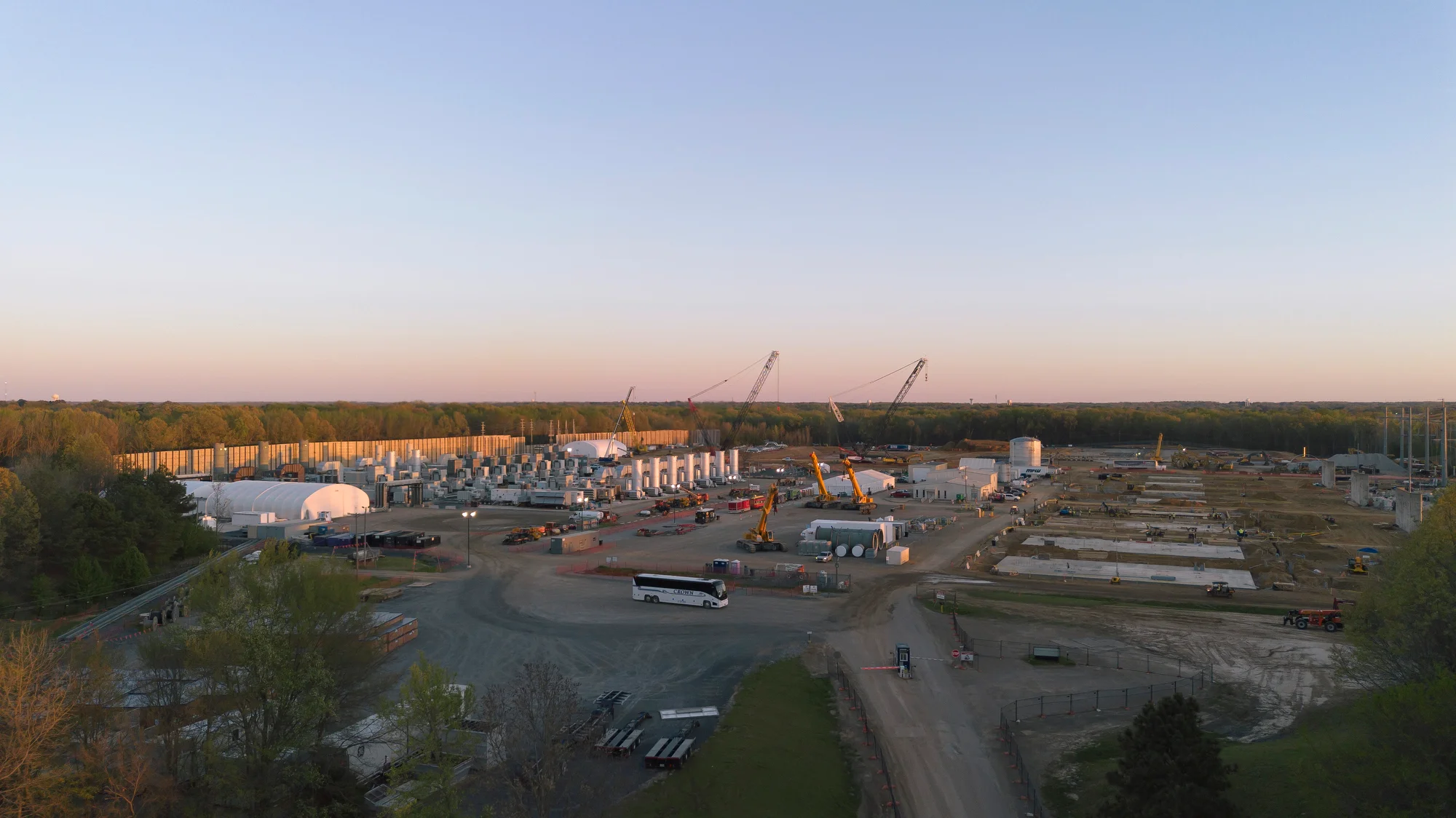
Analysis points out that because more and more technology companies are unable to obtain power grid access qualifications in time, they are beginning to bypass the traditional public power grid system and build their own power generation facilities to meet the operational needs of data centers. Most of these projects, known as "Behind-the-Meter", rely on fossil fuels such as natural gas, and the emissions they produce are usually not directly reflected in public grid emissions statistics.
The report estimates that by 2030, off-grid power generation equipment built or contracted to operate by data center developers may emit more than 460 million tons of carbon dioxide each year. The scale of this new emission alone is close to Mexico’s total annual carbon emissions. It should be noted that this comparison is for emissions from associated off-grid power generation facilities, not emissions from all data center activities.
One of the important reasons why companies turn to self-built power generation is the slow grid connection process. Many large-scale projects need to wait for many years to complete grid connection approval, and the development pace of the AI industry is much faster than the traditional energy infrastructure construction cycle. In order to meet project bring-on time requirements, developers are increasingly inclined to deploy quickly-constructed power generation systems such as natural gas turbines and connect them directly to data centers.
Even if off-grid power generation is not considered, data center projects connected to the public grid will still have a significant impact on emissions growth. Analysts believe that by 2030, this part of the project may increase carbon dioxide emissions by an additional approximately 154 million tons, which is equivalent to an increase of approximately 10% above the baseline level. In other words, whether the data center chooses to be off-grid or connected to the grid, its energy consumption will put significant pressure on the U.S. emission reduction goals.
Industry insiders pointed out that the AI industry is exposing many bottlenecks in the US energy infrastructure. As more and more supercomputing clusters and large data centers are put into construction, how to meet the demand for computing power while ensuring the transition to clean energy will become a key issue facing U.S. energy policy in the next few years.
The analysis also pointed out that promoting the implementation of more new energy projects, shortening the waiting time for power grid access, and establishing a more stringent supporting mechanism for new energy sources are considered to be the main ways to mitigate the risks of related emission growth and avoid the impact of the expansion of the AI industry on climate goals.
Related articles:
Why do Americans hate data centers more than nuclear power plants?
The U.S. AI data center is difficult to implement, Trump’s “unexpected move”
No one scolds TSMC, a large water consumer. Why does its AI data center that uses less water offend Americans?
Comments