
Abstract:
As the artificial intelligence industry enters the stage of large-scale infrastructure construction, the energy demand it brings is causing more and more environmental disputes. New research warns that planned AI data centers in the United States may significantly increase carbon emissions from the power industry in the next few years, and even offset most of the emissions reductions achieved through the energy transition over the past 15 years.
According to a report obtained by Bloomberg, the environmental organization Sierra Club predicts that planned AI data centers in the United States will produce an additional approximately 618 million tons of carbon dioxide emissions between 2025 and 2030, equivalent to a 42% increase in emissions related to the power industry. If the prediction comes true, the 15-year greenhouse gas emission reduction achievements achieved by the U.S. power industry by reducing the use of coal power, improving energy efficiency, and expanding the deployment of renewable energy may be basically offset.
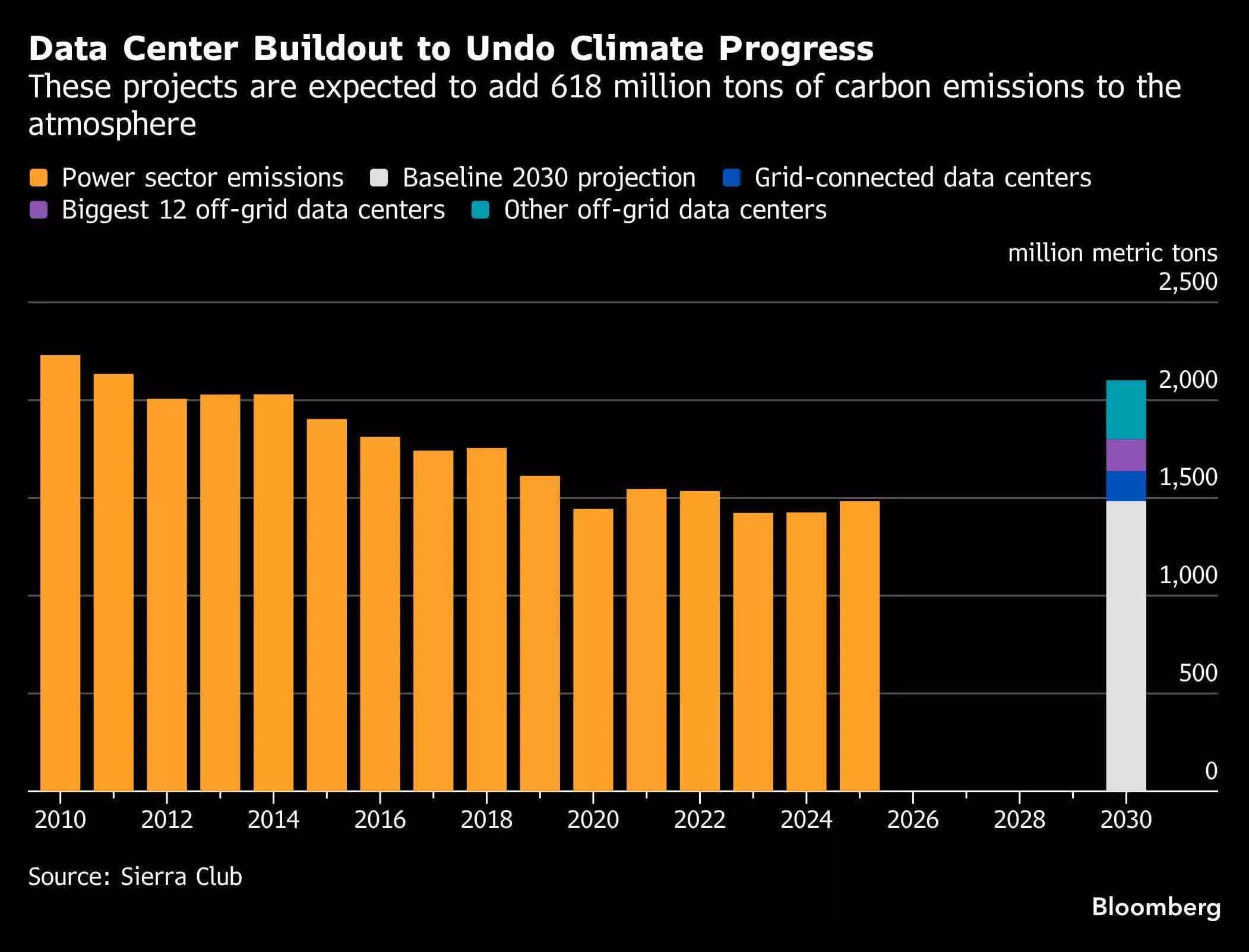
The report points out that by 2030, total emissions from the U.S. power industry may rise to 2.1 billion tons of carbon dioxide. This latest forecast is two to four times higher than the organization’s estimate a year and a half ago, reflecting the expansion of AI infrastructure much faster than previously expected.
Facing the problem of insufficient access capacity of traditional power grids, many data center operators are trying to build independent power supply facilities to avoid long waiting times for grid connection. Although this approach can reduce the pressure on residential power grids and reduce the impact on regional electricity prices, these off-grid energy systems may bring more than 460 million tons of additional carbon emissions, which is roughly equivalent to Mexico's national carbon emissions in a year.
However, there are still huge differences in the judgments of various agencies on future emission trends. The current gap between the highest and lowest forecasts is greater than California and Florida combined. Some research institutions believe that large-scale deployment of renewable energy will significantly alleviate the problem. For example, Rhodium Group predicts that even under the most pessimistic emissions scenario, emissions levels in the U.S. power industry in 2040 will still be 24% lower than in 2025.
In addition, the outside world is not sure that all currently announced AI data center projects will eventually be implemented. Sightline Climate, a climate research organization, previously estimated that about one-third to one-half of U.S. data center projects originally scheduled to open this year may face delays or cancellations.
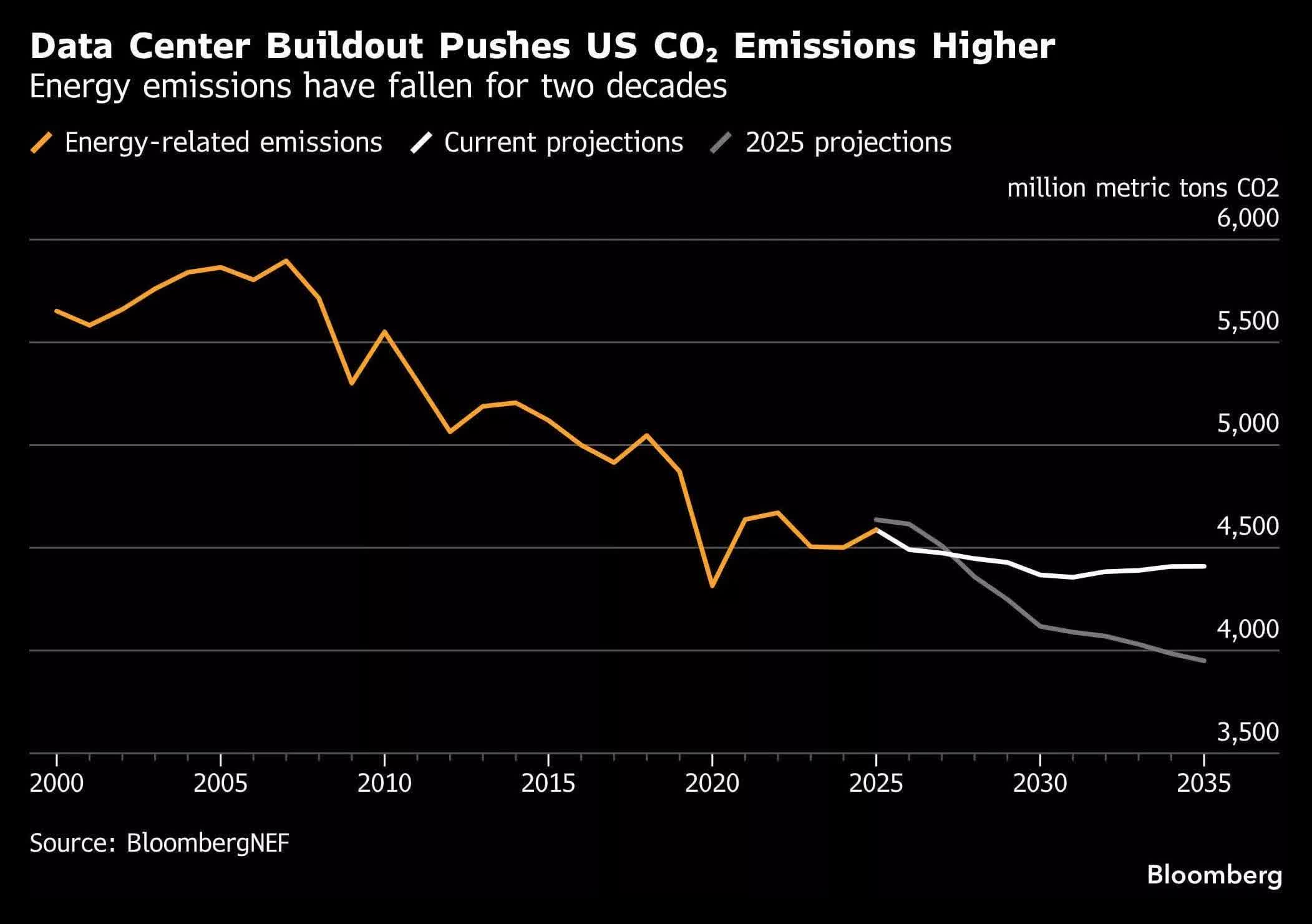
Energy supply issues have begun to affect the development of the AI industry. As power infrastructure construction cannot keep up with demand growth, GPU deployment in some data centers has slowed down. The high-performance computing equipment purchased by some enterprises even has to sit idle, waiting for data centers that can provide sufficient power to come into operation.
The report also mentioned that the data center project Amazon plans to build in Texas will be powered by a natural gas power plant with an installed capacity of 7.65 GW. According to the approved documents, the power plant can emit up to 33 million tons of carbon dioxide per year. If it reaches this level, it may become one of the largest single sources of carbon emissions in the United States.
In recent years, data centers have come under increasing scrutiny for their surge in power demand, massive water consumption, and strain on community infrastructure. As the scale of AI models continues to expand, how to strike a balance between ensuring the growth of computing power and achieving emission reduction goals in the future is becoming an important challenge faced by the technology industry, energy companies and regulatory agencies.
Comments