
Abstract:
General Motors recently announced a series of future plans surrounding artificial intelligence, electric vehicles and autonomous driving at the "Onward" technology event held in New York. Facing increasing competitive pressure from Chinese auto companies, the traditional automaker is trying to position itself as a technology company driven by software and artificial intelligence, rather than just a car company.
At the event, General Motors outlined an ambitious development blueprint. The company said that in the future, it will use artificial intelligence to shorten the development cycle of new models by half, introduce a new generation of central computing platform with a computing power that can be increased by up to 40 times, accelerate the development of next-generation battery technology, and plans to extend autonomous driving capabilities that do not require drivers to continuously monitor the road to the highest-selling pickup and SUV models.
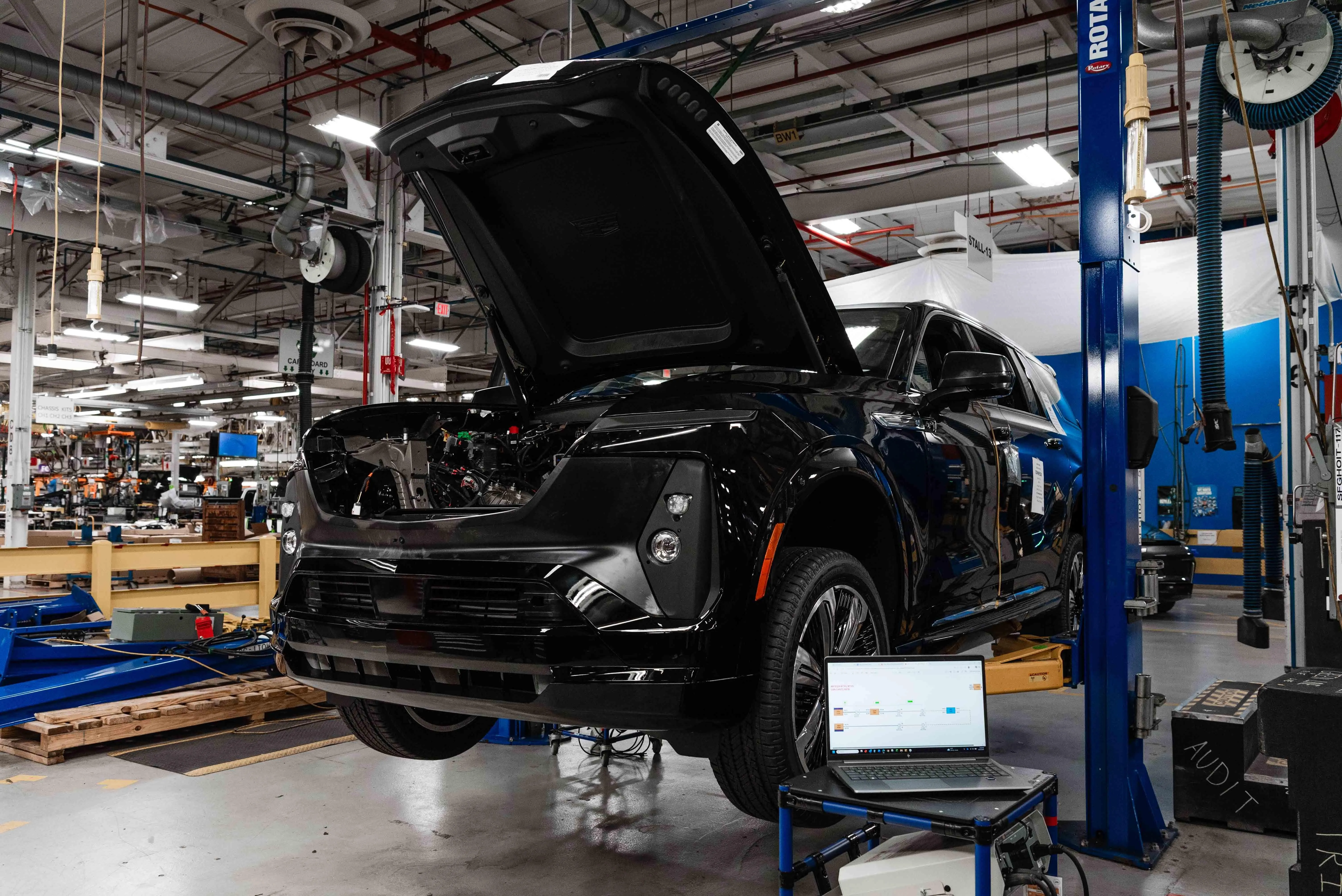
For a long time, General Motors' new car development cycle usually took four to five years. As the automotive industry gradually transforms into software-defined cars, R&D efficiency is affected by a large number of dispersed electronic control units and complex platform architectures. To change this situation, General Motors plans to unify design, engineering, testing and manufacturing processes into a digital platform through a technology system called "Digital Thread Virtualization" to achieve more efficient collaborative development.
According to the company's goals, the time from concept design to mass production of new cars is expected to be reduced to about two years. This speed is not only significantly faster than the traditional automobile manufacturing model, but also helps narrow the gap in R&D efficiency with Chinese new energy automobile companies.
Artificial intelligence is considered a key tool to achieve this goal. General Motors said that some aerodynamic tests that took dozens of hours to complete in the past are now expected to be shortened to tens of seconds with the help of AI; structural analysis work that originally took months to complete can also be completed within hours. The company believes that using large amounts of engineering and manufacturing data accumulated over decades to train AI models will become an important advantage that differentiates it from emerging competitors.
In terms of battery technology, General Motors will accelerate the research and development of next-generation chemical systems. Through digital simulation and artificial intelligence modeling, the company hopes to quickly screen and optimize battery solutions during the experimental phase, thus reducing the expensive and time-consuming physical testing process. General Motors sees its latest battery development project as an important validation case for its digital development model.
At the same time, the company is advancing a new central computing architecture. The new platform will replace a large number of independent controllers with a small number of high-performance computing units to achieve a higher degree of integration between various vehicle systems. According to General Motors, the performance of next-generation central computing hardware can be up to 40 times that of existing systems, providing support for future AI functions, autonomous driving capabilities and advanced in-vehicle software services.
Autonomous driving is also one of the key contents of this conference. General Motors reiterated that it plans to launch a highway autonomous driving system that supports "Eyes-Off" driving by 2028, which is an advanced autonomous driving feature that allows drivers to take their attention away from the road in certain scenarios. The technology is expected to be first applied to the Cadillac Escalade IQ electric vehicle, and will later be gradually extended to more high-volume models, including large SUV and pickup truck product lines.
In addition to technological upgrades to the vehicles themselves, GM also hopes to reshape the way users interact with their cars. The new OnStar AI service will become an important digital assistant in the car and on the mobile phone, providing users with voice interaction, vehicle control, navigation management and personalized service experience. The company hopes to use this to upgrade OnStar from a traditional car networking and rescue service platform to an intelligent service center covering the entire car life cycle.
Although General Motors' development speed in the electrification field has been questioned by the outside world in recent years, and has experienced challenges such as software development delays and electric vehicle strategic adjustments, the company's management believes that software architecture, artificial intelligence and central computing platforms will become its core competitiveness in the next decade. By integrating both its gasoline and electric vehicle businesses into a unified software ecosystem, GM is trying to redefine its role in the era of smart cars and compete more directly with Tesla and rapidly emerging Chinese automakers.
Related articles:
GM injects AI into OnStar to move from in-car call center to intelligent assistant platform
Comments