
Abstract:
Researchers at Northwestern University in the United States are developing a new fabric coating that is expected to allow protective clothing to not only block dangerous chemicals, but also actively break down and reduce the toxicity of some highly toxic substances. This research originally originated from the need for chemical weapons protection in the military field. In the future, it may also provide new protection solutions for industries such as agriculture and chemical manufacturing that are often exposed to harmful chemicals.
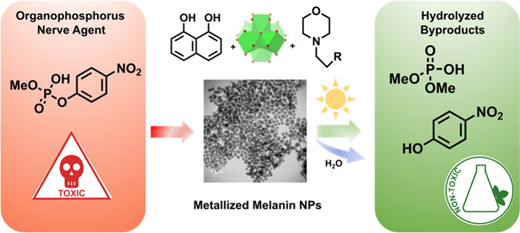
Nerve agents are particularly dangerous because they can quickly interfere with the normal functioning of the human nervous system and block signaling between the brain and body. Severe exposure can trigger epileptiform seizures, paralysis, and even death within minutes. Currently common protective clothing mainly relies on physical barriers to isolate harmful substances. Although it can prevent chemical substances from contacting the skin, it usually does not actively destroy these poisons.
The solution proposed by the research team is not to recreate a special fabric, but to develop a functional chemical material that can be coated on the surface of different fabrics. It's similar to a dye treatment process that attaches to fibers, but instead of just changing the fabric's color, it gives the material the ability to actively handle toxic chemicals.
This research builds on more than a decade of previous exploration by the team. In 2015, Northwestern University researchers discovered that zirconium-containing materials can help break down toxic chemicals. This study further combined zirconium with a melanin-like substance called allomelanin. This pigment is related to natural pigments in fungi and, in addition to providing color, has the ability to adsorb small molecules and heavy metal ions.
The researchers took advantage of the properties of each of the two components: melanoidin has a porous structure that traps harmful molecules like a microscopic sponge, while zirconium is responsible for driving chemical reactions that destroy trapped toxic substances. In addition, water can act as a catalytic agent during the reaction, helping to activate the decomposition process.
However, researchers soon discovered that breaking down the original poison did not mean the danger went away. Chemical reactions can produce new by-products that are sometimes even more dangerous than the original substance. In the experiment, zirconium and melanoidins worked together to produce two by-products: one is non-toxic dimethyl phosphate, and the other is extremely toxic methylnitrophenols.
To solve this problem, the research team once again took advantage of the adsorption capacity of melanoidins. In addition to capturing the original toxic chemicals, this material is also able to bind the harmful by-products mentioned above, thereby reducing their concentration and potential harm.
The experimental results showed that within 10 minutes, the concentration of methylnitrophenol dropped by 50%. The researchers also found that increasing the amount of melanoidin and exposing the material to sunlight further reduced the toxicity of this byproduct. However, the research team has not announced how much improvement sunlight exposure can bring.
Nathan Gianneski, a co-author of the study and a professor at Northwestern University, said that the research team has been conducting research on melanin for more than 12 years, trying to understand the multiple functions of this substance in nature and optimizing it through materials engineering to give it the potential for large-scale application. He believes that this achievement not only demonstrates a new protective coating, but also provides ideas for rethinking the design of protective materials.
If this technology is eventually perfected, future protective clothing may no longer just passively block dangerous substances, but can actively participate in chemical decomposition when exposed to certain toxic chemicals, thus reducing the risk posed by the continued presence of contaminants. Potential application scenarios include protection of military personnel, pesticide treatment, and chemical production.
However, there is still a long way to go from laboratory verification to actual use. The researchers also need to further evaluate how this coating performs in real-world environments, including its reaction efficiency under different conditions of temperature, humidity and pollution, its long-term stability, and its actual protection against different types of poisons. Only after it is confirmed that the decomposition products are adequately controlled and the material can continue to function reliably can this technology be applied to mass-produced personal protective equipment.
Relevant research papers have recently been published in the journal "ACS Nano".
Comments