
Abstract:
Researchers at the Indian Institute of Science have discovered that in the process of using hydrogen to convert carbon dioxide into fuels and industrial chemicals, there may be a hydrogen transfer pathway that has long been ignored by conventional models. This discovery not only helps explain the differences between experimental results and theoretical predictions, but may also provide new directions for developing more efficient catalysts and promoting the utilization of carbon dioxide resources.
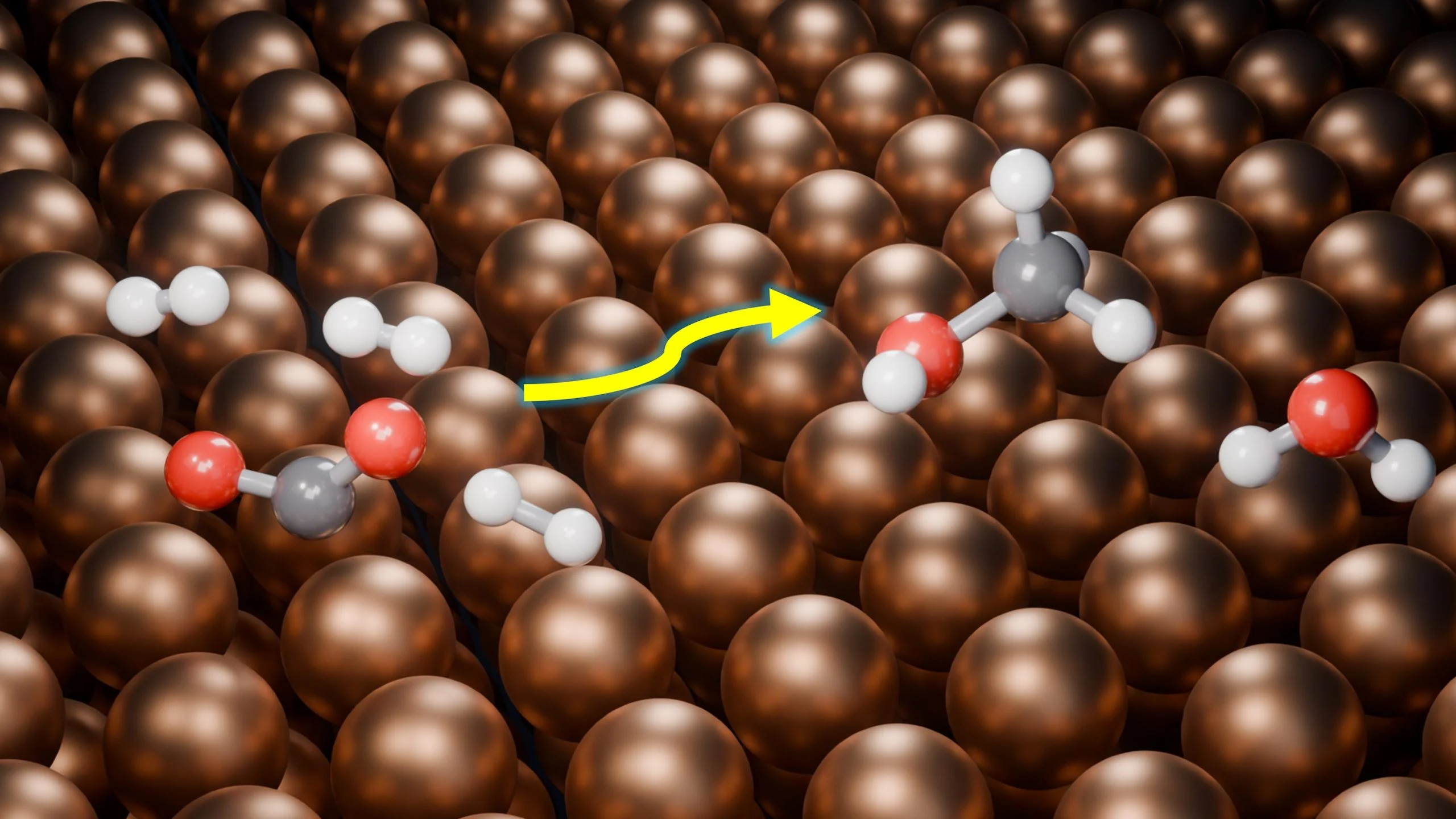
This study was led by a research team from the Indian Institute of Science (IISc), and the results were published in the magazine "Nature Communications" on September 17, 2026. The researchers developed a computational framework that combines quantum mechanical calculations, machine learning, and reaction kinetic modeling to study carbon dioxide hydrogenation reactions occurring on the surface of copper catalysts.
Carbon dioxide hydrogenation is a technology that combines carbon dioxide with hydrogen and converts it into other chemicals under the action of a catalyst. Among them, methanol is an important target product, which can be used in fuel production and is also widely used in chemical manufacturing. Therefore, how to improve the conversion efficiency of carbon dioxide and allow the reaction to generate more target products has always been an important topic in related research.
However, these types of chemical reactions are far more complex than simple reaction equations. On the catalyst surface, carbon dioxide and its derived intermediates may undergo a large number of sequential or competing reaction steps. Researchers will face extremely huge computational demands if they try to fully describe all possible reaction paths through quantum mechanical calculations. In order to control computational costs, traditional research usually only selects some of the reactions that are considered important to include in the model.
The problem is that if a model misses a key reaction, even if the rest of the calculations are accurate, the final prediction may deviate significantly from reality.
The research team first used quantum mechanical simulations to build a verified reaction database, which contains 152 reactions. They then trained a machine learning model to estimate the activation energy barriers needed to be overcome for different reactions. Activation energy determines the ease with which a reaction occurs and is an important parameter for predicting the rate of chemical reactions.
On this basis, the researchers used automated tools to systematically identify possible reactions between 105 chemical species on the surface of the copper catalyst and determine which species can be converted into each other in a single step. After expansion, the original limited-scale reaction network finally increased to 9389 elementary reactions.
After expanding the reaction network, the calculation results changed significantly. When only considering 152 reactions, the model incorrectly predicted that formic acid would be the dominant product, while underestimating the extent of carbon dioxide conversion. After thousands of previously ignored reactions were included in the calculations, the model's prediction results were more consistent with experimental observations. It could correctly identify major products such as methanol and carbon monoxide, and predict a carbon dioxide conversion amount that was approximately 40 times that of the original model.
The researchers then incorporated the expanded reaction network into a kinetic model to analyze the actual behavior of the entire chemical system. Relevant predictions have also been verified by experimental studies. The personnel involved in the experimental verification came from the Green Research and Development Center of Hindustan Petroleum Corporation and the relevant research teams of the Agency for Science, Technology and Research (A*STAR) of Singapore.
In addition to improving the accuracy of model predictions, this research also reveals a hydrogen transport mechanism that deserves attention.
In traditional reaction descriptions, hydrogen molecules usually need to be dissociated into hydrogen atoms first, and then these hydrogen atoms participate in subsequent chemical reactions. But the researchers found that in some important reactions, the hydrogen in the hydrogen gas molecule can be transferred directly to the reaction intermediate without first completely dissociating into independent hydrogen atoms.
Further quantum mechanical calculations confirmed that this direct hydrogen transfer route may have particularly favorable energetic conditions when hydrogen is transferred to oxygen-containing intermediates.
This discovery challenges the simplified treatment of the hydrogen transfer process in some traditional models. The researchers point out that this mechanism only becomes apparent when the reaction network is enlarged to a sufficient size, allowing the computing system to consider more reaction paths that have not been included before. The team then conducted more detailed quantum mechanical calculations on the relevant steps, further confirming that this phenomenon was not simply predicted by the model.
The researchers believe this mechanism may provide clues for improved catalyst design. For example, if the catalyst could interact more strongly with hydrogen molecules, it might be possible to promote reaction pathways that favor methanol production. However, this is still a design idea that needs further verification. It cannot be concluded that enhancing the interaction between hydrogen molecules and catalysts will inevitably increase the methanol yield.
Another important significance of this work is that it demonstrates the potential of research methods that combine computational chemistry with machine learning. The research team integrated quantum mechanical calculations, machine learning, automated reaction path identification, and reaction kinetic models, which not only expanded the range of reactions that could be studied, but also reduced the difficulty of processing all possible reactions one by one through costly calculations.
The researchers said that this framework can also be applied to other chemical processes of industrial value in the future, such as carbon dioxide reduction, nitrogen reduction, and water splitting reactions on different catalysts. These processes are closely related to the fields of carbon resource recycling, nitrogen-containing chemical production and hydrogen production respectively.
With the increasing demand for emission reduction and energy transition, converting carbon dioxide into useful products such as methanol is regarded as one of the potential technical routes to realize carbon resource recycling. However, the overall environmental benefits of this type of technology also depend on how the hydrogen is produced, the source of the energy required, the performance of the catalyst and the economics of the overall process. If hydrogen production still relies on high-emission energy sources, the carbon dioxide conversion process itself does not necessarily mean a reduction in life-cycle emissions.
Therefore, the most direct contribution of this research is not to have developed new fuel production equipment that can be applied commercially on a large scale, but to reveal important chemical reactions that may be missed by traditional computational models and provide a method to study complex catalytic reactions more comprehensively. As researchers further validate the hydrogen transfer mechanism and apply it to catalyst optimization, this discovery is expected to lay the foundation for improving carbon dioxide conversion efficiency and developing more economical fuel production processes.
Comments