
Abstract:
In hot and humid areas, the stench emitted by outdoor trash cans has always been a problem that plagues urban environmental management. Now, a new technology developed by a Chinese research team may be able to use sunlight itself to solve this problem. Researchers have designed a solar module installed on a trash can lid that can use natural light to continuously decompose odor-causing chemicals and reduce garbage odor from the source.
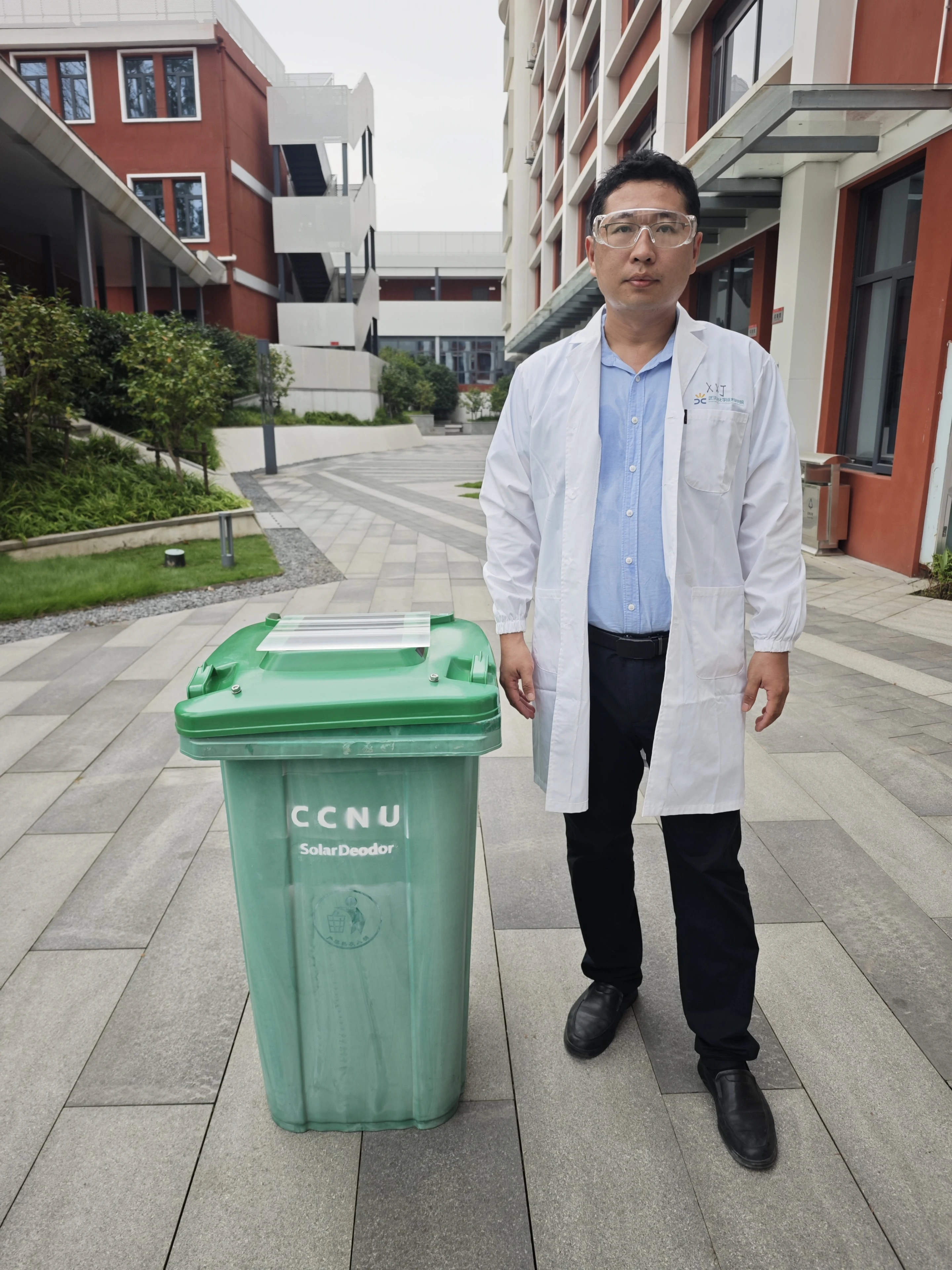
Relevant research was completed by Wang Jinlong’s team at Central China Normal University and a number of Chinese scientific research institutions, and was published in the journal "Environmental Science & Technology". Researchers pointed out that traditional methods to solve garbage odor mainly rely on air fresheners to mask the odor, or use activated carbon filters to absorb odor molecules, but these solutions are often less effective in high temperature and high humidity environments.
Unlike traditional methods, the new system does not simply capture odors, but directly breaks down the chemicals that cause odors. The research team said they hope to solve the problem inside the bin, rather than waiting for the odor to spread into the street environment.
The core material of this technology is manganese dioxide. An inexpensive and widely used material, manganese dioxide is commonly used in batteries, water treatment, air purification, and glass and ceramic manufacturing. The researchers used its ability to facilitate electron transfer and catalyze chemical reactions to target acetic acid produced during the decaying process of garbage. Acetic acid is one of the important sources of sour and vinegar-like odors after garbage decays. Manganese dioxide absorbs and breaks down acetic acid, eliminating odors.
In order to further improve the effect, the research team added lithium element to the manganese dioxide structure. The introduction of lithium changes the internal electron transport properties of the material, which is equivalent to optimizing the catalyst so that it can break down the molecules that cause odor more efficiently.
Sunlight is the source of energy required for the operation of this system. Because chemical reactions require heat to drive, the researchers did not use electricity for heating, but used sunlight to directly heat the catalytic material. Through the process of "photothermal conversion", sunlight is converted into heat energy, thereby activating the catalytic reaction.
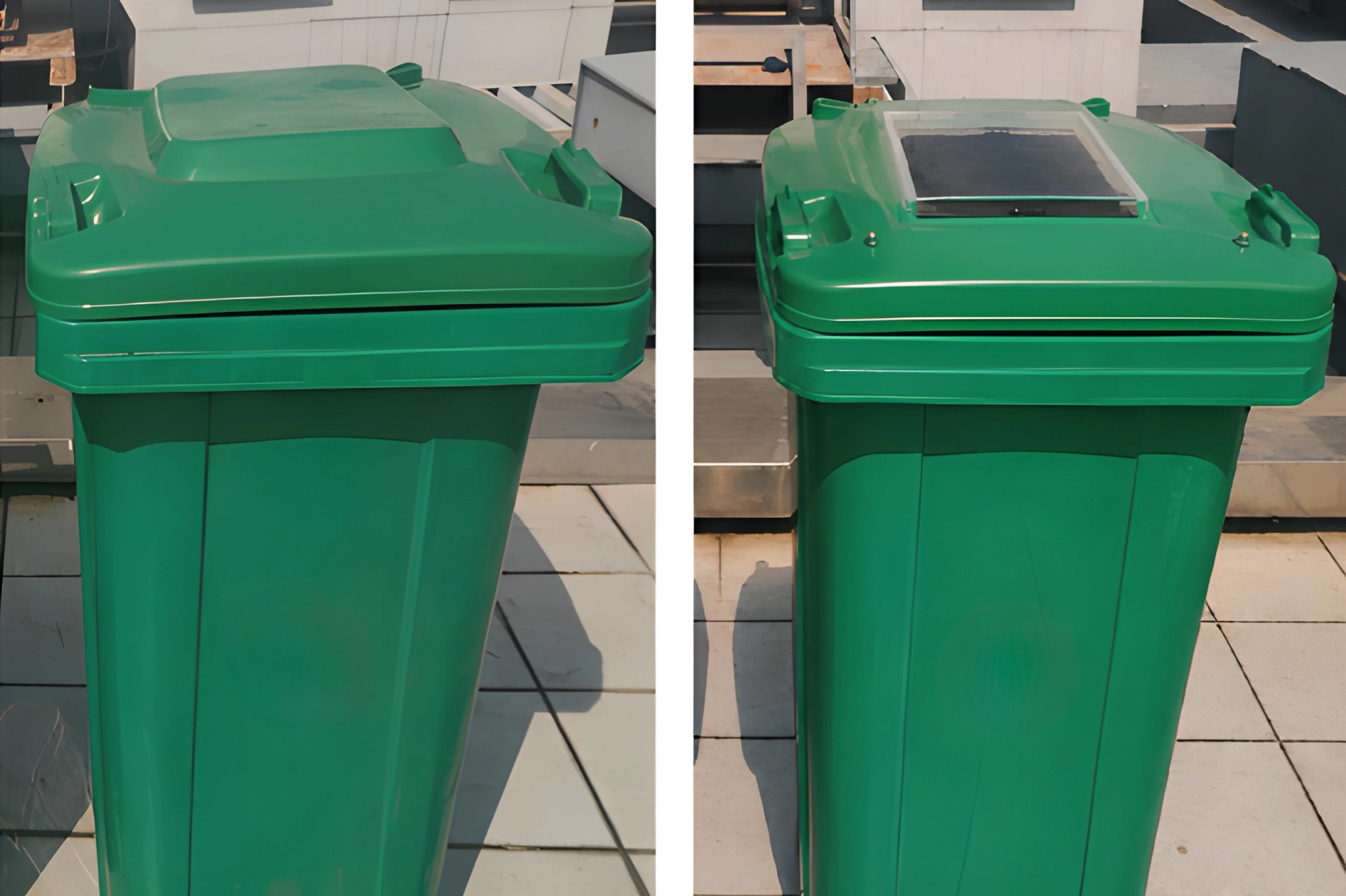
To achieve this, the team developed a transparent and breathable trash can lid assembly. The device contains a lens structure that can focus sunlight, which can concentrate the light on the surface of the catalytic layer and improve the catalytic efficiency. The entire module mounts removable onto the lid of a standard wheelie bin and requires no additional power source to operate.
Experimental results show that under simulated sunlight conditions, lithium-modified catalysts are significantly better than ordinary manganese dioxide and traditional activated carbon materials in terms of efficiency and stability, and can maintain good performance under high humidity conditions.
In order to verify the actual application effect, the researchers installed the device on a trash can and used food residues such as fruit, bread, and wine to simulate real domestic waste for testing. The results show that the system can continuously and efficiently decompose acetic acid released during the decay process of garbage, and can work stably for more than 40 days under natural sunlight conditions.
Researchers believe that this technology can not only be used in trash cans in residential areas in the future, but is also expected to be applied to community garbage collection points and urban waste management systems. Because the device relies on solar energy to operate and uses low-cost materials, it has the potential for large-scale deployment.
With the acceleration of urbanization and the increase in hot weather caused by climate warming, the problem of garbage odor has become more and more prominent. This innovative solution that uses sunlight to actively decompose odor molecules provides a new idea for green, low-cost urban environmental management.
Comments