
Abstract:
Oregon State University chemist Kyriakos Stiliano and his collaborators have developed a series of materials that use light energy to quickly and efficiently produce hydrogen from water, bringing new possibilities for the large-scale production of green hydrogen energy. The research team said that this material not only has high efficiency, but also has good stability and scalability potential, and is expected to help reduce the production cost of clean energy in the future.
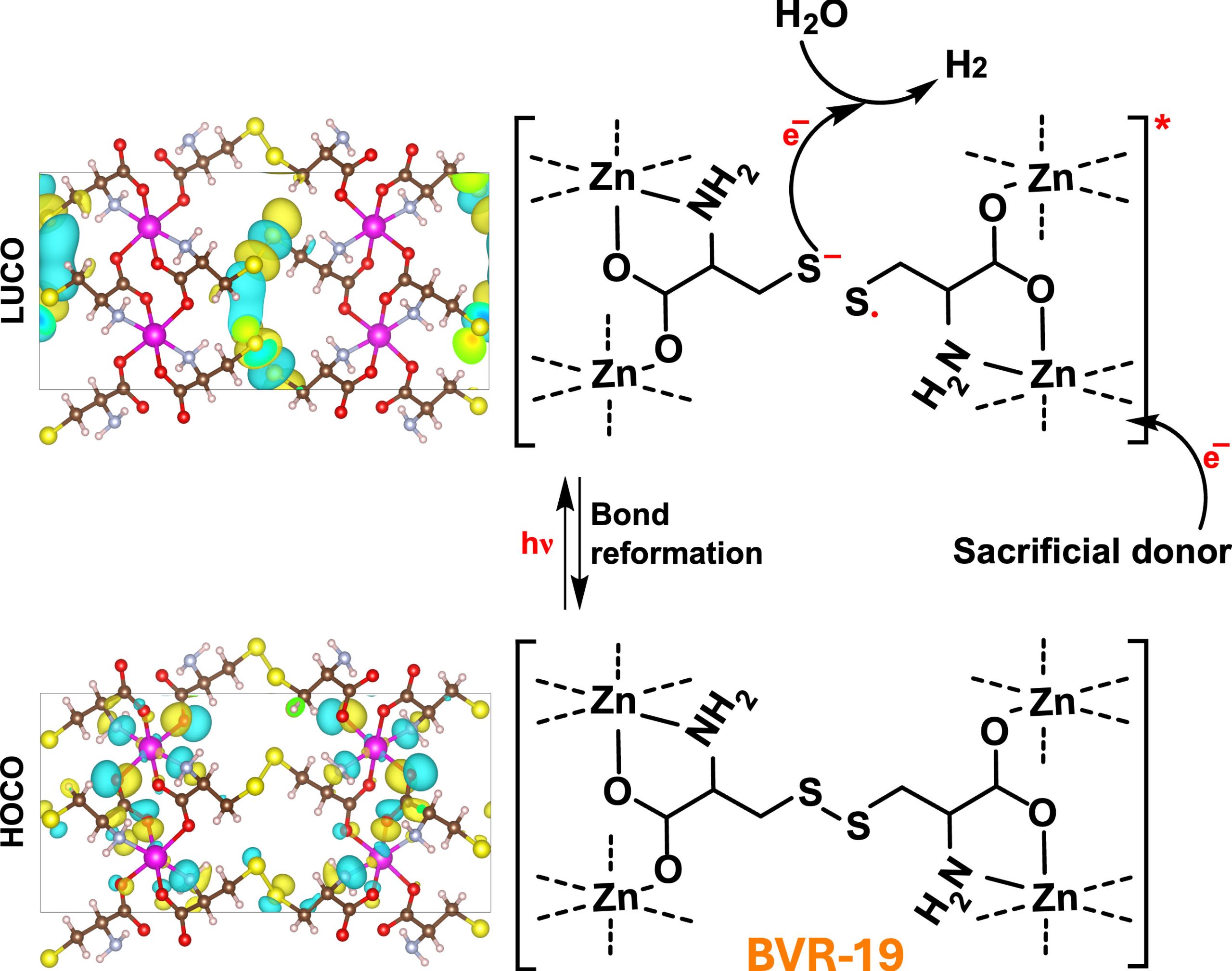
Currently, most industrial hydrogen production still relies on fossil fuels such as natural gas, which not only consumes huge energy but also produces large amounts of carbon dioxide emissions. Although using solar energy to split water to produce hydrogen is considered an ideal solution, related technologies have long been limited by low efficiency, expensive materials, and insufficient durability.
This research focuses on a special crystal material. The material acts as a photocatalyst, stimulating internal electron movement after absorbing sunlight and driving water molecules to split into hydrogen and oxygen. Compared with traditional photocatalytic materials, the new crystal has a stronger ability to utilize sunlight and can convert solar energy into chemical energy more efficiently.
The researchers pointed out that the crystal has a highly ordered atomic arrangement structure inside, which can help electrons move quickly and reduce energy loss, thus improving the overall reaction efficiency. At the same time, the active sites in the material can promote the decomposition process of water molecules, further increasing the rate of hydrogen production.
Experimental results show that this crystal can continuously and stably perform water splitting reactions under light conditions and maintain good performance during long-term testing. The research team believes that stability is one of the most critical indicators for future practical applications, because many laboratory materials, although relatively efficient, will rapidly degrade during operation.
The researchers also emphasized that an important advantage of the technology is its direct use of solar energy. In theory, such a system could continue to produce hydrogen as long as there is sunlight and water, without relying on external electricity input. If efficiency can be further improved and production scale expanded in the future, it is expected to provide new energy solutions for remote areas, industrial facilities, and renewable energy storage systems.
Hydrogen is widely regarded as an important energy carrier for achieving a low-carbon economy. It can be used in fuel cell vehicles, steel manufacturing, chemical production and large energy storage systems. However, the current production cost of green hydrogen is still significantly higher than that of traditional fossil fuel hydrogen production methods. Therefore, the development of more efficient and cheaper hydrogen production technology has become an important goal of the global scientific research community.
The research team stated that in the future, they will continue to optimize the structure and composition of the crystal, further improve the photocatalytic efficiency, and explore commercial manufacturing routes. If the relevant technology can be successfully industrialized, the vision of using sunlight to obtain clean hydrogen directly from water may be one step closer to reality, providing new technical support for the global energy transformation.
Comments