
Abstract:
A SUNY Binghamton research team has developed a paper-based "hygroelectric" wallpaper that absorbs moisture from the air and generates a small amount of electricity while buffering indoor humidity changes. Relevant research was published in Advanced Energy Materials. The team said its goal is not to replace the grid or rooftop solar power, but to power low-power Internet of Things devices such as environmental sensors and wireless modules, and to explore allowing walls to have both energy collection and humidity regulation functions.
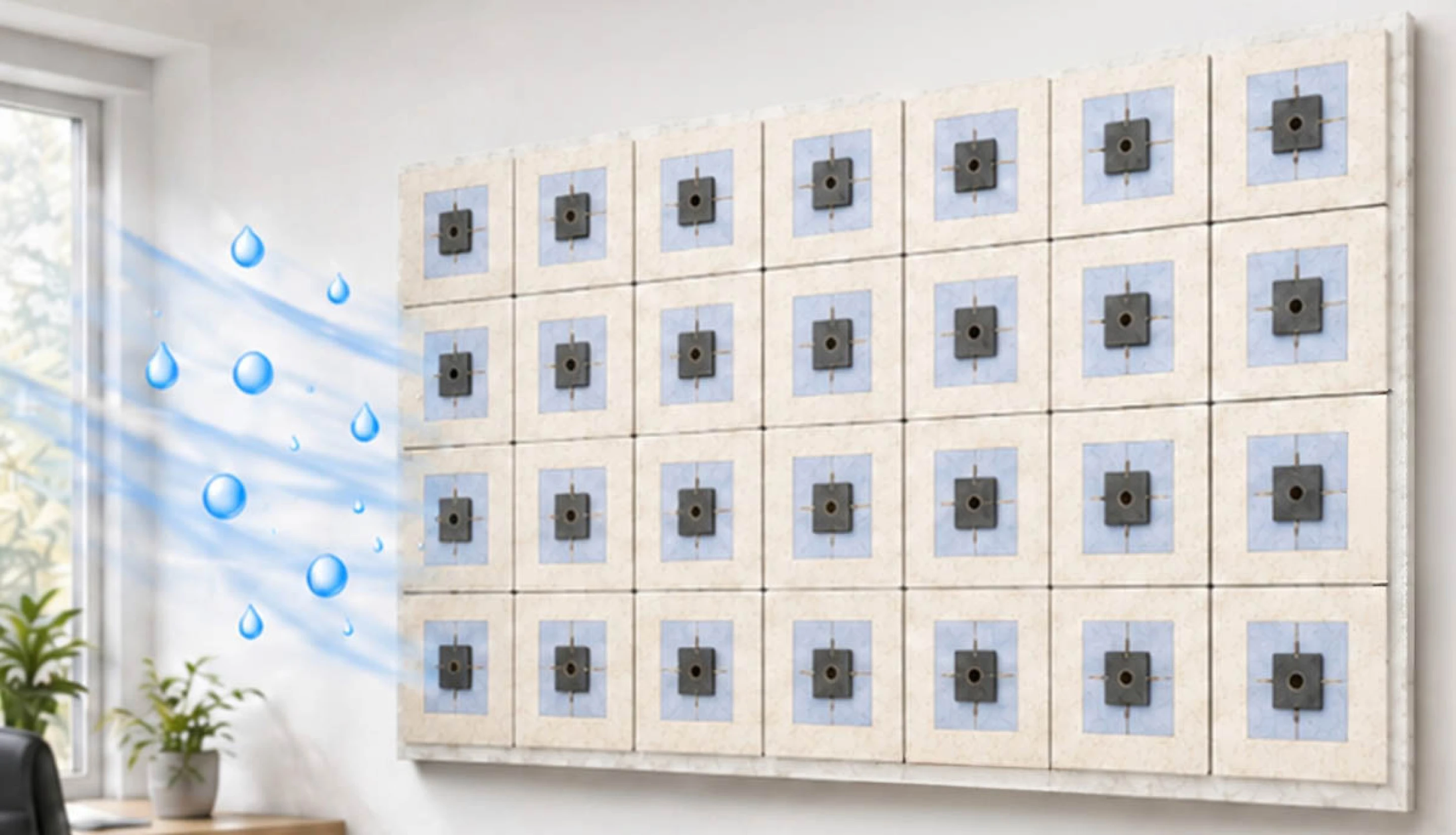
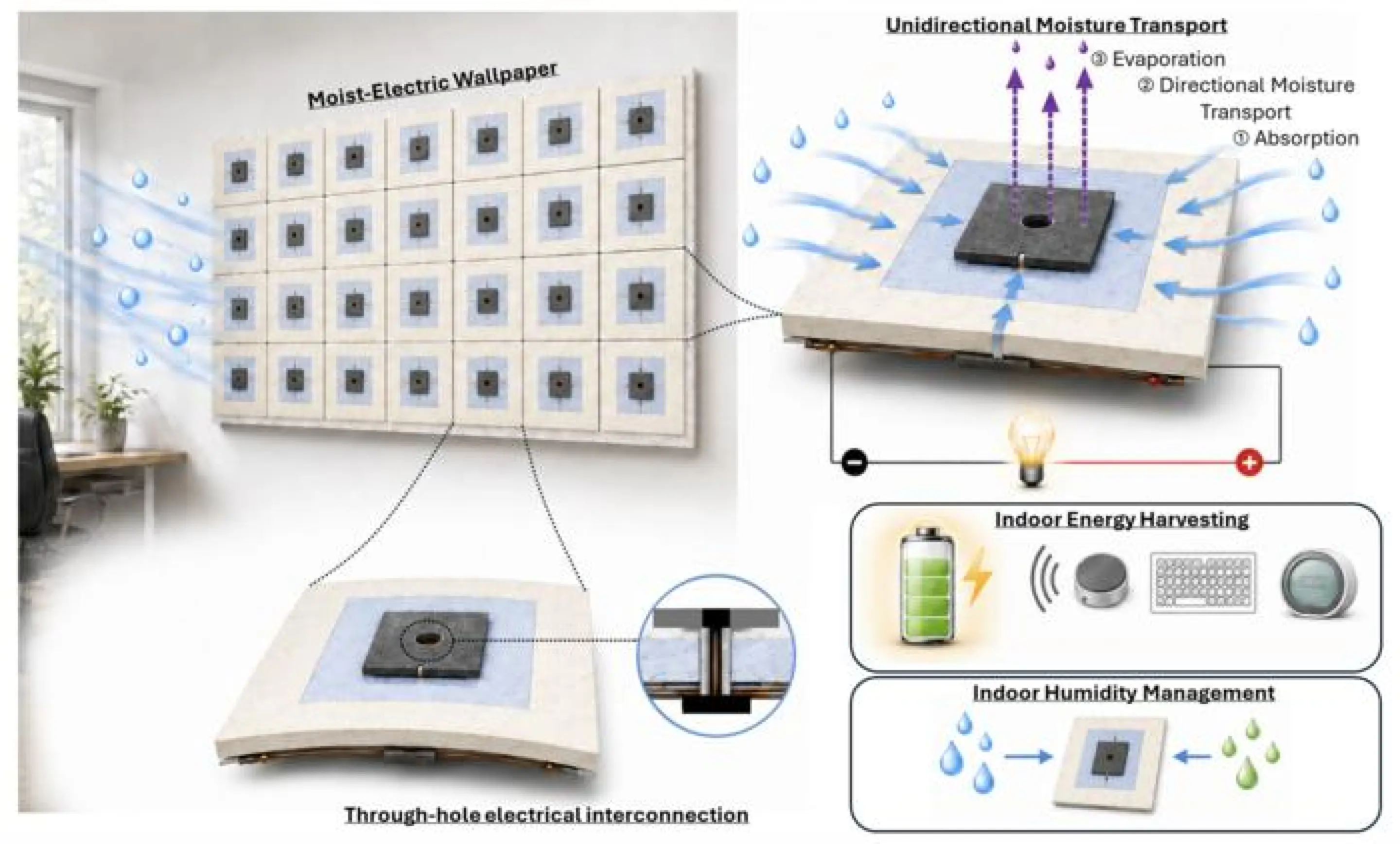
This prototype is not a commercially available wallpaper, but is based on laboratory chromatography paper about 340 microns thick. Each about 2 cm square power generation unit is divided into three areas: the edges are coated with glycerin, which is responsible for absorbing water vapor from the air; the middle area contains polyvinylpyrrolidone (PVP), which uses smaller pores and strong water absorption capacity to guide moisture inward; the center is treated with wax, making it difficult for liquid water to pass through, but water vapor can still escape through the micropores. The researchers made electrodes with graphite ink and connected the units through laser vias filled with silver paste, with the circuits hidden on the back of the paper.
Electricity comes from a continuous process of moisture absorption, internal water transport and central evaporation. Water molecules interact with chemical groups in glycerin, cellulose and PVP to release protons, forming an ion concentration difference between the edges and the center, prompting the charged particles to move and establish a voltage, and then the graphite electrode collects the current. The team placed the hygroscopic zone on the periphery and the evaporation zone in the center, allowing moisture to move directionally along the surface of the sheet. The wax layer is not completely sealed, but selectively blocks liquid water and allows water vapor to escape to maintain the humidity gradient.
Under test conditions of 80% relative humidity, a single unit generates a voltage of approximately 0.34 volts, with a peak power density of approximately 2.2 microwatts per square centimeter, which is approximately 0.55 microwatts per square centimeter based on the entire 4-square-centimeter unit footprint; the output remains stable for approximately 90 minutes. The higher the humidity, the more moisture the unit absorbs and the stronger the output overall. When 10 units are connected in series, the voltage at 80% relative humidity is about 2.9 volts; when 10 units are connected in parallel, the current is about 240 microamps. The paper points out that the power density of the entire wallpaper footprint is still low, and the existing geometric design has not yet been optimized for total output.
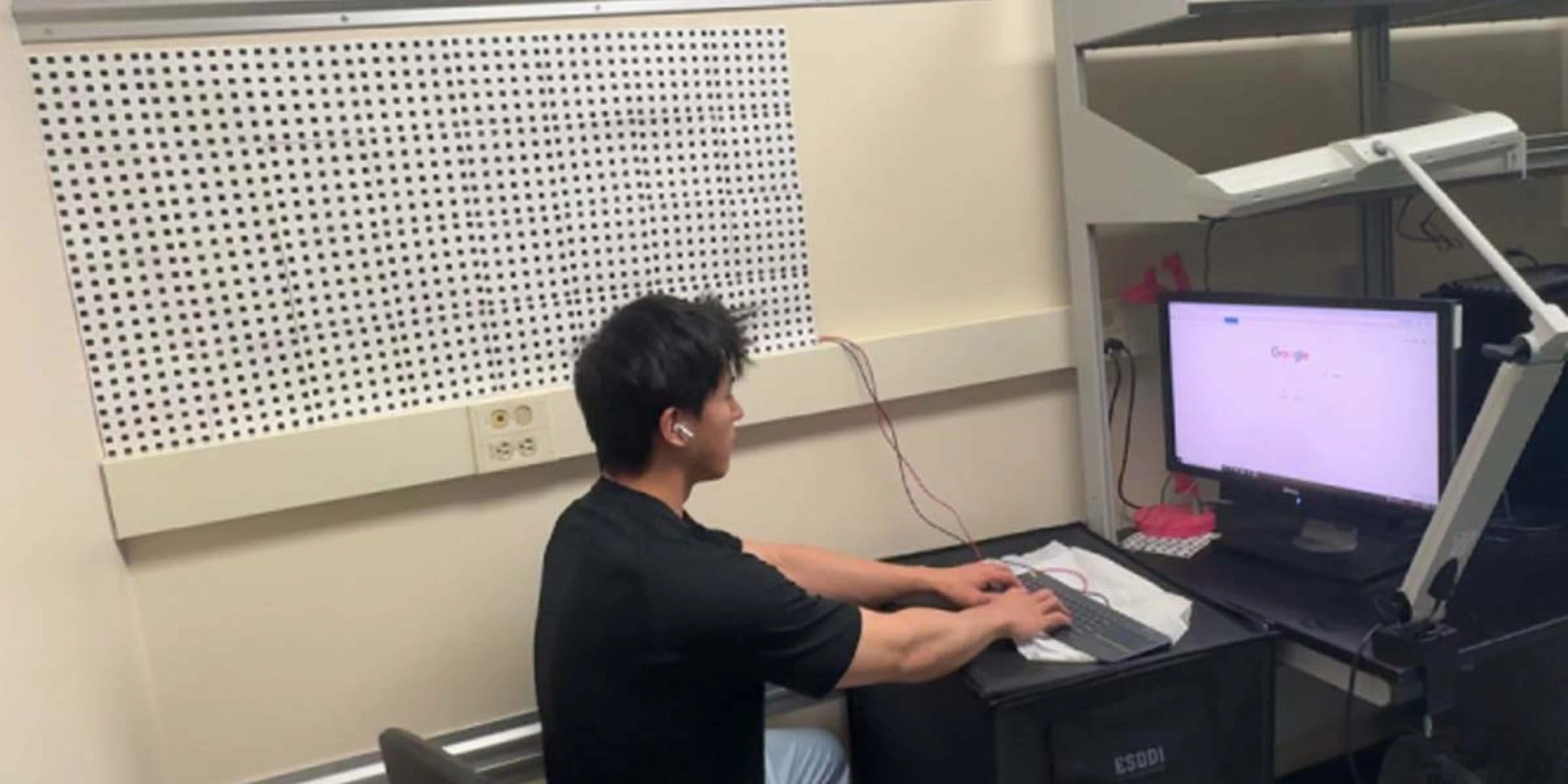
The research team then formed a larger array of 1,596 units, reduced the indoor humidity to about 32% within 15 minutes at a relative humidity of about 38%, and demonstrated powering a wireless keyboard; the demonstration used capacitor energy storage to release charge when the keyboard was working. In a smaller experiment, 35 units powered the humidity sensor for about 15 minutes. The research also tested the humidity buffer in a 30 × 30 × 15 cm sealed box. 28 units reduced the humidity from 75% to 50% in about 4 minutes; the hygroscopic paper can release moisture in the dry air, causing the humidity to rise from 15% to 20% in about 16 minutes. These results are from controlled experiments and cannot be directly interpreted as long-term dehumidification or power capabilities for an entire home.

The team hopes to use wax printing, spraying, screen printing and laser processing to achieve full-process printing, and believes there will be opportunities to expand production in the future. But currently, lab paper is still being used, and research has yet to demonstrate product-grade durability, long-term cycling stability, or actual home performance under varying ventilation conditions. The researchers also pointed out that although higher humidity can increase moisture absorption and power generation, when the relative humidity approaches 90% to 95%, the water vapor pressure difference required for central evaporation may weaken, and the output may tend to plateau or even decline.
Comments