
Abstract:
Research teams from the University of Arkansas and the University of Michigan recently demonstrated a new technology. They developed a graphene-based energy harvesting device that harvests energy from ambient electromagnetic radiation generated by surrounding power lines and converts it into electrical energy to power sensors, enabling independent operation without batteries or power supply lines.
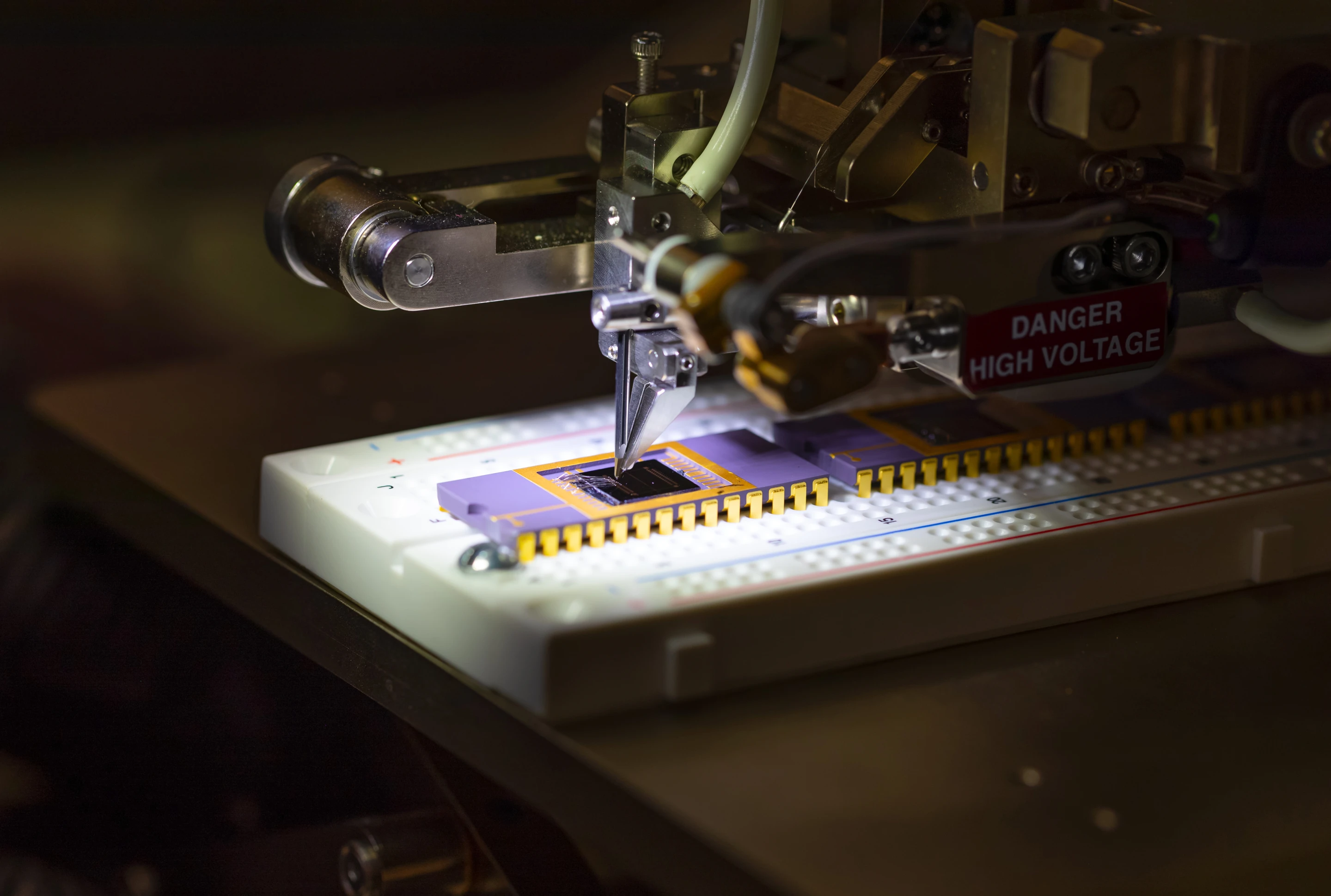
The researchers used this technology to build a wireless temperature monitoring system that includes a graphene energy harvester, power conversion circuit, energy storage capacitor and ultra-low power temperature sensor. The entire system obtains power through electromagnetic induction and can complete the temperature detection task without relying on traditional batteries.
The working principle is based on the changing magnetic field produced by alternating current. When an electric current passes through a wire, it creates a magnetic field around it, and alternating current continues to change direction and intensity, thus continuously releasing a changing magnetic field that carries energy. In the U.S. power grid, this change typically occurs as often as 60 times per second. The research team exploited these otherwise neglected energy sources to provide continuous power for independent devices.
To capture this magnetic field energy, researchers used graphene to create inductors and added a steel core to enhance magnetic field collection capabilities. When a device is placed near a power line, the changing magnetic field around the wire passes through the inductor and induces a weak AC voltage across it. This process is the same principle of electromagnetic induction utilized by traditional transformers and generators.
However, the electrical signals initially generated cannot directly drive electronic devices. On the one hand, it is alternating current, while the sensor requires direct current; on the other hand, its voltage level is far from sufficient. To this end, the research team designed a power conversion circuit based on a Cockcroft-Walton voltage doubler to rectify alternating current into direct current and gradually increase the voltage to a level usable by the sensor.
Unlike traditional solutions, this system does not use rechargeable batteries, but uses three capacitors to store the collected electrical energy. The capacitor gradually accumulates charge, and the researchers say the energy harvester replenishes power faster than the temperature sensor consumes it, allowing the system to maintain long-term operation.
Even after voltage increase and energy storage, the scale of power obtained in this way is still very small. In order to adapt to this limitation, the research team specially designed an ultra-low-power temperature sensor whose power consumption is only in the nanowatt level, which is one billionth of a watt. According to reports, the device consumes approximately 30 million times less power than an AirPods headset.
The researchers said that although the graphene inductor does not collect energy quickly, it is still enough to continuously replenish the energy stored in the capacitor. As long as there is a sufficient source of electromagnetic energy nearby, the system can theoretically operate indefinitely. At the same time, the capacitor can also store excess electricity, so that even if the surrounding power is temporarily interrupted, the device can still continue to work. According to the team's estimation, the stored charge can keep the sensor running for at least 24 hours, and in some cases it is expected to even last for about a week.
Professor Paul Sibado, the leader of the research, pointed out that although the speed at which the inductor replenishes charge to the capacitor is slow, it is still higher than the speed at which the sensor consumes power. Therefore, even after a power outage, the system can continue to operate for a longer period of time on the energy stored in the capacitor.
The research team believes that this technology is well suited for temperature monitoring networks in large industrial facilities. Thousands of sensors often need to be deployed around factories, pipeline systems and various mechanical equipment. Traditional solutions either require complex power supply wiring or require frequent battery replacement. With the adoption of new technologies, a large number of sensors are expected to work for a long time without wires or battery maintenance requirements.
However, the researchers also highlighted the limitations of the technology. First, the device must be located near a changing magnetic field strong enough that it cannot generate electricity out of thin air in any environment. Secondly, current experiments have not proven that the system can start on its own in a completely zero-power state. During the test process, the capacitor needs to be pre-charged and the processor needs to be programmed in advance. In addition, the system output power is extremely low and can currently only drive specially designed ultra-low-power sensors, which is not enough to power ordinary electronic devices such as smartphones.
Nevertheless, the team believes that this achievement provides an important direction for the development of self-powered sensors in the future. In addition to temperature monitoring, similar technologies can also be used in many fields such as product tracking, atmospheric environment monitoring, logistics fleet management, soil monitoring, wearable health devices, and medical tracking in the future.
At the same time, researchers are also exploring the use of acoustic energy, nonlinear energy, solar energy, thermal energy, kinetic energy and other sources of environmental radiation to generate electricity, hoping to eventually develop an autonomous sensor system that can simultaneously obtain power from multiple environmental energy sources to achieve truly long-term, maintenance-free operation.
Relevant research results have been published in the Journal of Vacuum Science and Technology.
Comments