
Abstract:
About 4.5 billion years ago, Earth and Mars were born together from clouds of gas and dust orbiting the young Sun. However, a new study shows that although the two neighboring planets formed in the same solar system, they may have experienced completely different growth processes.
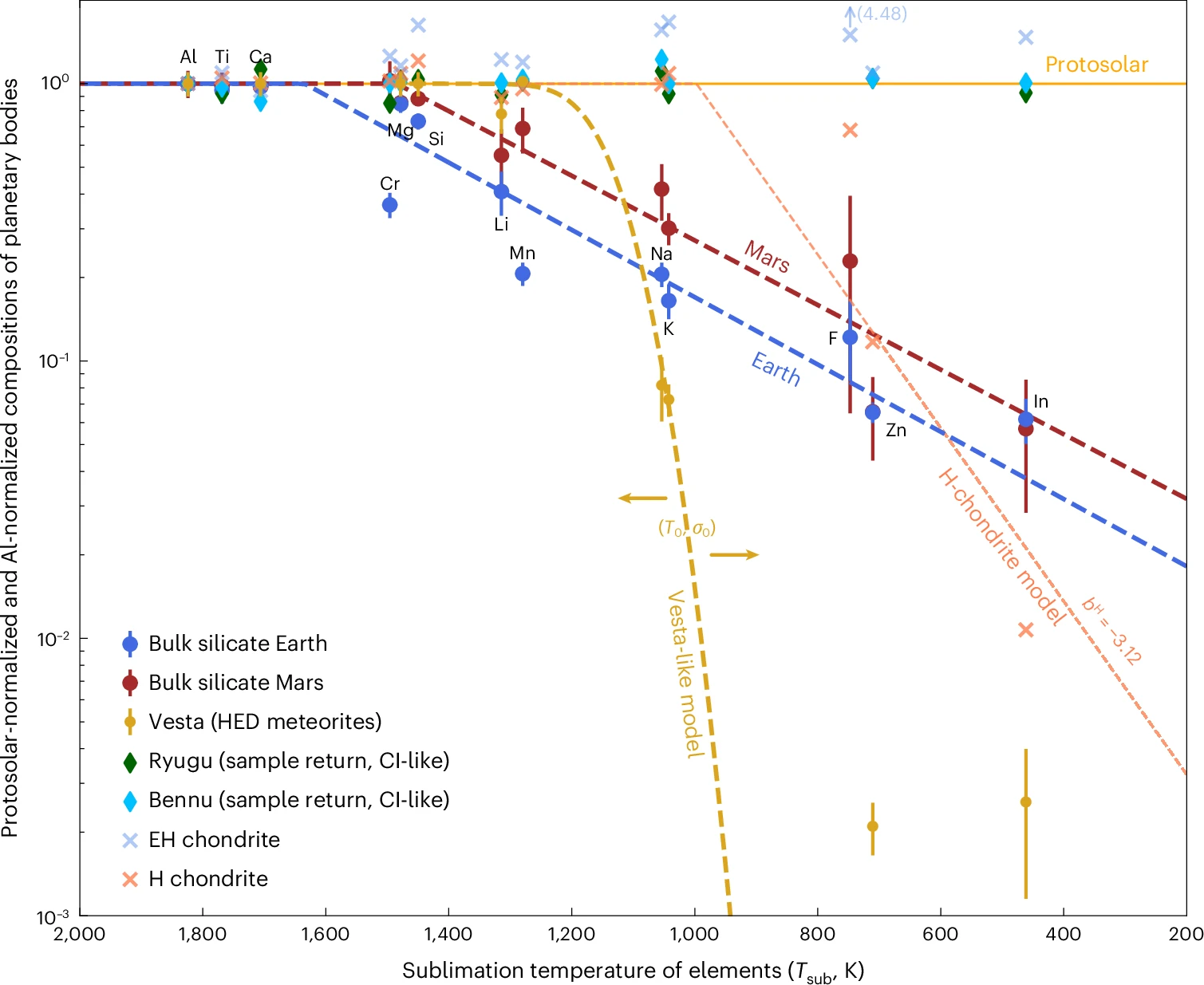
This study led by a research team from the University of Copenhagen in Denmark proposed that the Earth and Mars were not formed through the same proportion of material accumulation mechanisms, but relied on different "raw material recipes" during the planet's growth process. The research results were published in the journal Nature Astronomy.
Anders Johansen, one of the leaders of the study and a professor at the Institute of Global Studies at the University of Copenhagen, said that the most surprising finding is that the Earth and Mars seem to have adopted different formation modes. Intuitively, two planets formed in the same solar system and in adjacent regions should have more similar growth histories.
At present, the planetary science community generally believes that rocky planets are mainly formed in two ways. One is a process called "planetary body collision", in which large rocky objects continue to collide and merge; the other is "pebble accretion", in which larger objects continue to capture a large number of smaller particles and gradually grow. Many studies believe that the real situation may be the result of a combination of two mechanisms.
New research supports this hybrid model, but suggests that Earth and Mars rely significantly differently on the two mechanisms.
Wang Haiyang, the first author of the study and assistant professor at the University of Copenhagen, said that the research results show that at least 75% of the Earth's mass comes from two young protoplanets, and these protoplanets mainly grow and grow by accreting a large number of tiny "pebbles" particles. Planetesimal collisions contribute about 25% of the remaining mass of the Earth.
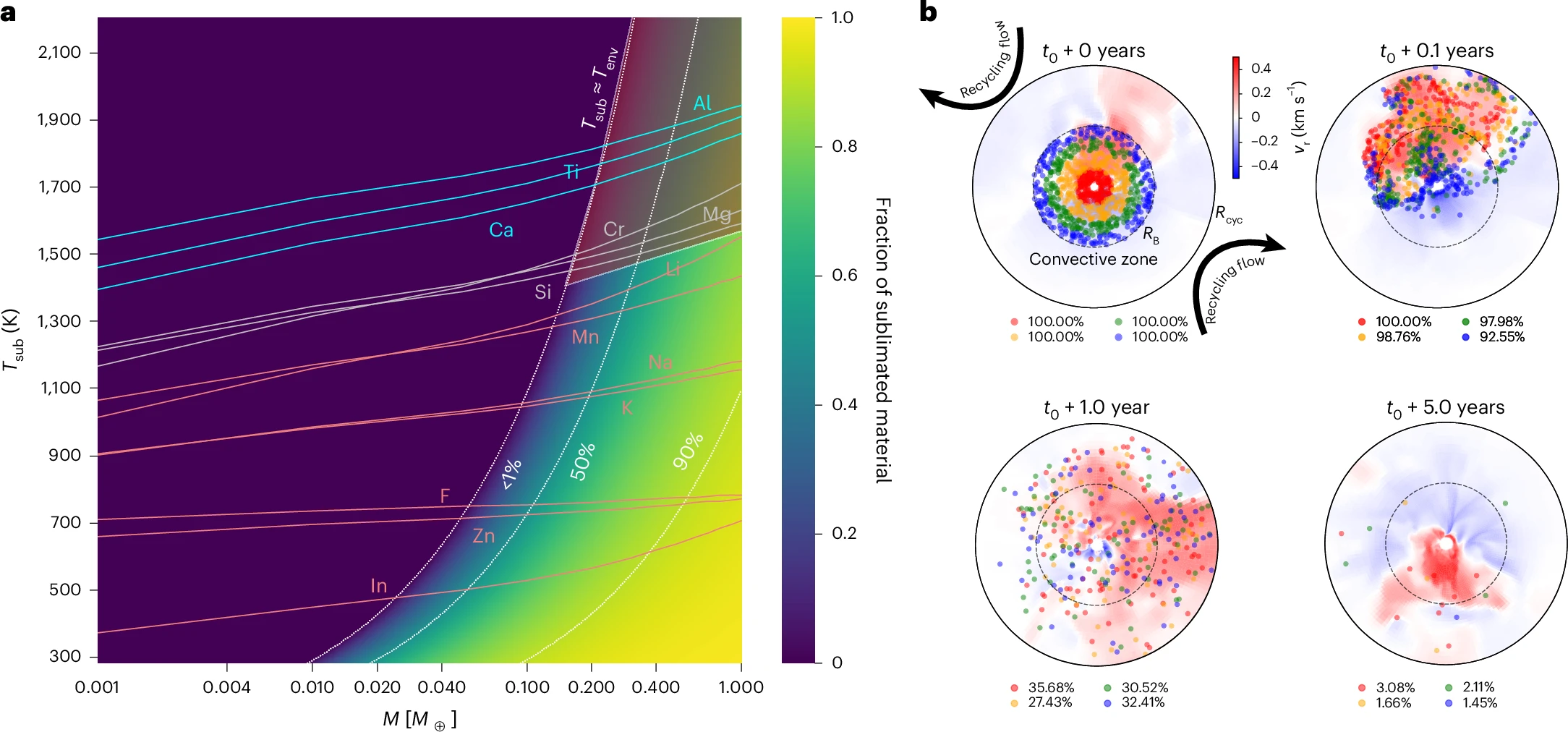
In contrast, the formation path of Mars shows almost the opposite trend. The research team estimates that about 75% of the mass of Mars comes from the collision and merger of planetesimal bodies, while the contribution of pebble accretion only accounts for about a quarter.
To reconstruct the formation history billions of years ago, the research team did not rely on traditional astrodynamic simulations, but looked for clues in the chemical signatures that Earth and Mars retain today.
The researchers focused on analyzing volatile elements in the crust and mantle of the two planets, including sodium, zinc and potassium. These elements evaporate easily at high temperatures, so their current levels reflect the heating and evolution history of the planet during its formation.
The team then compared these chemical signatures with computer simulations to test whether different formation models could reproduce the distribution of elements observed today.
Johnson said that this work is essentially a "cosmic detective investigation" spanning 4.5 billion years. Although most of the original evidence has long since disappeared, the chemical composition of the mantles of Earth and Mars still retains traces of their formation and can be regarded as "fingerprints" of early evolutionary processes.
The researchers pointed out that there are still certain uncertainties in the current model, because the scientific community does not yet know the precise composition of all the original materials in the early stages of the formation of the solar system. But even when tested under different assumptions, the results repeatedly point to the same conclusion: Earth and Mars likely followed different growth paths.
The research team believes that this discovery not only helps explain why there are huge differences between planets in the solar system, but may also provide an important reference for studying rocky planets around other stars. By understanding how different formation mechanisms shape planetary structure and composition, scientists may be able to more accurately determine in the future which exoplanets have Earth-like evolutionary potential and whether they have the conditions to support life.
Comments