
Abstract:
Astronomers conducted the latest research on a giant exoplanet with a mass of 11 times that of Jupiter and found that the formation process of this giant may be significantly different from traditional theoretical predictions. The new discovery not only challenges long-standing understanding of the birth mechanism of giant gas planets, but also allows scientists to rethink the boundaries between planets and "failed stars."
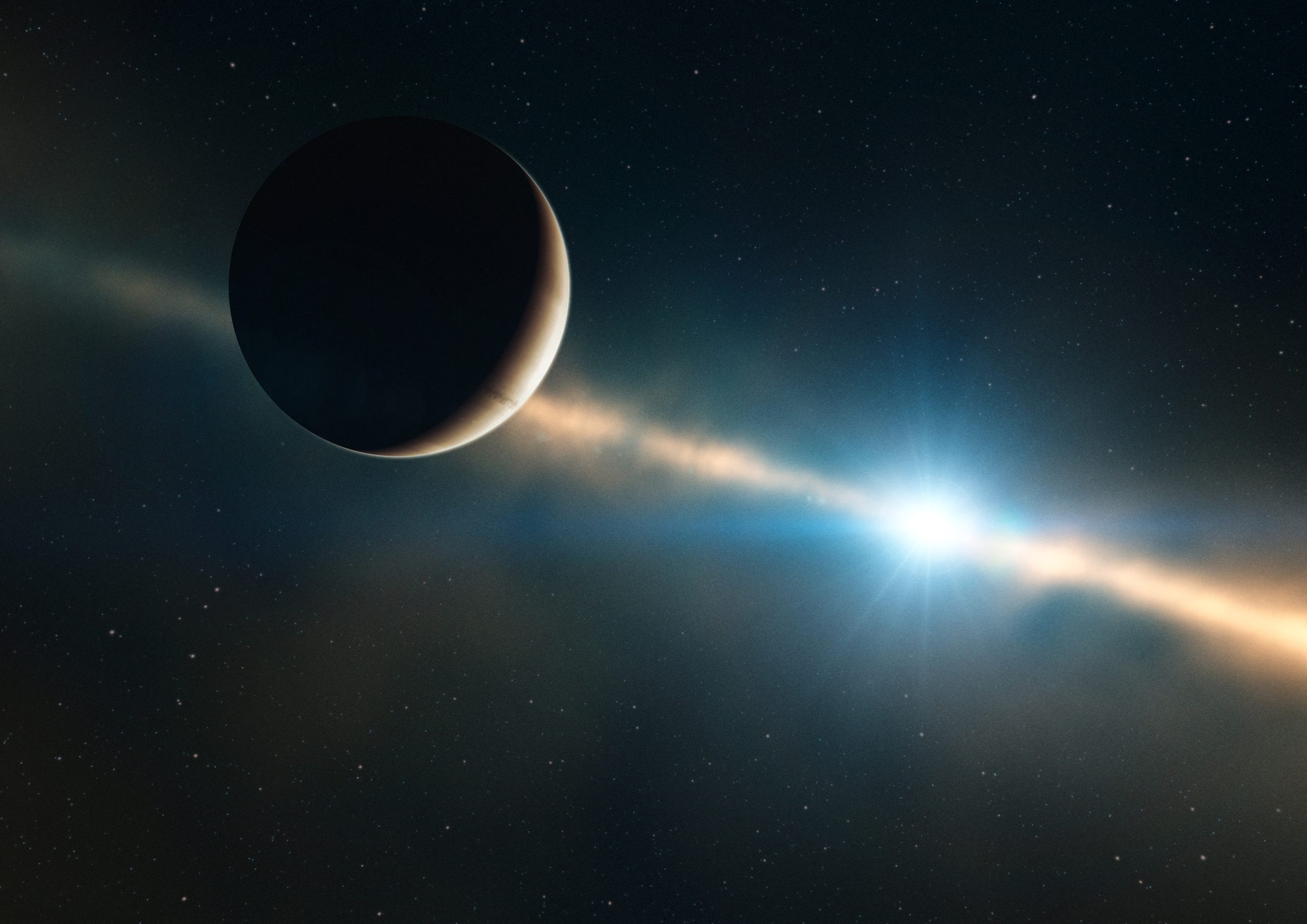
The planet that has attracted attention is called Beta Pictoris b, orbiting the young star "Beta Pictoris". It belongs to the typical "super Jupiter" category, with a mass of about 11 times that of Jupiter, and is one of the most massive planets currently known. Due to its astonishing size and mass, the astronomical community has long been trying to figure out whether it was born through a traditional planet formation mechanism, or whether it was formed by the direct collapse of a gas cloud like a star.
According to mainstream theories, gas giant planets such as Jupiter are usually formed through the "core accretion model." First, rocks and ice materials are gathered in the protoplanetary disk around the star, and a large solid core is gradually built. Then the core relies on its own gravity to attract a large amount of hydrogen and helium gas, and eventually grows into a giant gas planet.
However, things get complicated when the planet's mass increases. Many models believe that once the mass of a celestial body reaches a certain threshold, the traditional core accretion mechanism will be unable to continue to function. These supermassive objects are more likely to be born through a "gravitational instability model" similar to star formation, that is, the gas region in the protoplanetary disk directly collapses to form an object similar to a brown dwarf.
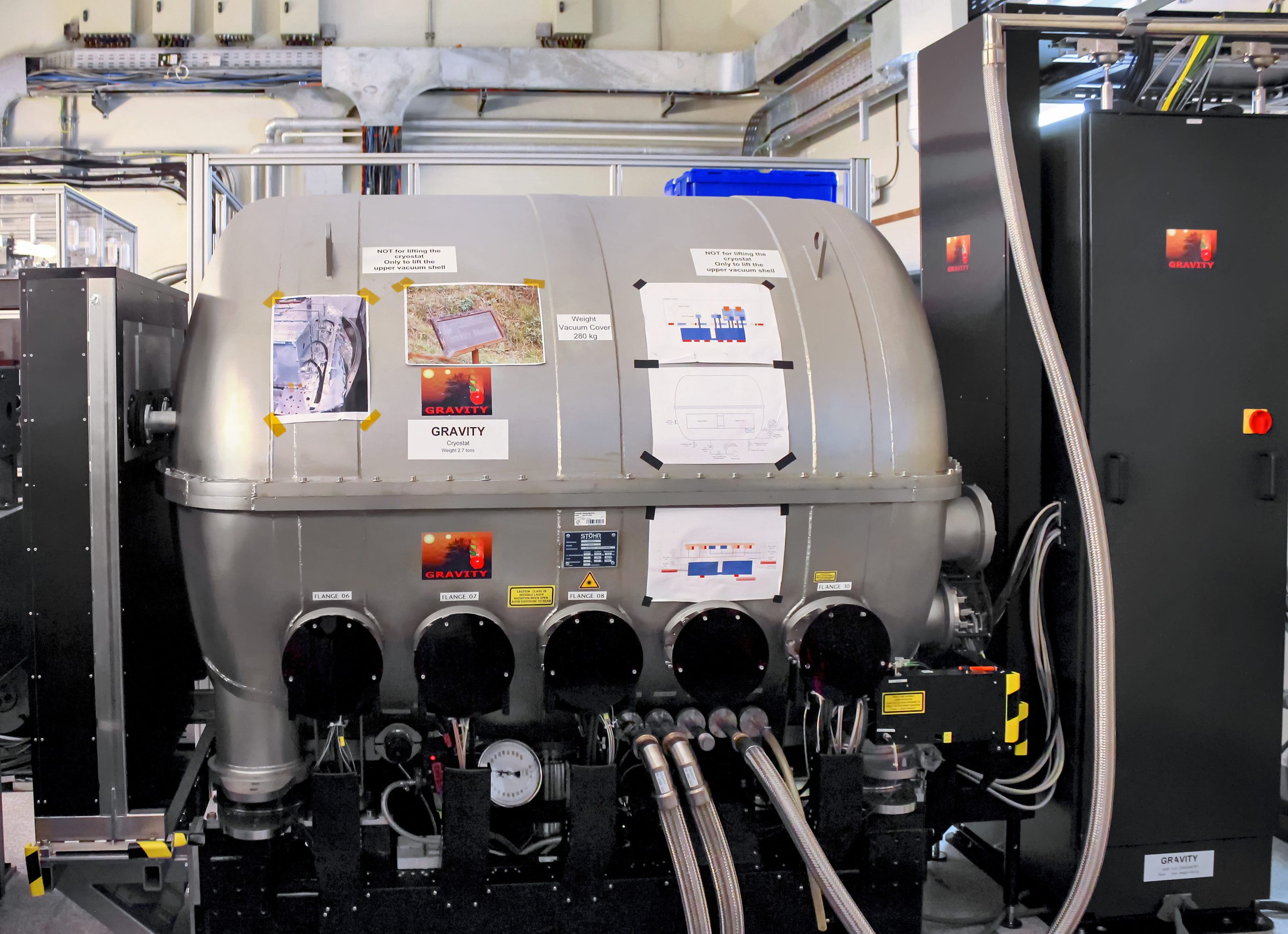
With the help of advanced observation equipment, the research team conducted a detailed analysis of the atmosphere of Beta Pictoris b. Scientists focused on studying the chemical element composition and compared these data with the parent star and theoretical models.
Surprisingly, the observation results show that the atmosphere of this super Jupiter is rich in heavy elements. Researchers believe that this chemical characteristic is highly similar to gas giant planets such as Jupiter and Saturn formed by core accretion mechanisms, rather than brown dwarfs formed through direct gas collapse.
In other words, even though the mass has reached 11 times that of Jupiter, this giant planet still retains the typical "planet formation fingerprint". The discovery means core accretion models may be applicable far beyond what scientists thought in the past.
Researchers pointed out that the traditional view is that when the mass of a planet grows to such a huge extent, it is difficult to provide enough material in the protoplanetary disk to complete the entire formation process. But the latest evidence shows that under certain special circumstances, the core accretion mechanism may be able to create gas giant planets that are far larger than theoretical expectations.
The discovery also blurs the line between planets and brown dwarfs. Brown dwarfs, often called "failed stars," have masses between those of planets and stars. For a long time, scientists have been trying to use quality to distinguish the two, but the research results of Beta Pictoris b show that relying solely on quality standards may not be enough, and the formation process may be a more important basis for judgment.
The research team believes that super Jupiters like Beta Pictoris b provide valuable clues for understanding the birth process of large celestial bodies in the universe. If objects with a mass 11 times that of Jupiter can still form through traditional planetary mechanisms, then existing theories about the upper limit of planet formation may need to be revised.
As new generations of observation equipment such as the James Webb Space Telescope continue to provide higher-precision data, astronomers are expected to discover more similar cases. Future research may further reveal how large a celestial body can still be classified as a "planet" and where the true limits of the planet formation mechanism are.
This result shows that there are still many unknown areas in human understanding of the planet formation process. The formation mechanisms once thought to apply only to traditional gas giant planets such as Jupiter and Saturn may be enough to shape worlds larger and more extreme than we imagine.
Comments