
Abstract:
A California Institute of Technology research team announced a landmark aerospace breakthrough. A space assembly system autonomously controlled by a robot successfully completed a structure construction task in orbit, becoming the first case in human history of autonomously building a structure in space without the participation of astronauts. This achievement is considered to be expected to completely change the construction method of future large spacecraft, space telescopes, communication facilities and space solar power generation systems.
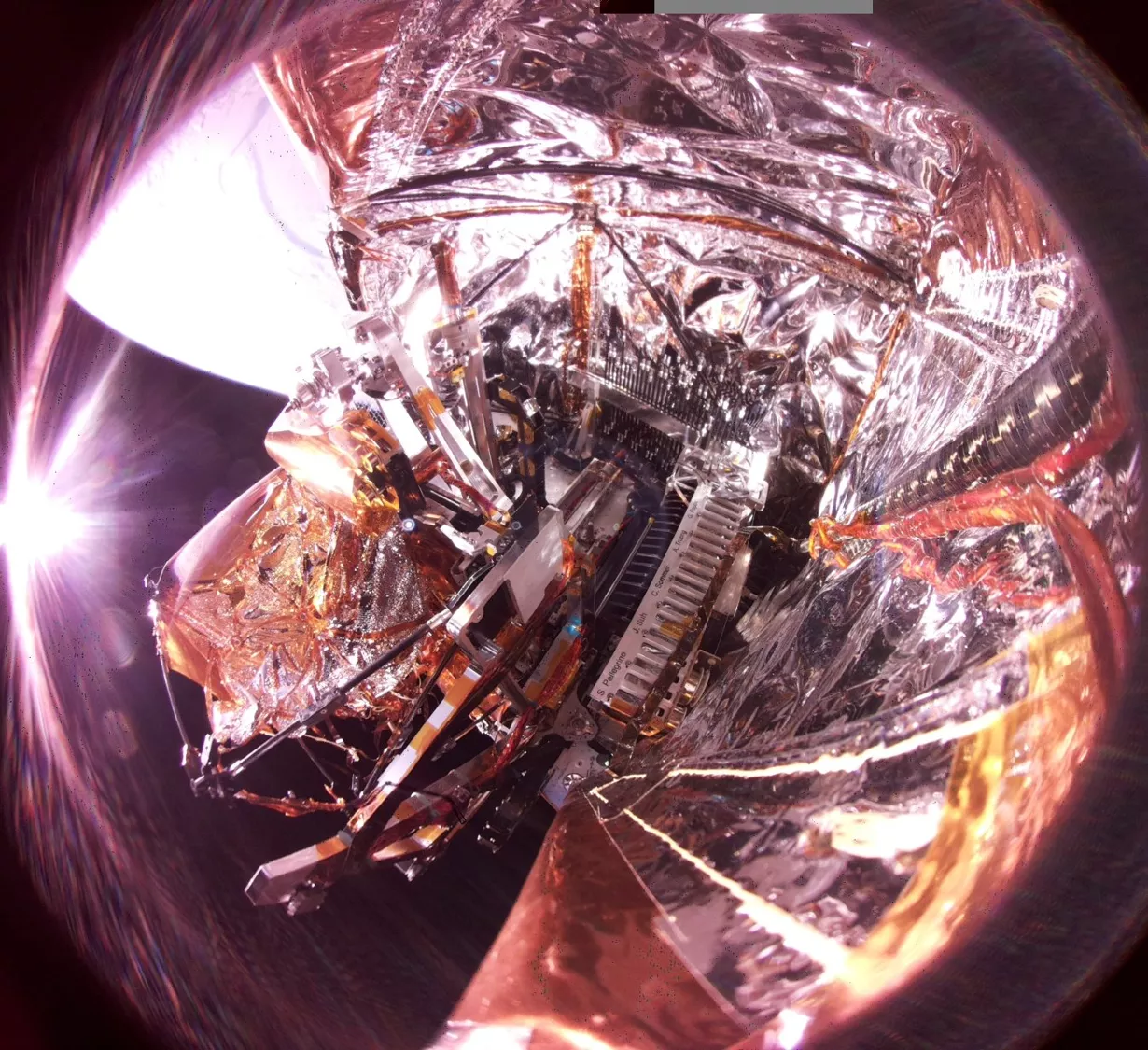
The mission was developed by the California Institute of Technology and funded by the U.S. Defense Advanced Research Projects Agency (DARPA) as part of the "NOM4D" program. The program aims to explore new ways to fabricate and assemble large structures directly in space, thereby escaping the size constraints imposed by rocket payload space.
The system performing the mission is called ASTRA, or the "Autonomous Space Tension Reflector Assembly" project. The robotic system has been orbiting Earth for the past six months, with the goal of building a set of reflecting antennas about 1.4 meters in diameter. The entire device is composed of composite fiber tubes, aluminum connectors and lightweight Kapton reflective film.
Unlike the traditional reliance on astronauts for extravehicular assembly, ASTRA adopts a completely autonomous operation mode. The robotic arm will grab structural rods and connecting nodes from nearby storage devices, and then gradually assemble them into repeated structural units according to a predetermined process, eventually forming a large truss frame.
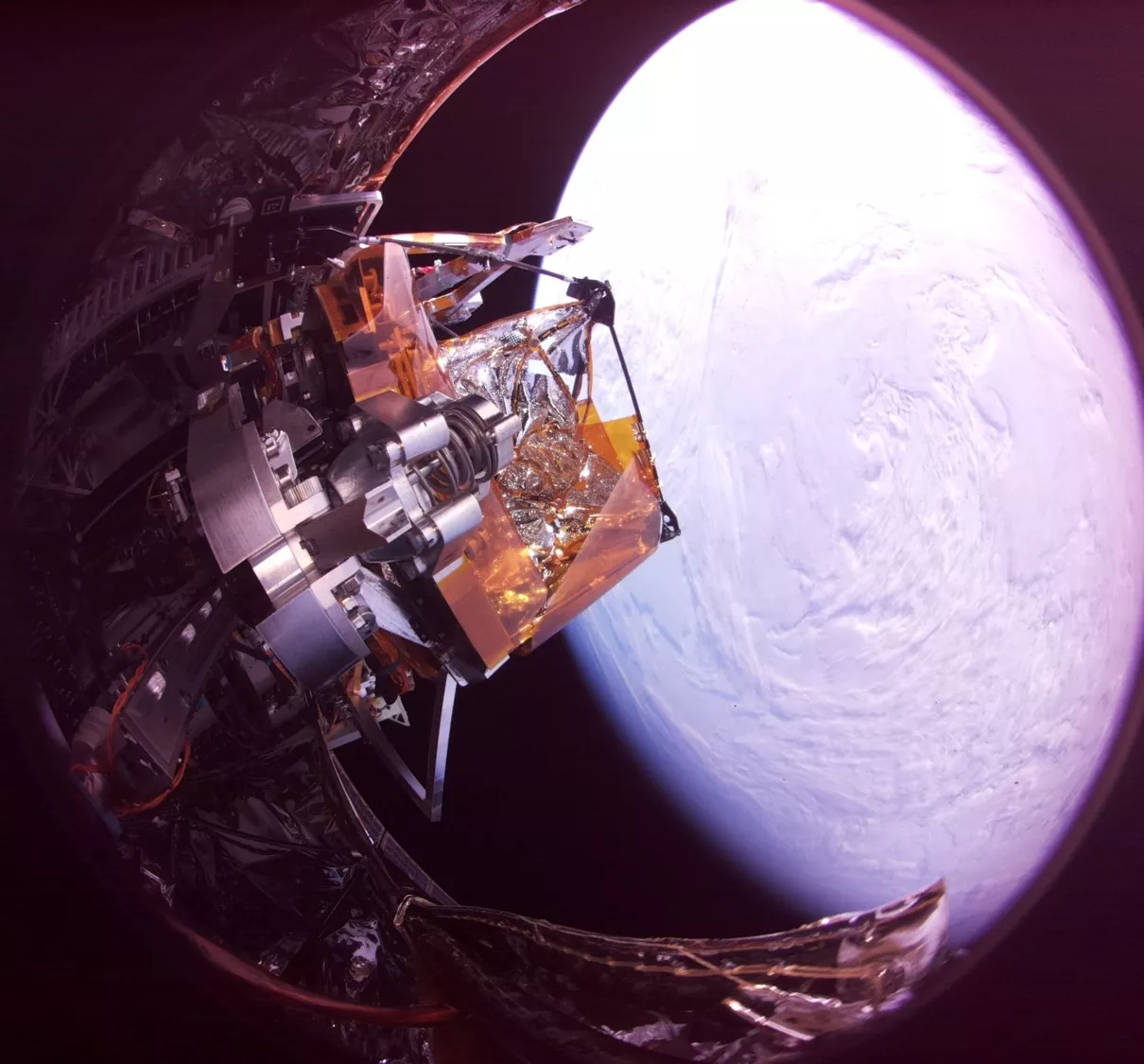
Project leader Sergio Pellegrino, professor of aerospace and civil engineering at Caltech, said that this is the first time humans have achieved autonomous construction of structures in space. Although astronauts have performed assembly work outside facilities such as the International Space Station in the past, this time all operations were completed independently by robots without any human intervention.
The research team revealed that due to technical challenges and mission schedule constraints, the robot was ultimately unable to complete the entire assembly of the entire set of antennas, and only built the initial part of the predetermined structure. However, the most important goal of the experiment is not to complete the antenna itself, but to verify whether the autonomous assembly concept can operate in a real space environment. Judging from the current results, this goal has been successfully achieved.
DARPA describes the entire assembly process as building a high-tech version of building block toys in space. However, the researchers pointed out that allowing the robot to accurately complete every action in weightlessness, vacuum and extreme temperature changes is far more complicated than ground experiments. Any slight error may cause structural instability or component damage.
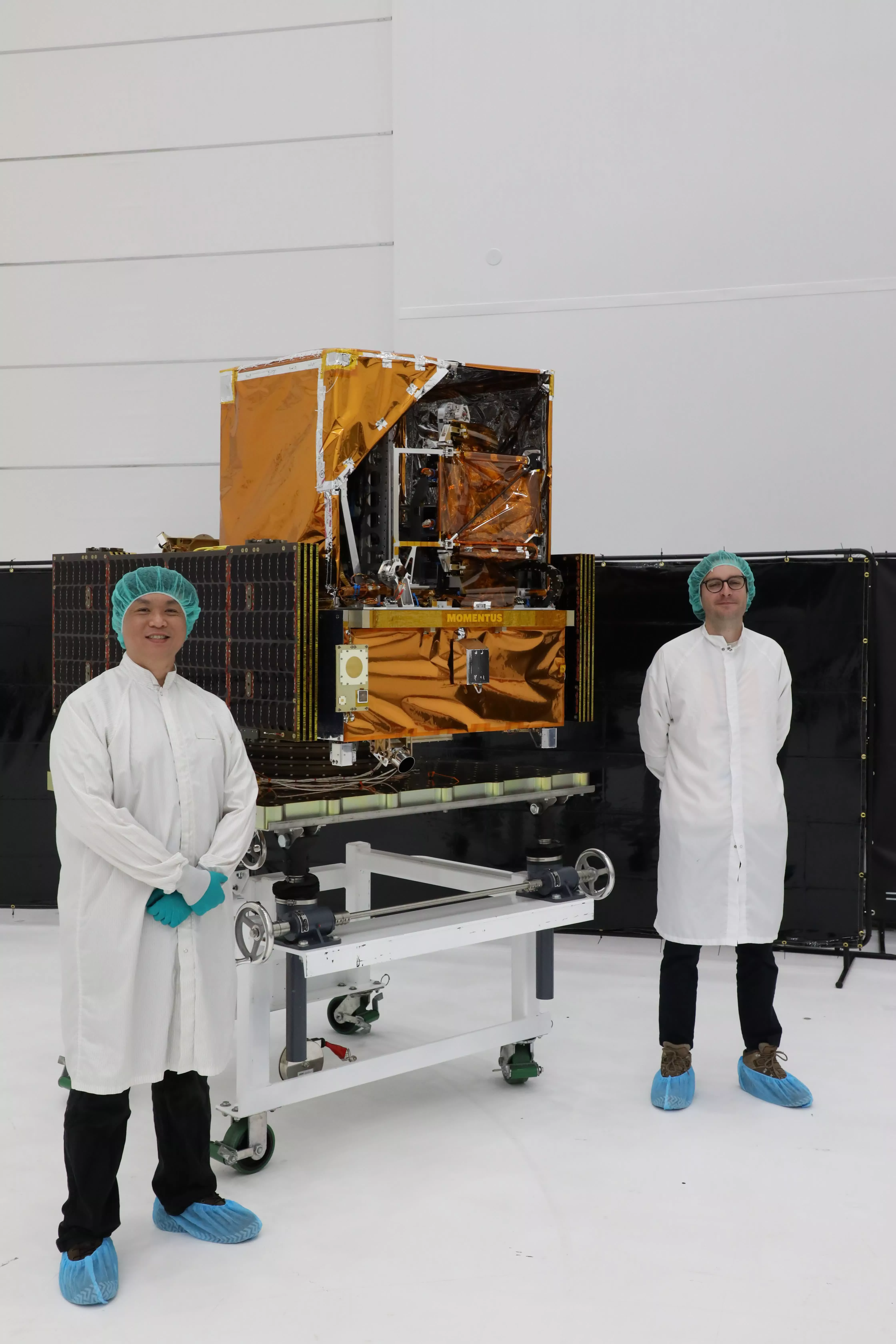
In fact, the project has gone through several stages of development. In the first two phases, the research team completed the overall design plan and engineering verification, and proved the feasibility of the concept in a ground laboratory environment. Subsequently, it took them less than 12 months to complete the manufacturing, testing and delivery of the flight payload, and send it into orbit for field verification.
Researchers believe that the most important value of this technology in the future lies in breaking through the size limitations of rocket fairings. Currently, any equipment that goes into space must fit within the space inside the launch vehicle, which places strict constraints on the scale of large telescopes, communication platforms, and solar power generation facilities. And if structures can be built directly on orbit, the size of future facilities will no longer be limited by launch conditions.
DARPA stated that the long-term goal of the NOM4D project is to achieve the construction of ultra-large space structures of hundreds of meters or even kilometers. The scale of such a facility far exceeds current technological capabilities and may be used to build next-generation deep space observation telescopes, large communication antenna arrays, and space solar power generation networks in the future.
Pellegrino pointed out that this technology is not only suitable for astronomy and astrophysics research, but also has great potential in areas such as commercial communications, space energy, and future lunar base construction. For example, very large solar arrays can collect energy in space and wirelessly transmit power to the earth, creating a new energy supply model.
Analysts believe that although the ASTRA mission has only completed a small-scale verification, it marks the first official step in the era of independent orbital manufacturing. As robotics, artificial intelligence, and advanced materials continue to develop, humans may no longer rely on manufacturing complete spacecraft on Earth in the future, but instead directly build larger, more complex, and more powerful infrastructure in space.
Comments