
Abstract:
Recently, residents in remote areas of California, USA, were surprised to find that dazzling lights were projected from nearby mountains at night, illuminating the vast desert below. Multiple media reported that
This is a night lighting demonstration being carried out by the American startup company "Reflect Orbital". The company plans to deploy tens of thousands of giant mirrors in space in the next ten years to reflect sunlight to the surface of the earth. Related plans have caused huge controversy.
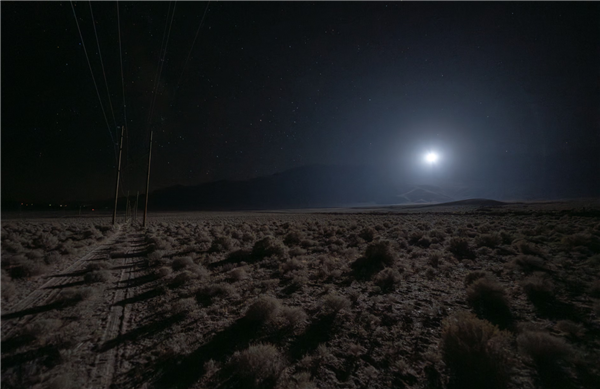
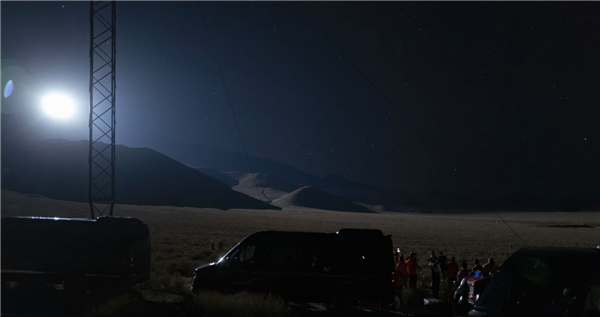
It is reported that the demonstration was carried out near the town of Lone Pine in the Sierra Nevada Mountains. The "Reflection Orbit" company used large mobile lighting equipment to simulate the effect of satellites reflecting sunlight. The company says the light brightness is similar to that of a full moon, and is designed to truly simulate the technology's ability to provide lighting for nighttime search and rescue and other emergency rescue operations.
The company also revealed an almost science-fiction goal,
to launch 50,000 satellites into space in the next ten years to "light up" parts of the earth at night.
A spokesman for the company said that search and rescue teams are expected to be the first customers, so they are working with local search and rescue teams to conduct field demonstrations. The technology can also provide light for crops, replace broken street lights, and even provide solar power for military operations, allowing users to achieve on-demand lighting with the click of a button on the app.
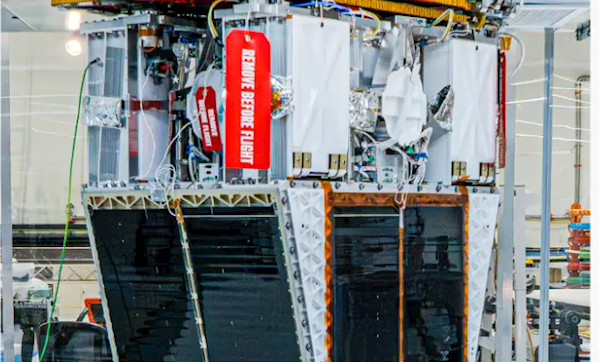
The Earendil 1 satellite will be folded like origami before launch and unfolded into a huge flat mirror after entering orbit.
In July this year, the US Federal Communications Commission (FCC) approved the company’s proposal to launch its first demonstration satellite within the year.
The satellite, called Earendil 1, will enter an orbit about 645 kilometers above the Earth's surface and use a 59-foot-diameter (about 18-meter) mirror to reflect sunlight into a beam 3 miles wide (about 4.8 kilometers).
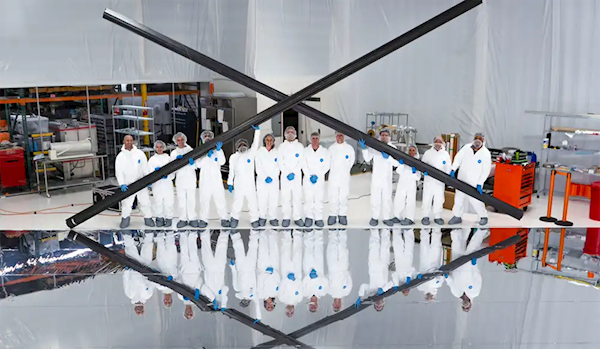
Reflect Orbital employees pose with a giant mirror.
The target brightness of the first demonstration satellite is moonlight level (about 0.1-2.3 lux), while daylight level (up to 36,000 lux) is the company's long-term vision after the completion of the constellation in 2035.
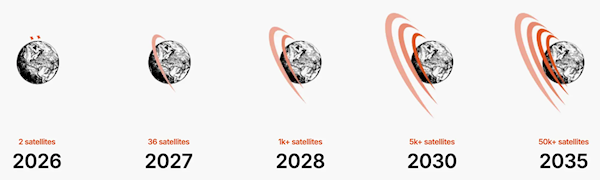
However, the plan faced strong opposition.
Hasselman, a senior lawyer at the American environmental law organization Earthjustice, bluntly stated that "this is a stupid project" and there are still a lot of unresolved issues that may have serious consequences.
It also pointed out that almost all life on earth evolved based on circadian rhythms. A large amount of data shows that disrupting this rhythm is absolutely unwise. The plan to deploy 50,000 satellite mirrors is simply "crazy" and will completely destroy the night sky as we know it.
In August this year, four groups represented by Earthjustice applied to the FCC, requesting that the approval decision be reconsidered. They are worried that the satellite will reflect sunlight back to the earth after it reaches an altitude of about 645 kilometers, which may cause a series of chain problems.
Organisms such as birds, insects and mammals rely on changes in day and night for feeding, roosting and mating, and any change in rhythm could have catastrophic effects on some species.
Astronomers have also expressed concern that nighttime glare will aggravate existing light pollution and may trigger a race for more satellites to enter orbit, obscure the starry sky and generate more space debris. The American Astronomical Society warns that
Looking directly at unusually strong sunlight through a telescope may harm your eyes, and the reversal of day and night may also disrupt the body's biological clock and endanger your health.
It is worth mentioning that this is not the first time humans have tried space lighting solutions. In the 1990s, Russia implemented the "Flag" program: Flag 2 in 1993 successfully deployed its reflector in orbit, casting a spot of light equivalent to the full moon over Europe; Flag 2.5 in 1999 failed because the mirror was entangled and torn by the space station antenna, and the project was shelved thereafter. Whether the "reflection track" can break through the technical bottleneck is still unknown.
Comments