
Abstract:
Australian researchers recently released a heartbreaking video: After giving birth to a dead calf, a humpback whale mother stayed with the calf for a long time, constantly approaching it, touching it, and maintaining close eye contact with it. The rare event provides important clues to how large whales cope with death and raises a long-standing question: Do whales experience grief in the same way humans do?
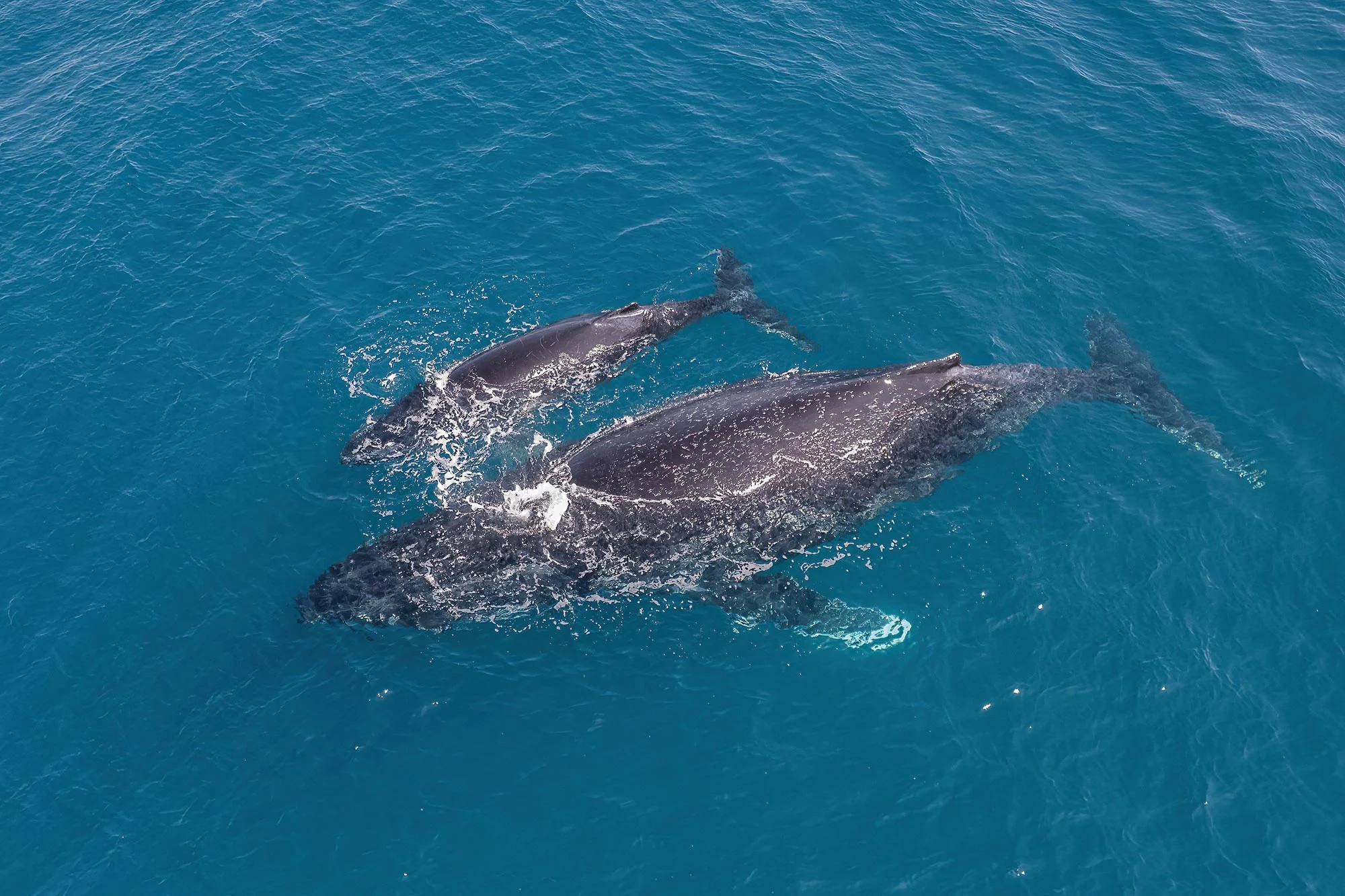
This incident occurred in July 2025 near the Gold Coast in southeastern Queensland, Australia. Researchers from Griffith University and Sea World Foundation analyzed relevant images and observation records, and published a research report in the academic journal "Discover Animals" on September 16, 2026. Researchers say this is the first well-documented case of a humpback whale mother spending an extended period of time with her stillborn calf.
At that time, Andrew Mulville, captain of the Sea World Foundation rescue ship, discovered two adult humpback whales behaving abnormally at sea. At first, he thought they were just resting near the surface, but the two whales moved in an unusual way, and one of them showed a vertical posture with its tail pointed upward.
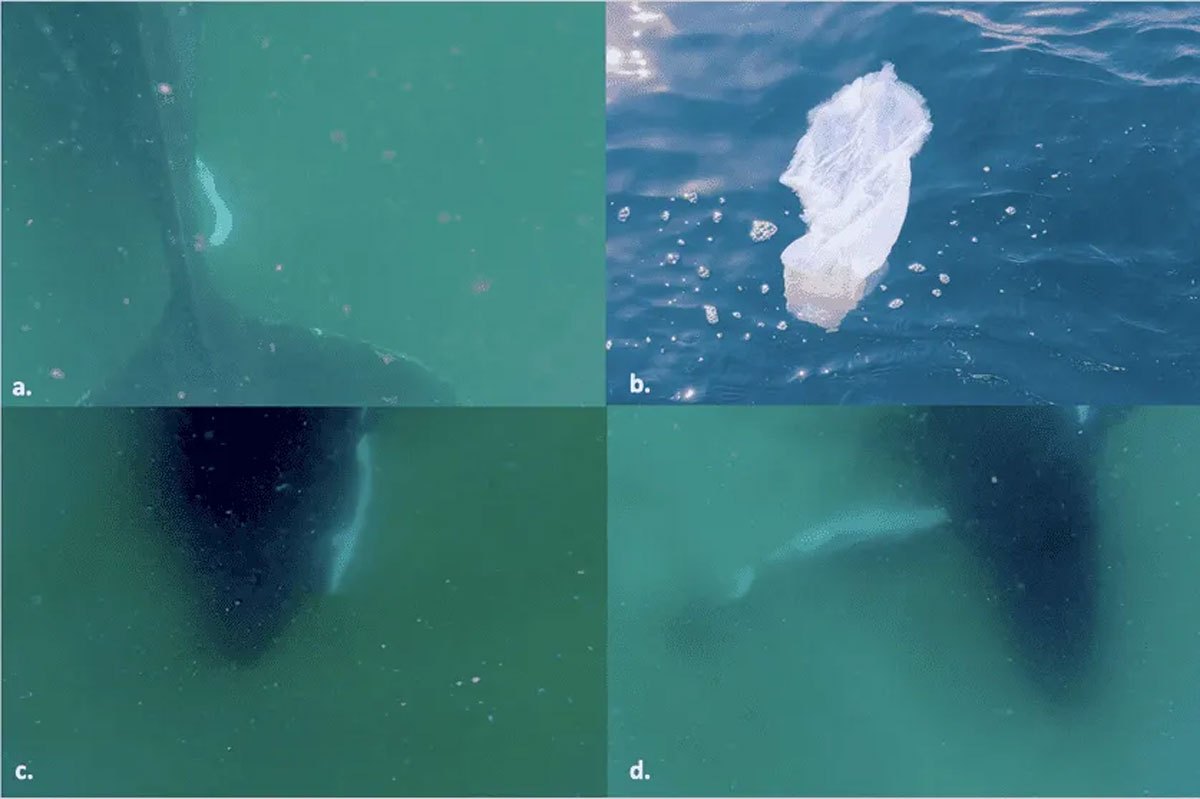
Subsequently, the crew on the ship noticed fetal membrane tissue floating on the sea. This discovery led them to realize that one of the female whales may have just given birth. However, no normal newborn whale calves were found around, which puzzled the on-site personnel.
In order to figure out what happened, Mulville and others used GoPro camera equipment to track and observe, and found the body of the young whale underwater. The calf lies on the seabed with no signs of life, while the mother whale continues to return to the location of the calf.
Researchers observed that mother whales would repeatedly dive short distances, swim to their calves, stay for a while and then return to the surface. Sometimes it rests close to the calf's body, and sometimes it uses its head or pectoral fins to come into contact with the calf, or even moves its pectoral fins close to the calf's body. Underwater footage also recorded the mother whale standing face to face with the calf, as if trying to confirm whether it was still responsive.
Researchers believe that these behaviors are similar to the caregiving behaviors displayed by some mammals with complex social relationships after the death of another species. The mother whale did not leave quickly, nor did she show obvious aggression or avoidance behavior, but continued to focus on the dead calf.
Olav Meinecke, a researcher at Griffith University's Cetaceans and Climate Research Program, said the mother whale had been in close contact with her calf for hours and possibly days. The observed behavior suggests there may be a strong maternal attachment between mother and calf that does not immediately disappear when the calf dies.
The researchers also noticed that another adult humpback whale had been appearing nearby. It is thought the whale may have been a companion to its mother. Two adult whales swam slowly near the calf, intermittently making short dives and staying near the surface.
Over the next two days, researchers continued to observe adult humpback whales in this area. However, due to a lack of sufficient individual identification information, the researchers could not completely confirm whether the subsequent whales were the two initially observed, nor could they conclude that they had not left their calves during the entire period.
The reason why this case has attracted the attention of the scientific community is related to the unique physiological characteristics of humpback whales. Humpback whales are baleen whales and are different from toothed whales such as killer whales and dolphins. Baleen whales filter food from the sea primarily through their baleen, while toothed whales typically have more complex feeding behaviors and social interactions.
Previous research on whales caring for their dead companions has mostly focused on toothed whales and dolphins. Scientists have observed that some toothed whale mothers will lift their dead calves to the surface or swim with their bodies for long periods of time after they die. Similar behavior has been seen in other social mammals.
In contrast, records of baleen whales showing sustained concern for dead companions are limited. This doesn't necessarily mean that baleen whales don't exhibit similar behavior, but it could also be that events are difficult to observe and record.
Humpback whales usually move in the vast ocean, making it difficult for researchers to observe the birthing process at the right time and place. Newborn humpback whales do not have sufficient body fat reserves to maintain buoyancy as easily as adult whales, so they may sink to the bottom of the sea quickly after death. This makes it difficult for scientists to spot calves from a distance and makes it more difficult to record the behavior of mothers.
Meineke pointed out that there are very limited public scientific records on humpback whale births, and this observation not only records the death of the calf, but also provides detailed images of the mother whale continuing to pay attention to the calf after the death, so it has special research value.
However, the researchers did not directly assert that female whales are experiencing the exact same emotions of sadness as humans. Although the behavior is visually reminiscent of mourning, scientists cannot determine the animals' subjective feelings from the images alone, nor can they directly measure whether they experience grief similar to humans.
The behavior of the mother whale may reflect sadness, or it may stem from strong maternal attachment, confusion about the status of the calf, or instinctive caregiving behaviors that continue to operate after birth. These explanations are not necessarily mutually exclusive, but current evidence is insufficient to clearly distinguish between them.
As a result, researchers prefer to use more cautious terms such as "sustained attention behavior after death" rather than directly defining it as mourning in the human sense. This formulation both acknowledges the specificity of behavior and avoids making undue inferences about animal emotions in the absence of direct evidence.

Nonetheless, the case still provides important clues to understanding cetacean social relationships. Mother whales remain with their calf for long periods of time, constantly approaching and touching it, suggesting that the bond between mother and calf may be more complex than previously thought. Even if it is impossible to determine exactly what the mother whale feels, her behavior shows that attention to the calf does not end immediately with death.
The researchers also point out that observing how animals cope with death can help humans understand their cognitive abilities, social bonds and emotional responses. Elephants, primates and some toothed whales have all shown persistent concern for dead companions, and this incident with the humpback whale adds an important case study.
Such behavior may also have evolutionary significance. For social mammals, caring for young, recognizing the status of companions, and maintaining social relationships are all important behavioral abilities. Researchers need to further observe the actions that different species take after the death of their own kind to determine how much of these behaviors are due to common evolutionary mechanisms and how much is related to each species' unique lifestyle.
This study also reminds the scientific community that there is still much unknown about the emotional and cognitive abilities of baleen whales. In the past, researchers' attention to large cetaceans tended to focus on aspects such as migration, reproduction, predation, communication, and population protection. However, the behavior after death has long lacked systematic research because it is difficult to observe.
As maritime observation equipment and underwater photography technology continue to improve, researchers are expected to record more cetacean behaviors that were difficult to capture in the past. However, such incidents are very rare, and scientists still need to accumulate more cases to determine whether the behavior of humpback whale mothers continuing to accompany their calves after they die is universal.
For this mother whale, she approached the calf again and again on the seabed, eventually becoming a special window for scientists to understand whale behavior. It cannot tell humans what it is thinking, but its behavior of staying for a long time and repeatedly touching the young whale is enough to remind people that the connection between large marine mammals and their offspring may be far deeper than what can be directly observed by the outside world.
The researchers hope that in the future, the rare deaths of newborn whales in cetaceans can be recorded more systematically to further understand their behaviors in the face of death, as well as the cognitive, emotional and evolutionary mechanisms that may be involved behind these behaviors.
Comments