
Abstract:
About 99 million years ago, when dinosaurs still ruled the earth, a tiny insect was wrapped in resin and eventually became part of amber as the resin gradually hardened. Now, by analyzing this preserved amber fossil, researchers have discovered an ancient insect that has never been formally described by science before. Its most striking feature is a set of special mouthparts that are nearly twice as long as its body and have densely wrinkled surfaces. This structure may allow insects to flexibly bend their mouthparts in narrow spaces while preventing them from collapsing during bending, but the same structure has not been found in living relatives.
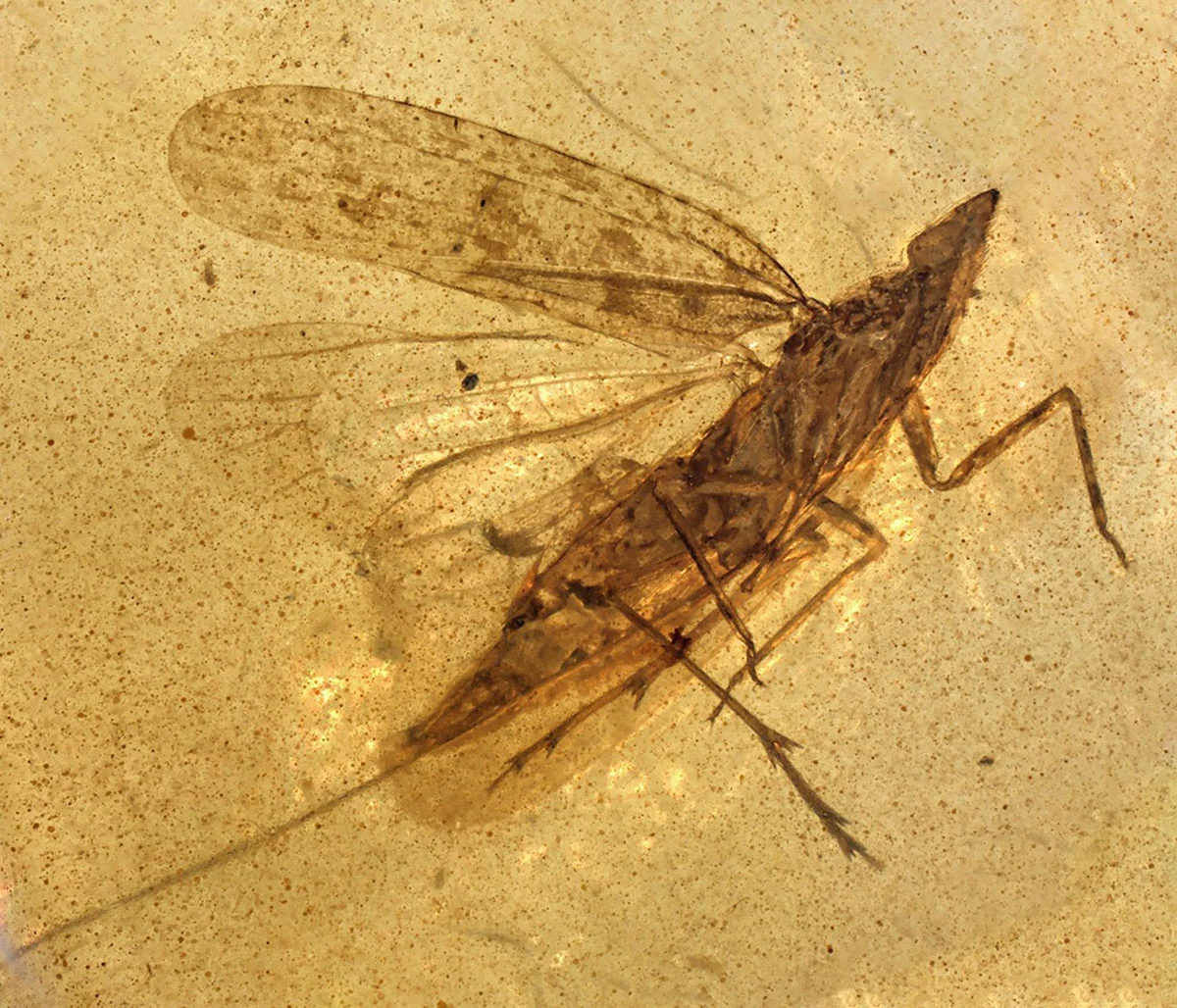
This study was completed by researchers from Tel Aviv University in Israel, and the results were published in the academic journal "Insects". By analyzing Cretaceous amber fossils unearthed in the Kachin region of Myanmar, the research team re-understood the diversity of insect feeding methods and body structures at that time. Researchers believe that this insect may have evolved a highly specialized feeding system that allows it to insert its slender mouthparts into cracks in the bark to suck out the sap from inside the plant.
The researchers named this newly discovered insect Cretodorus noonoo, which can be temporarily translated into Chinese as "Cretodorus Noonoo". Among them, the name Noo-Noo comes from the vacuum cleaner character Nunu in the children's TV show "Teletubbies". The character possesses a slender, flexible straw-like hose that bears a resemblance to the ancient insect's unusually long and bendable mouthparts.
The insect belongs to the Neazoniidae family, an extinct family of ancient wax cicada-like insects. Wax cicada insects usually have piercing-sucking mouthparts that can pierce plant tissue and suck out sap. The researchers point out that although the long mouthparts of this ancient insect may at first glance be reminiscent of the siphon-like mouthparts of butterflies, there are important differences in structure and function.
The long mouthparts of butterflies are mainly used to suck nectar. They can usually be curled up and extended when feeding. The mouthparts of Cretodorus noonoo extend toward the rear of the body, and the overall structure is more consistent with the feeding method of piercing plant tissue and sucking out internal liquids. The research team believes that the length of the mouthparts alone cannot determine that this insect feeds on nectar.
In order to further determine the living habits of this insect, the researchers examined multiple related fossil specimens to look for whether pollen was preserved on the insect's body. If these insects frequently visit flowers and take on the role of pollinators, the presence of pollen on their bodies may provide support for this hypothesis. However, after examining a sizable number of fossils, the researchers found no convincing evidence of pollen accumulation. Therefore, there is currently insufficient evidence that this insect ever served as a pollinator.
What really surprised the research team was the densely distributed transverse folds on the surface of the mouthparts.
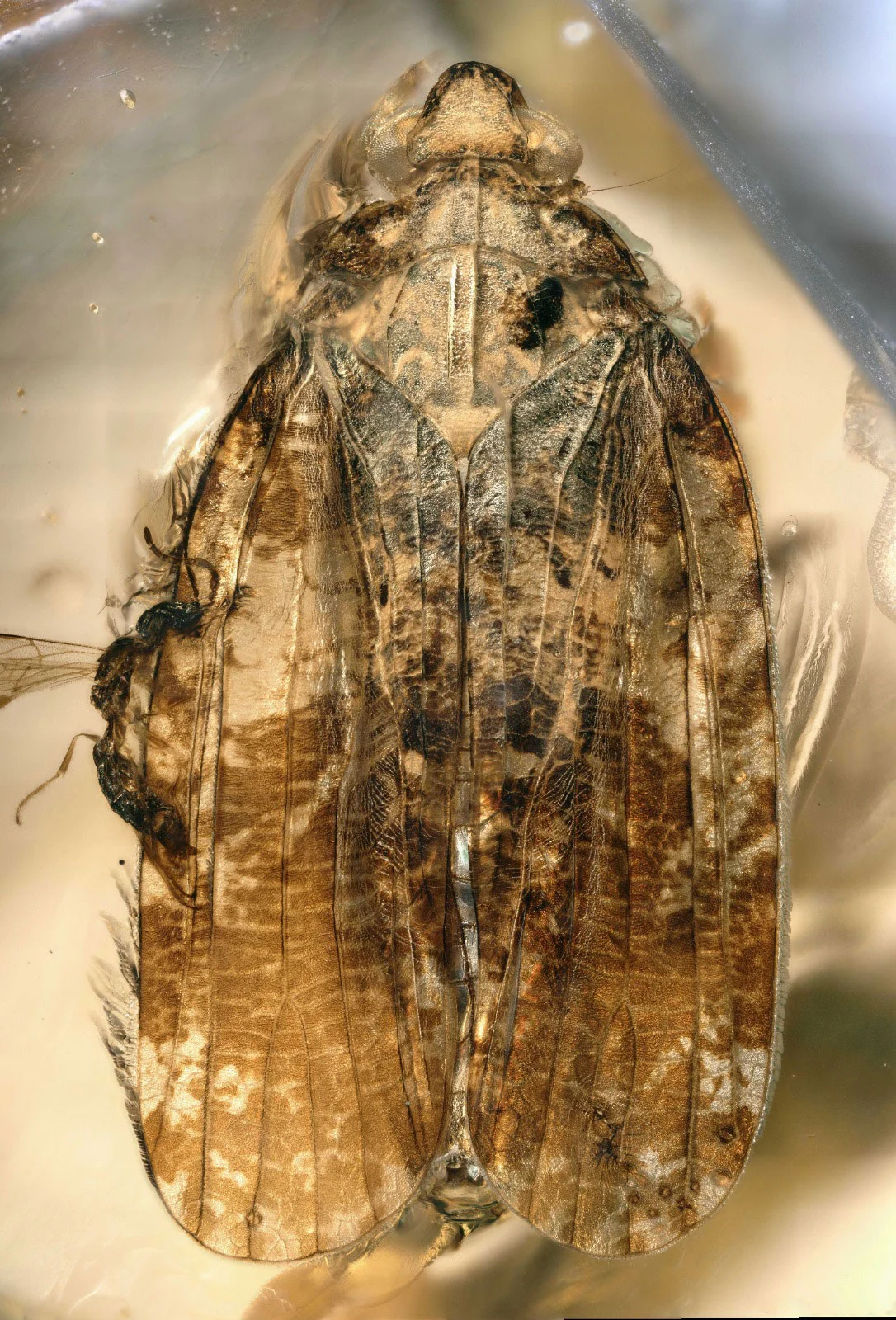
The researchers used high-resolution micro-computed tomography, also known as micro-CT, to create a three-dimensional reconstruction of the insects in amber. Compared with ordinary microscopic observation, this method can help researchers observe the internal structure of fossils from different angles and analyze some subtle features that are difficult to identify directly.
Scan results show that the transverse folds on the mouthparts are not simple surface textures, but part of the structure of the mouthparts themselves. These folds may give the mouthparts special flexibility, allowing them to bend without being prone to severe deformation at the bends.
The researchers compared this to modern bendable straws or flexible hoses. When ordinary elongated tubular structures are excessively bent, the internal channels may be squeezed, making it difficult for liquids to pass through. However, the structure with special folds can disperse the pressure generated by bending to a certain extent and reduce the risk of local collapse of the pipe wall.
This structure may be especially important for a mouthpart that is nearly twice as long as the body. The longer the mouthparts are, the more the insect has to control its direction while feeding and avoid the mouthparts from folding or becoming clogged in tight spaces. Lateral folds may have allowed the ancient insect to more flexibly adjust the position of its mouthparts in the complex bark environment while maintaining clear feeding channels.
There is also fossil evidence that further supports this explanation. In some specimens, the insect's mouthparts are preserved in a curved state. Because resin quickly restricts an insect's movements when encased in it, these curved forms may reflect the flexibility of the mouthparts themselves when the insect was trapped, rather than just accidental deformations that occurred after the fossil was formed.
Of course, fossils can only preserve limited information, and researchers cannot directly observe how the insect moved its mouthparts during life. Therefore, the specific mechanical functions of the mouthpart folds and the actual movements of insects when feeding are still scientific inferences based on structural evidence. However, the three-dimensional scanning results and the preservation state of the curved mouthparts corroborate each other, giving this explanation a certain degree of credibility.
Researchers suggest that the insect may specialize in using tree sap as a food source. Its unusually long and slender mouthparts can reach into narrow cracks on the surface of the bark, and then extend deeper along the cracks to find the tissues inside the plant responsible for transporting water and nutrients.
There are a variety of tissues in plants that perform transportation functions. Among them, xylem is mainly responsible for transporting water and dissolved minerals, and phloem is responsible for transporting organic matter produced by plants. Researchers believe that this insect may use its special mouthparts to pass through gaps in the bark and send its sucking structures into deeper plant tissues to obtain liquids. However, the specific tissue it feeds on and what plant juices it mainly absorbs cannot be completely determined based on fossils alone.
The end of the mouthparts also has two grooved leaf-like structures. The research team speculates that these structures may help the insects fix the position of their mouthparts during feeding.
The researchers proposed a vivid explanation: when the mouthpart enters a narrow bark crack, the two structures at the end may spread to both sides of the crack to form support with the surrounding surface, thereby helping the mouthpart remain stable. This mechanism is somewhat similar to expandable wall anchors - the anchor enters the hole and expands, forming a stronger contact with the hole wall.
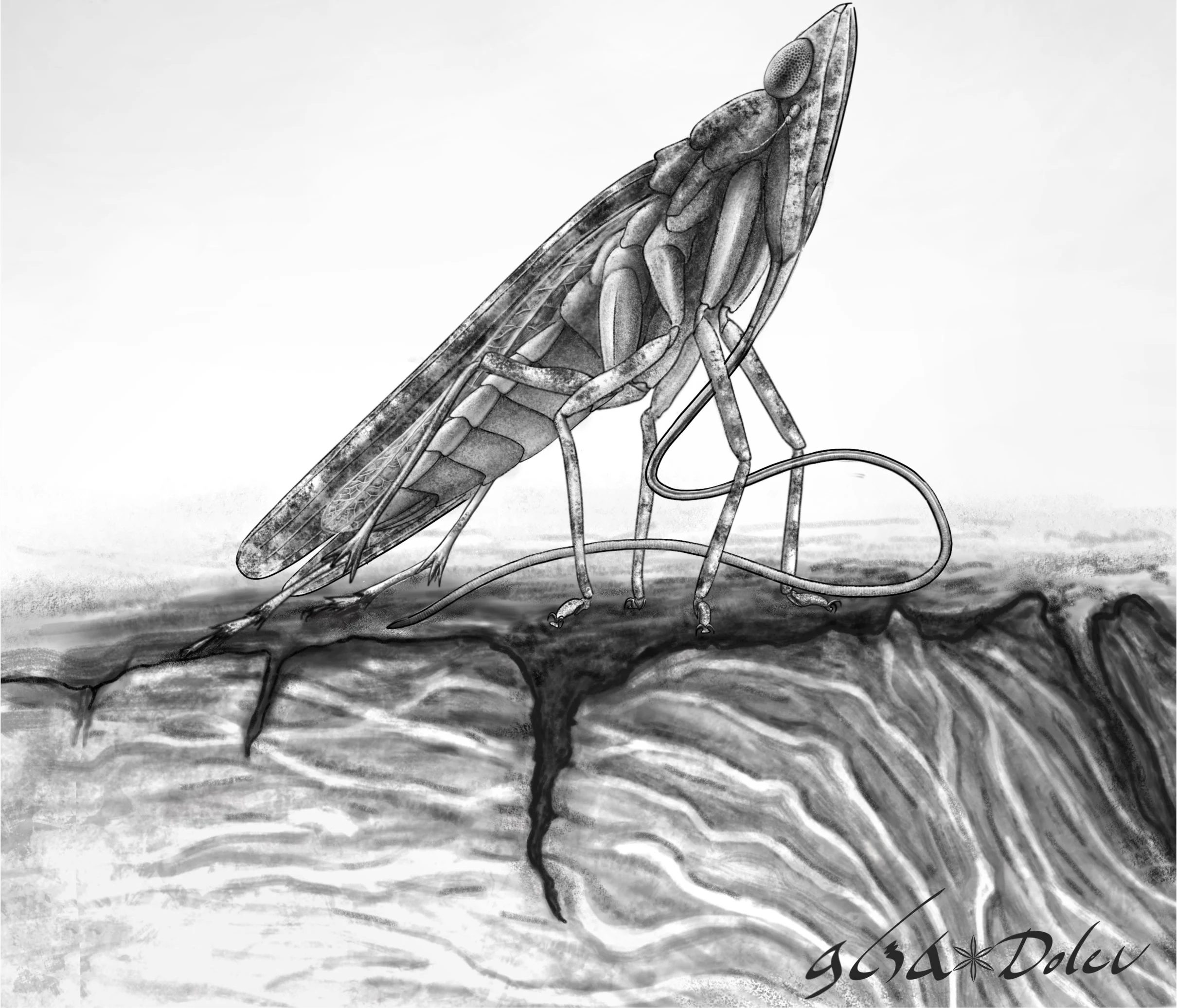
If this hypothesis is true, then this insect not only has unusually elongated feeding organs, but may also have a special mechanism for positioning and fixing its mouthparts. This structural combination helps it complete feeding in the narrow space inside the bark, and also shows that ancient insects may have evolved highly specialized body structures for specific ecological environments.
The significance of this research goes beyond the discovery of a strange-looking new species. It also reveals that ancient insects once possessed adaptations that have been lost in modern insects.
Existing wax cicada insects usually rely on needle-like mouthparts to pierce plant tissues and suck out internal liquids. The mouthparts of Cretodorus noonoo evolved an extremely elongated and highly flexible structure based on this basic feeding mode. The researchers pointed out that no mouthparts identical to this fold structure have been found in closely related living species.
This does not mean that all ancient insects once had similar organs, but it does mean that there may have been many structural innovations in the evolutionary history of insects that later disappeared. Modern insects are only part of a long evolutionary process that has survived, and the body structures observed today do not represent all possible forms that may have existed in the past.
Amber played a key role in this research. Resin can quickly envelop small organisms under certain conditions, and gradually hardens into amber during long-term geological processes. Unlike many fossils, which leave only squashed outlines or scattered bones, amber can sometimes preserve minute structures of an insect's body, even mouthparts, feet and other delicate organs.
Amber deposits in the Kachin region of Myanmar have preserved a large number of Cretaceous insect fossils, providing important materials for studying forest ecosystems about 100 million years ago. The research team analyzed 13 amber specimens from Neoaphididae and related insects. By comparing the morphological characteristics of different individuals, they confirmed that this special mouthpart is not an accidental anomaly in a single specimen, but a structural feature related to this ancient insect group.
During the Cretaceous, the forest ecosystems on Earth were significantly different from today. Complex ecological relationships are formed between plants, insects and other organisms, and different insects may have evolved a variety of different feeding strategies in order to utilize limited food resources. The specialized mouthparts displayed by Cretodorus noonoo are an example of this diversity of ecological adaptations.
Researchers believe that the discovery of this insect provides new clues to understanding the relationship between ancient insects and trees. Cracks in bark may serve as important pathways for certain insects to access plant sap, and feeding organs that can penetrate into these narrow spaces may help them exploit resources that are inaccessible to other insects.
However, the current evidence is not enough to determine exactly which trees the insect relied on, nor to accurately reconstruct its complete life history in ancient forests. If more well-preserved specimens are discovered in the future, researchers may be able to learn more about the internal structure of its mouthparts, how it was actually used, and its ecological relationship with other ancient insects.
This study once again shows that amber can not only preserve the appearance of ancient creatures, but may also retain fine enough anatomical information to allow scientists to identify special structures that once existed but were later lost during evolution.
For Cretodorus noonoo, that seemingly absurd long mouthpart may have been a highly practical survival tool. It can penetrate deep into the cracks of the bark, may remain flexible through special folds, and may also be fixed in position with the help of terminal structures. Nearly 100 million years later, these details are still preserved in amber, providing scientists with a window into ancient insect evolution experiments.
Comments